URL is vulnerable to clickjacking
Many pages on the site did not send the X-Frame-Options header, so they could be loaded inside a frame on another site. An attacker could overlay a page such as account settings or the invite page and trick a logged-in user into clicking controls they cannot see.
 Originally disclosed on HackerOne
- Disclosed after 24 hours
##The browser has verified the identity: Successfully implemented in IE browser
##Reproduce steps: URLs do not have X-FRAME-OPTIONS set to DENY or SAMEORIGIN, and they are vulnerable to clickjacking. Run under the browser's code and you will see that the listed links are vulnerable to clickjacking attacks
<html>
	<frameset cols="25%,25%,25%">
		<frame src="https://www.zomato.com/robots.txt" />
		<frame src="https://www.zomato.com/users/fan-feng-52680914" />
		<frame src="https://www.zomato.com/cairns-qld" />
	</frameset>
</html>
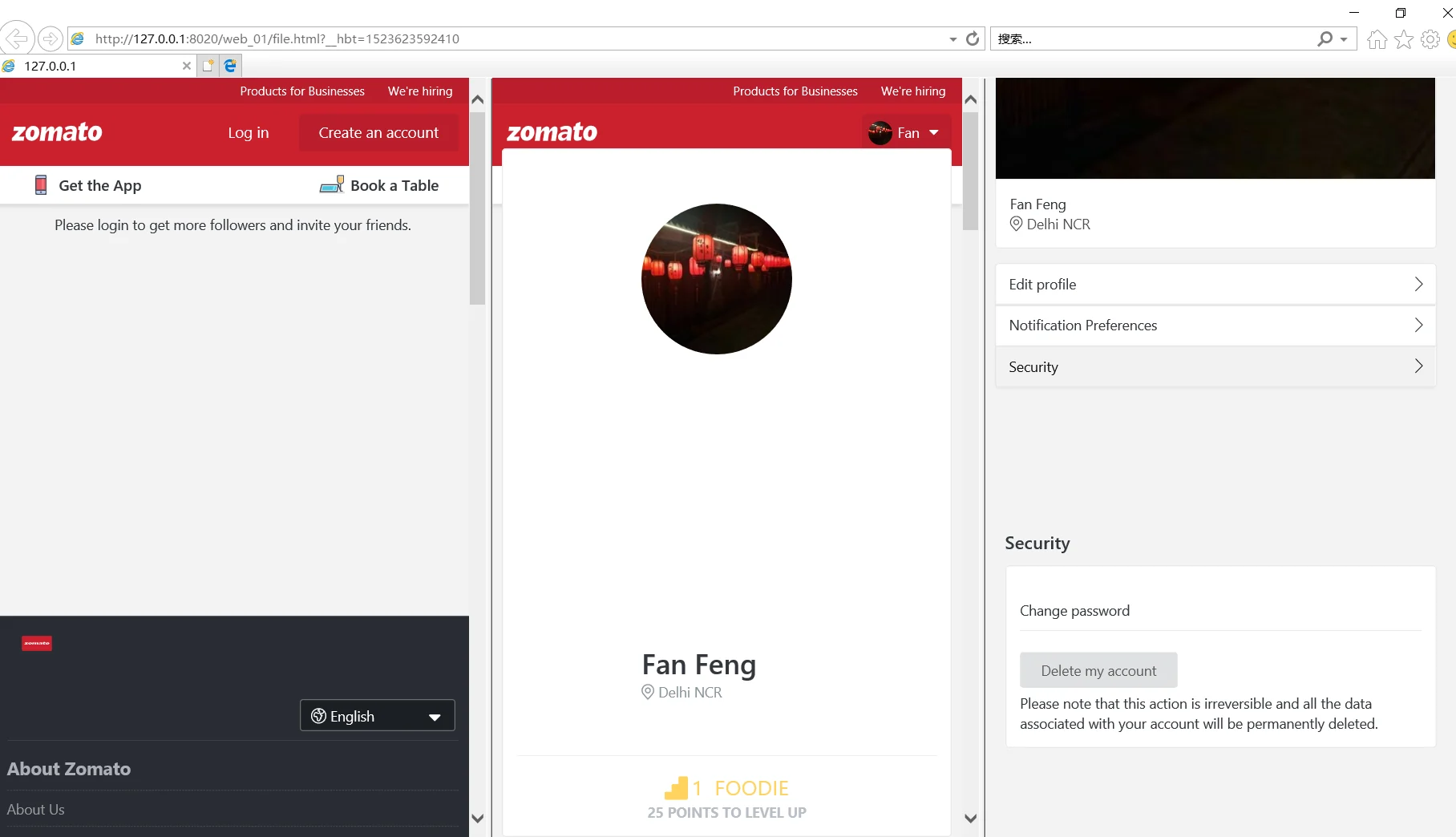
Impact
Most of the zomato.com urls were tested and found that most basic urls support iframe display in IE.
E.g:
- https://www.zomato.com/users/fan-feng-52680914/edit
- https://www.zomato.com/invite
- https://www.zomato.com/cairns-qld
- https://www.zomato.com/cairns-qld/caffiend-cairns?zrp_bid=0&zrp_pid=14
- https://www.zomato.com/users/fan-feng-52680914/bookmarks
- https://www.zomato.com/users/fan-feng-52680914/managewallets
The hacker selected the UI Redressing (Clickjacking) weakness. This vulnerability type requires contextual information from the hacker. They provided the following answers:
URL *.zomato.com
Can a victim be tricked into unknowingly initiating a specific action? Yes
What specific action can the user be tricked into? E.g: Hackers can lure users into the personal settings page, change data that is useful to hackers, delete accounts...
Not written yet. The AI write-up for this report has not been written yet. The Original tab links to the source.
How it worked
Root cause
Likely the application did not send an X-Frame-Options header (or an equivalent frame-ancestors policy) on its pages, so browsers allowed them to be framed by other origins.
Impact
An attacker could frame sensitive pages such as account settings, the invite page or wallet management and trick a logged-in user into performing actions; the report only demonstrates framing in Internet Explorer and does not show a working clickjacking exploit.
What the attacker needed
Victim is logged in; victim uses a browser that frames the pages; victim is lured to an attacker page
How it was found
- Open a page that loads the target URLs inside frames in the browser.
- Observe that the framed pages render, showing they can be embedded by another site.
Explained by bugbounty.wiki with AI from the original and checked against quotes from it; it can still be wrong. Read the original before relying on a detail.
Not written yet. The AI write-up for this report has not been written yet. The Original tab links to the source.
Clickjacking means hiding a real website inside an invisible frame on a page the attacker controls, so your clicks land on the real site's buttons. Here the site did not tell browsers to refuse being framed, so pages like account settings could be shown under decoy content. A logged-in user could then be nudged into changing settings or deleting things without realising.
What is UI spoofing?
The interface lies to the user: a framed page catches their clicks, or a browser shows the wrong address or a fake prompt. Paid when it leads to a sensitive action or convincing phishing.


