xss found in zomato
A cross-site scripting flaw existed in the restaurant name field of Zomato's add-restaurant form. An attacker could submit a payload that executed in the verification team's browser when they reviewed the submission.

- Fixed in 4 days
- Disclosed after 13 days
while i was testing with your site i found a xss at add the restraunt option
steps to reproduce
- login to zomato
- goto add restraunt
- in the name feild add any xss payload
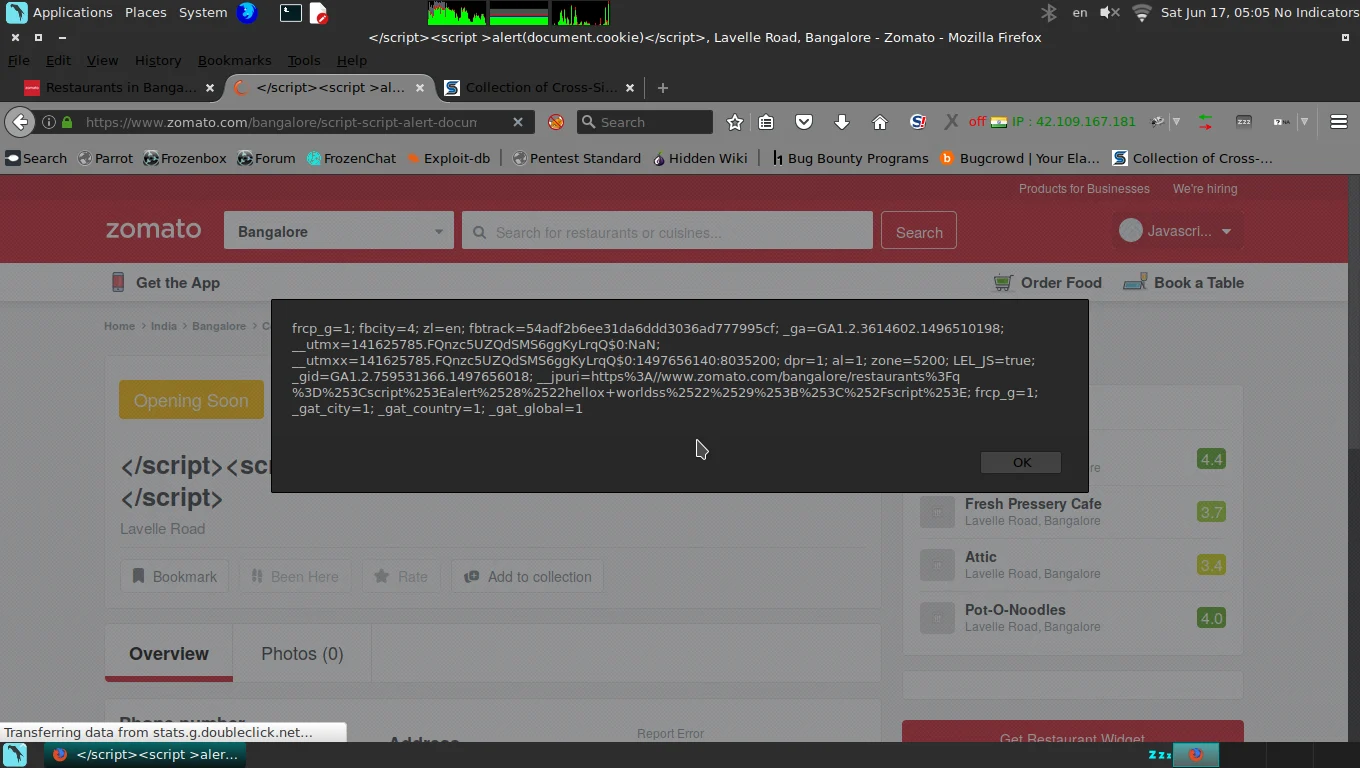
4)complete it the restraunt will be sent for verification to the verification team and the xss payload will also be sent to there and get executed there screen shot added
Attachments
Not written yet. The AI write-up for this report has not been written yet. The Original tab links to the source.
How it worked
Root cause
Likely the restaurant name was stored and later rendered in the verification interface without output encoding or sanitisation.
Impact
An attacker could run script in a Zomato verification team member's browser when they review the submission.
What the attacker needed
A Zomato account; ability to submit a restaurant
How it was found
- Log in to Zomato.
- Go to the add restaurant page.
- Enter an XSS payload in the name field.
- Complete the submission.
- The restaurant is sent to the verification team, where the payload executes.
Explained by bugbounty.wiki with AI from the original and checked against quotes from it; it can still be wrong. Read the original before relying on a detail.
Not written yet. The AI write-up for this report has not been written yet. The Original tab links to the source.
Cross-site scripting (XSS) is when a site accepts text from a user and later shows it in a browser without making it safe, so the text can run as code. Here the restaurant name was shown to staff reviewing submissions, so a malicious name could run in their browser.
What is XSS?
Script an attacker supplies runs in another user's browser, on the target's origin, with that user's session.



