SSRF/XSPA in labs.data.gov/dashboard/validate
A validator endpoint on labs.data.gov fetched a user-supplied URL server-side and returned different error messages depending on whether a port on the target host was open. An attacker could use this to probe internal services and ports that are not reachable from the internet.
 Originally disclosed on HackerOne
- Fixed in 12 days
- Paid in 12 days
- Disclosed after 2.6 years
Hi.
This vulnerability allows access to all ports locally. Which is not visible from the web.
1)We need an interim site file index.php 2)Next we write in index.php
<? header("Location: http://localhost:25"); ?>
3)Next go to https://labs.data.gov/dashboard/validate
And write url - for example http://example/index.php
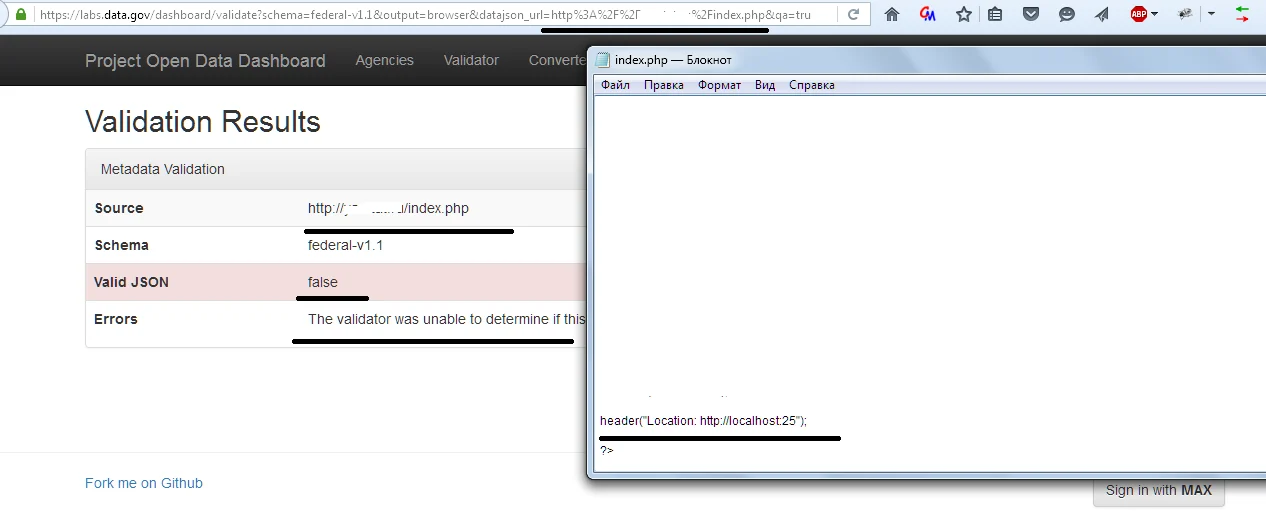
If the port will be open (locally) that we will see the inscription
Source http://example/index.php Schema federal-v1.1 Valid JSON false Errors The validator was unable to determine if this was valid JSON
F224225
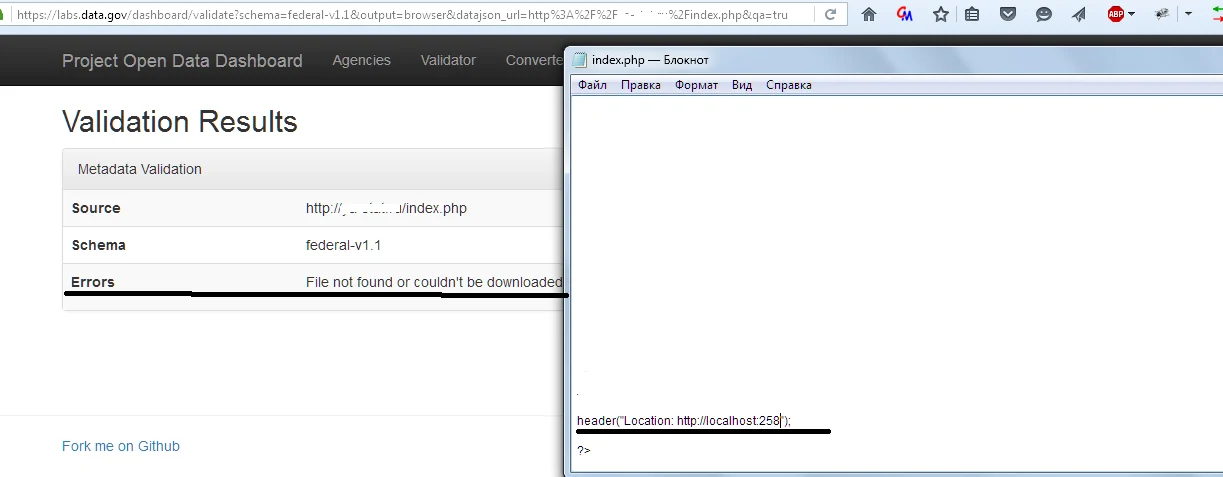
if not open
Source http://example/index.php Schema non-federal Errors File not found or couldn't be downloaded
F224224
final url for example
https://labs.data.gov/dashboard/validate?schema=federal-v1.1&output=browser&datajson_url=http%3A%2F%2Fexample%2Findex.php&qa=true&as_sfid=your_sfid&as_fid=your_fid
thank you ,haxta4ok00
Attachments
Not written yet. The AI write-up for this report has not been written yet. The Original tab links to the source.
How it worked
Root cause
Likely the validator fetched the supplied datajson_url without restricting it to public addresses, and its distinct error messages leaked whether the connection succeeded.
What the attacker needed
Ability to host a page that redirects; validator accepts arbitrary URLs
How it was found
- Host a small page that redirects visitors to a local address on a chosen port.
- Open the validator page on labs.data.gov.
- Submit the address of your page as the data URL.
- Compare the returned error text to learn whether the port is open.
Explained by bugbounty.wiki with AI from the original and checked against quotes from it; it can still be wrong. Read the original before relying on a detail.
Not written yet. The AI write-up for this report has not been written yet. The Original tab links to the source.
The site has a feature that downloads a file from a web address you give it. The server does the download, not your browser, so you can point it at addresses inside the server's own network. By watching which error message comes back, you can tell whether a service is listening on a given port, even though you could never reach that service yourself.
What is SSRF?
The server can be made to fetch an address the attacker chooses, reaching internal services, cloud metadata or other customers' data.




