xmlrpc.php FILE IS enable on Main website
The WordPress installation left xmlrpc.php enabled, exposing the XML-RPC interface and its method listing. The reporter claims this could allow admin panel bypass and heavy denial-of-service, though the text only demonstrates listing available methods.
 Originally disclosed on HackerOne
- Disclosed after 13 months
The domain contains XMLRPC activated which can cause serious damage to your server and website.Admin panel can be easily bypassed and also can cause heavy DDOS that can take down the entire server.Just a simple fix can resolve the issue.Secure your site :)
URL:https://iandunn.name/wordpress/xmlrpc.php
Steps to Reproduce the issue is shown on the POC video attached with this report
This is what you originally see when you try to open the xmlrpc.php located at
1)http://<targetWebSite.com>/xmlrpc.php here ( https://iandunn.name/wordpress/xmlrpc.php )
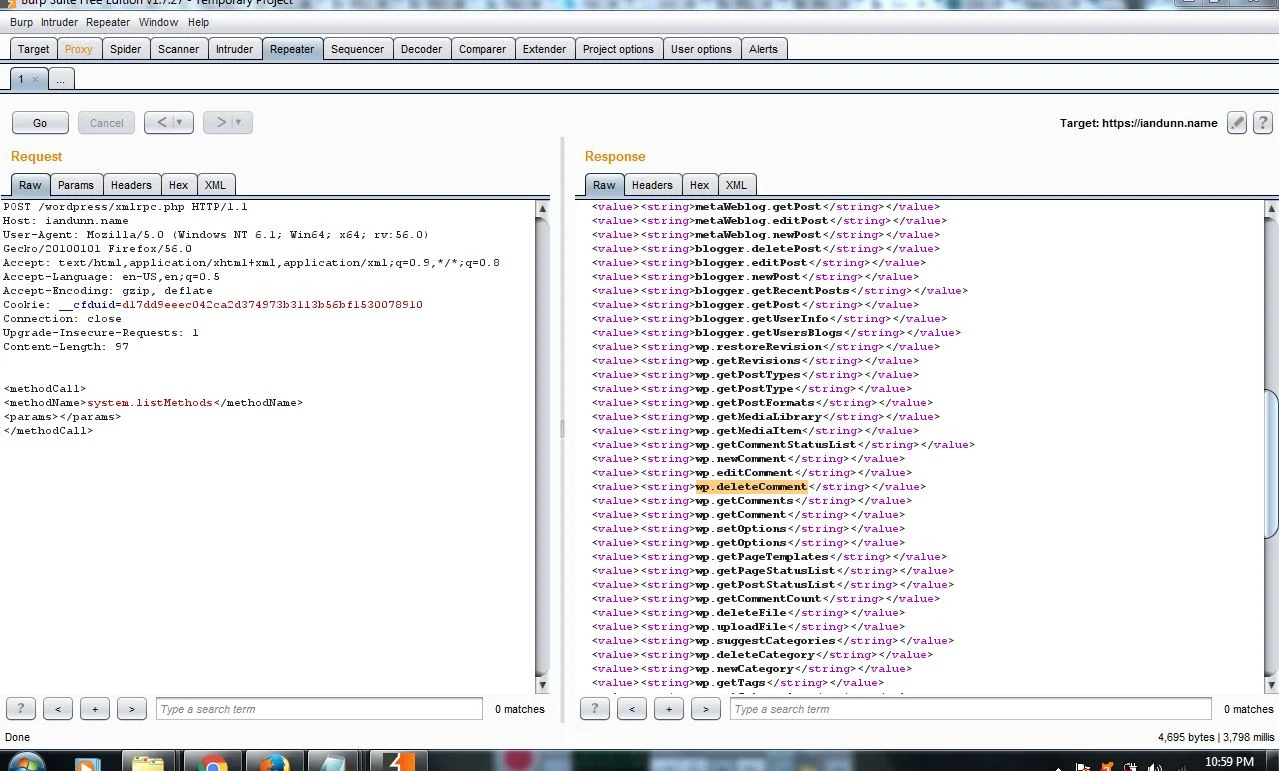
2)Open your proxy (I am using burp )and resend the request
3)The first thing to do now is Send a POST request and list all the available methods , why ? cause that’s how we’ll know which actions are even possible to make and potentially use one of them for an attack. TO list all methods Send a POST request with the following POST data,like shown in the picture,you’ll get a response with all the methods avaliable
<methodCall> <methodName>system.listMethods</methodName> <params></params> </methodCall>For more details and to understand the impact watch the video attached with this mail
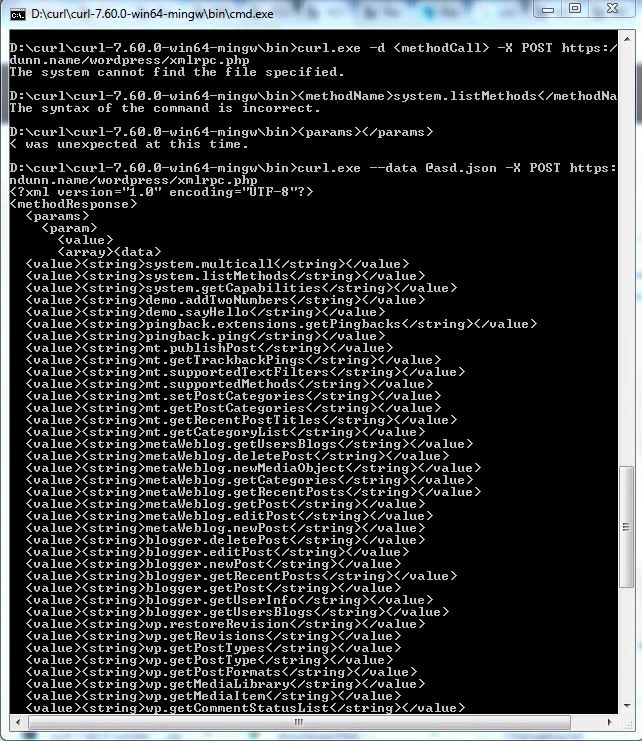
As you asked me to submit the report on curl i just installed curl on my windows :-) Just to help you Cheers
Save the below code as asd.json <methodCall> <methodName>system.listMethods</methodName> <params></params> </methodCall>
curl.exe --data @asd.json -X POST https://iandunn.name/wordpress/xmlrpc.php
Fix/Migration In order to fix the isuue follow the link: http://www.wpbeginner.com/plugins/how-to-disable-xml-rpc-in-wordpress/
https://digwp.com/2009/06/xmlrpc-php-security/
Similar Report: https://hackerone.com/reports/325040
Check the above report to know the actual impact of the xmlrpc.php
More Details about exploitation: https://medium.com/@the.bilal.rizwan/wordpress-xmlrpc-php-common-vulnerabilites-how-to-exploit-them-d8d3c8600b32
Thank You, Hope You wil soon fix it :)
Impact
Running a system which potentially carries a lot of vulnerable endpoints and bad default settings is always a risk. Hardening should always be compulsory.
Attachments
Not written yet. The AI write-up for this report has not been written yet. The Original tab links to the source.
How it worked
Impact
The reporter claims the endpoint could be used to bypass the admin panel and to launch heavy denial-of-service traffic, but the text does not demonstrate either.
What the attacker needed
None
The fix
The endpoint should be disabled, for example with a plugin or server rule, as the linked guides describe.
How it was found
- Open the xmlrpc.php file on the target site in a browser.
- Send the request through an intercepting proxy such as Burp.
- Send a POST request asking the endpoint to list all available methods.
- Read the response listing the methods that can be called.
Explained by bugbounty.wiki with AI from the original and checked against quotes from it; it can still be wrong. Read the original before relying on a detail.
Not written yet. The AI write-up for this report has not been written yet. The Original tab links to the source.
WordPress has a feature called XML-RPC that lets other programs talk to the site remotely. When it is switched on, anyone can send it requests and ask which actions it supports. The reporter says this could be abused, but only shows how to list those actions.
What is Access control?
A user can do something their role should not allow: reach an admin function, act on a feature they have not paid for, or skip a permission check. IDOR is the special case where the object belongs to someone else.


