Javascript Payload reflected Back in Report Embed Code
A report template's name was not escaped when placed into the embed code, so a name containing HTML and script markup was reflected into that code, which could compromise the privacy of the user who embeds it.

- Triaged in 28 hours
- Fixed in 43 days
- Disclosed after 43 days
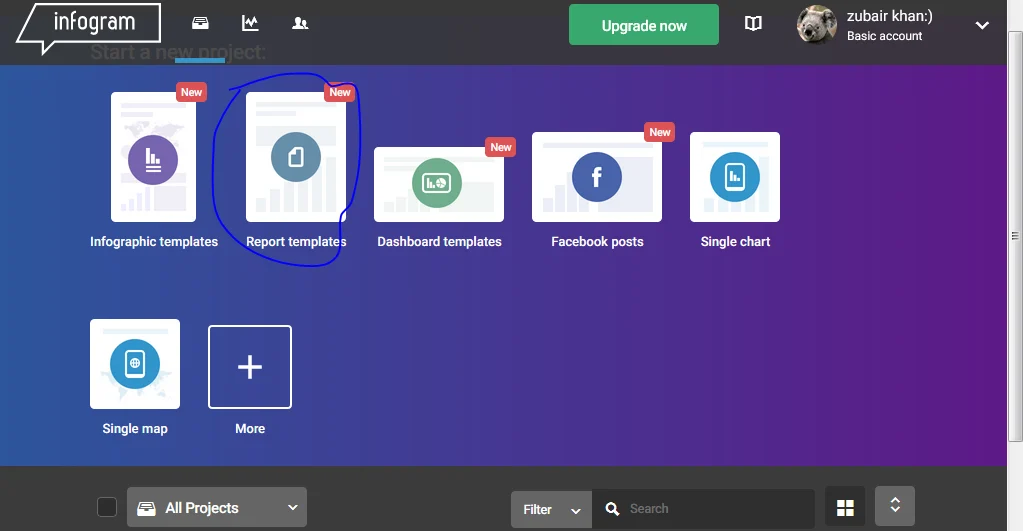
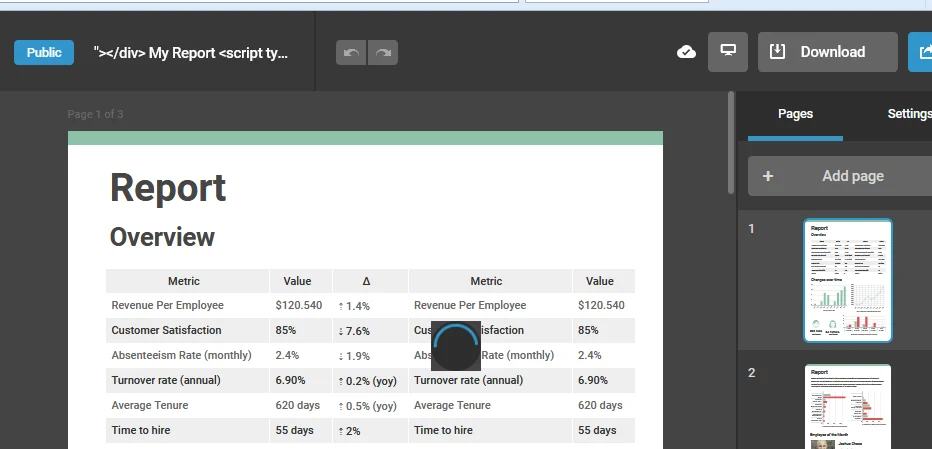
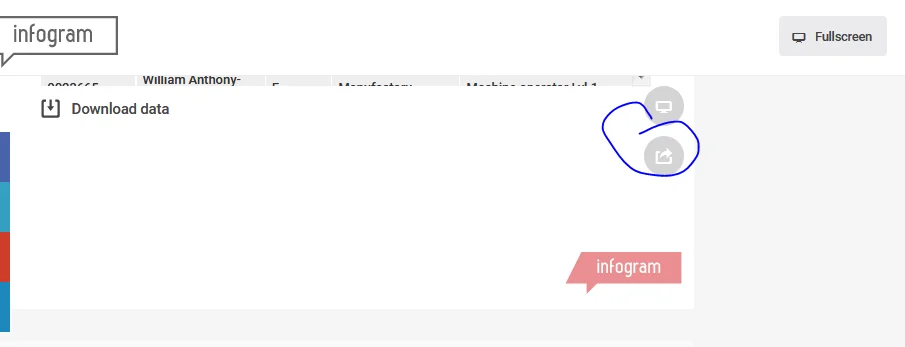
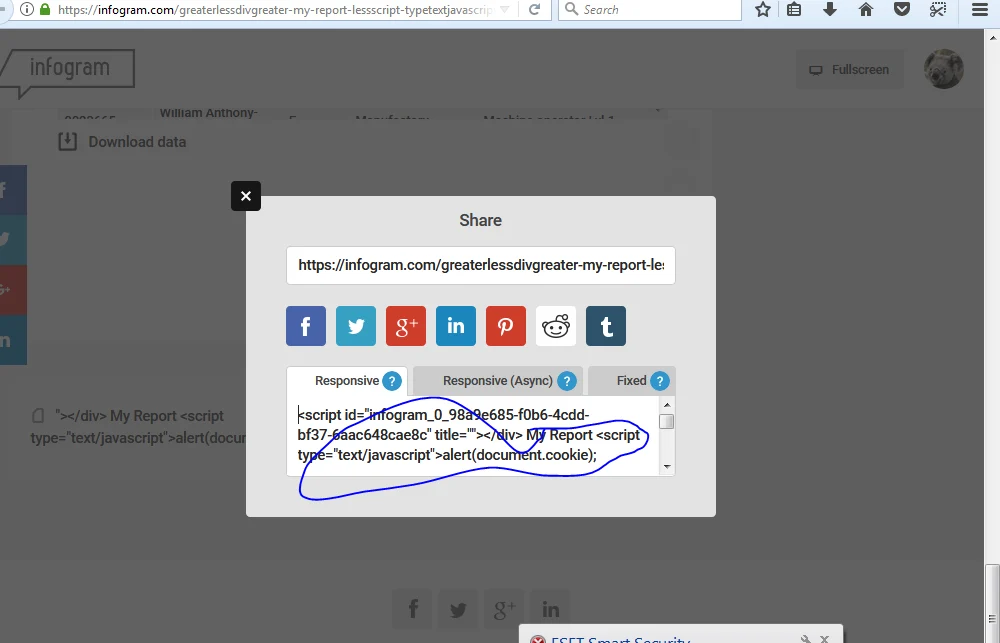
1)Create new Report template 2)Spoof its name with payload "></div> My Report <script type="text/javascript">alert(document.cookie);</script><div id=" 3)Visit Back to your library list https://infogram.com/app/#/library 4)Select The Created report and click view on web,Click the Share Button 5)Copy & embed the code somewhere in html file you ll triage the Javascript exceution
The Payload is reflected in embed code and can compromise the embed code user's PRivacy.
Fix:Report/Project name need to be escaped properly
For reproduction of issue use: https://infogram.com/greaterreport-classic-lessdivgreaterlessscriptgreateralerttestlessscriptgreater-1g0gmjzqk1y3p1q
Attachments
Not written yet. The AI write-up for this report has not been written yet. The Original tab links to the source.
How it worked
Root cause
Likely the report name was inserted into the embed code without HTML-encoding, so markup in the name was treated as code.
Impact
The reflected payload in the embed code could compromise the privacy of the user who embeds it.
What the attacker needed
Ability to create a report template; victim embeds the generated code
How it was found
- Create a new report template.
- Set its name to a value containing HTML and a script tag.
- Open the library list in the app.
- Select the created report, view it on the web and open the Share button.
- Copy the embed code into an HTML file to see the script run.
Explained by bugbounty.wiki with AI from the original and checked against quotes from it; it can still be wrong. Read the original before relying on a detail.
Not written yet. The AI write-up for this report has not been written yet. The Original tab links to the source.
When a website shows text you typed back on a page, it should convert special characters like angle brackets into harmless text. Here it did not, so a crafted report name became real HTML and a script tag in the embed code, which could compromise the privacy of the user who embeds it.
What is XSS?
Script an attacker supplies runs in another user's browser, on the target's origin, with that user's session.



