Fake email from <any_name>@kubernetes.io to any other email
The kubernetes.io domain lacked valid SPF records, so an attacker could send email that appeared to come from any address at that domain. The reporter claims this enables phishing and spam by making forged messages look legitimate.

- Disclosed after 16 days
Summary by the program
We have been aware of issues related to domain SPF and DMARC records since before the bug bounty program was launched (see this email thread). While we may address the issue in the future, nobody in the community has judged it of sufficient importance to take the time to add/update the records.
The report
Hi, I just found an issue No Valid SPF Records in your mail server @kubernetes.io
Desciprition :
There is a email spoofing vulnerability.Email spoofing is the forgery of an email header so that the message appears to have originated from someone or somewhere other than the actual source. Email spoofing is a tactic used in phishing and spam campaigns because people are more likely to open an email when they think it has been sent by a legitimate source. The goal of email spoofing is to get recipients to open, and possibly even respond to, a solicitation.
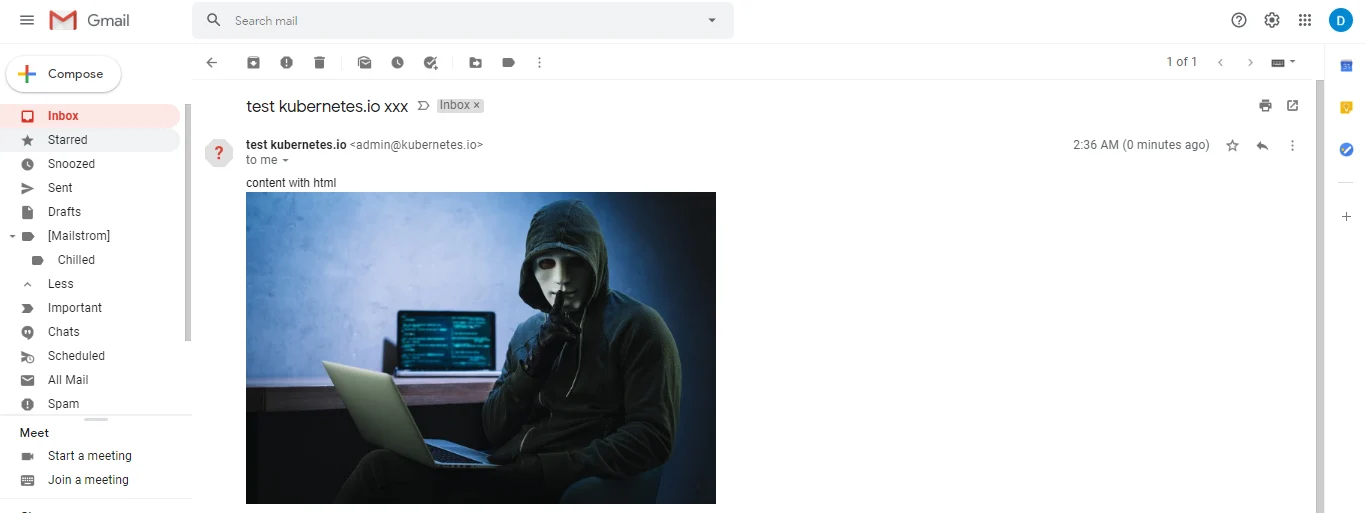
Impact
An attacker would send a Fake email (from <any_name>@kubernetes.io to any other email). The results can be more dangerous.
Not written yet. The AI write-up for this report has not been written yet. The Original tab links to the source.
How it worked
Root cause
Likely the domain's DNS lacked a valid SPF record, so receiving mail servers had no published list of authorised senders to check against.
Impact
An attacker could send forged email claiming to come from any address at the domain, which could be used in phishing; the program notes the community has not judged the issue important enough to fix.
What the attacker needed
Ability to send email; target domain lacks SPF
The fix
The domain should publish a valid SPF record (and DMARC) listing authorised senders, though the program says it may address this in the future.
Explained by bugbounty.wiki with AI from the original and checked against quotes from it; it can still be wrong. Read the original before relying on a detail.
Not written yet. The AI write-up for this report has not been written yet. The Original tab links to the source.
Email senders can claim any 'from' address unless the domain publishes records that tell receiving mail servers which servers are allowed to send for it. SPF is one such record. Without it, a forged message from that domain is harder for receivers to spot as fake.
What is Misconfiguration?
Settings left unsafe: exposed panels, open storage buckets, debug modes, default credentials.