Users can change project visibility which requires high subscription by just changing request body
A user could set a project's visibility to Personal or Workspace, which normally requires a paid subscription, by changing the visibility field in the project creation request. This let them use premium functionality without paying.

- Fixed in 4 months
- Disclosed after 5 months
Summary:
A Broken Access Control vulnerability allows users to change project visibility — a feature restricted to higher subscription tiers — by simply modifying the request body of visibility to Personal or Workspace. This bypasses subscription checks, enabling unauthorized access to premium functionality
Steps To Reproduce:
- On the burp, enable intercept
- On Lovabl, write anything to build a project
- Click create and go to burp to endpoint
https://lovable-api.com/workspaces/{YOUR-WORKSPACE-ID}/projects - On the body of the request change the visibility to Personal or Workspace which requires paid subscription
{"description":"landing view","visibility":"Personal","initial_message":{"id":"umsg_01k6qkw83ze07t9f7m9p3jabs9","message":"landing view","files":[],"optimisticImageUrls":[],"chat_only":false,"agent_mode_enabled":false,"ai_message_id":"aimsg_01k6qkw841e07t9f7ytpghd6bs"}}
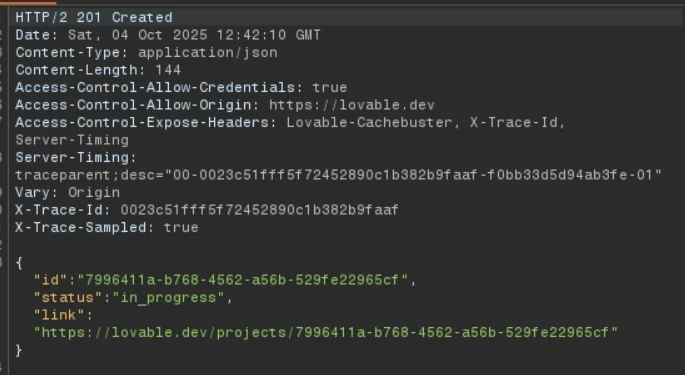
- Send the request, 201 Created response and the project is now personal or workspace without any restrictions
POC Video
Impact
- Users can access resources, features, or content they did not pay for
- Direct revenue loss to the company since attackers can use premium features without subscription/payment.
Not written yet. The AI write-up for this report has not been written yet. The Original tab links to the source.
How it worked
Root cause
Likely the server trusted the visibility value from the request body without verifying the user's subscription tier.
Impact
Users could access premium features without paying, causing direct revenue loss to the company.
What the attacker needed
A Lovabl account; ability to intercept HTTP requests
The fix
The server should verify the user's subscription tier before accepting a paid visibility value.
How it was found
- Turn on request interception in Burp.
- Create a project on Lovabl by writing any content.
- Intercept the request to the projects endpoint for your workspace.
- Change the visibility field in the request body to Personal or Workspace.
- Send the request; it returns 201 Created and the project has the paid visibility.
Explained by bugbounty.wiki with AI from the original and checked against quotes from it; it can still be wrong. Read the original before relying on a detail.
Not written yet. The AI write-up for this report has not been written yet. The Original tab links to the source.
When you create a project, the website sends a request to its server with details like the project's name and who can see it. The server is supposed to check whether your account is allowed to choose a paid visibility setting. Here it did not check, so anyone could pick the paid option by editing the request.
What is Access control?
A user can do something their role should not allow: reach an admin function, act on a feature they have not paid for, or skip a permission check. IDOR is the special case where the object belongs to someone else.

