Clickjacking
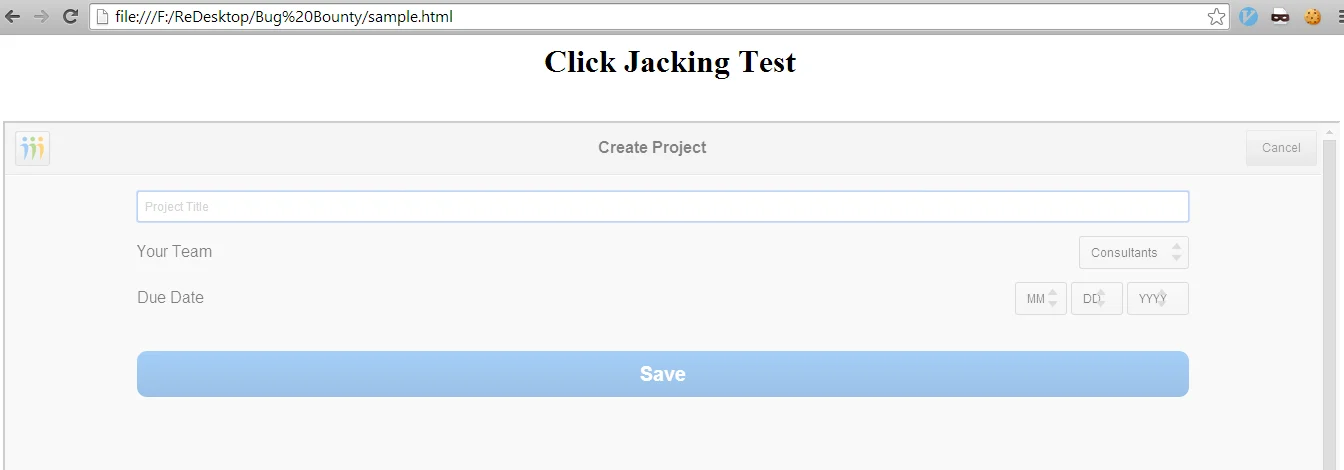
The mobile version of the site did not implement clickjacking protection, allowing an attacker to embed a sensitive page in an iframe on a malicious site. This could trick a logged-in user into performing unintended actions such as creating a new workspace.

- Triaged in under an hour
- Fixed in 27 days
- Paid in 27 days
- Disclosed after 30 days
Hi,
You have no implementation of Clickjacking attacks on your mobile version. I have set up a user agent switcher and tried to support my claim with regards to the mobile website.
For proof of concept: <iframe src="https://m.mavenlink.com/#/workspaces/new"></iframe>
For mitigation, you may want to add the HTTP header XFRAMEOPTIONS and set it to DENY.
Attached below is a screenshot. Thanks!
Attachments
Not written yet. The AI write-up for this report has not been written yet. The Original tab links to the source.
How it worked
What the attacker needed
Victim visits attacker-controlled page; victim is logged in to the mobile site
The fix
The site should send an X-Frame-Options header set to DENY (or use CSP frame-ancestors) to prevent framing.
How it was found
- Set the browser's user agent to the mobile version.
- Load a page that embeds the mobile site's new workspace page in an iframe.
- Observe that the page loads inside the frame, confirming clickjacking is possible.
Explained by bugbounty.wiki with AI from the original and checked against quotes from it; it can still be wrong. Read the original before relying on a detail.
Not written yet. The AI write-up for this report has not been written yet. The Original tab links to the source.
Clickjacking is when a malicious site loads a real page from another site in an invisible frame and places fake buttons on top. A user thinks they are clicking one thing but actually clicks a button on the hidden page. This report says the mobile site could be framed, so an attacker could trick users into actions like creating a workspace.
What is UI spoofing?
The interface lies to the user: a framed page catches their clicks, or a browser shows the wrong address or a fake prompt. Paid when it leads to a sensitive action or convincing phishing.



