DOS across Facebook endpoints
Facebook did not limit the length of certain request parameters, so a page moderator could send very large values to an appointments endpoint and cause repeated server errors that permanently broke the page for admins, editors and moderators. The same missing length limit affected several other endpoints, which were closed as duplicates of the first report.
 Published on medium.com
A while back I read a report by a friend of mine, Kassem, where he was able to completely block a user from using Facebook Messenger with a long string of text. After reading this I decided to look through some Facebook endpoints to see if it was still viable.
The full write-up lives on its author's site
It belongs to its author, so we link to it rather than copy it. The other two tabs are our own rewrites, checked against it.
Context
Facebook Pages have a set of administrative roles: Admins, Editors and Moderators. A page can also have the appointments feature enabled, which lets visitors book appointments through a button on the page. The inbox of the page is where those appointments are managed, and it includes a create appointment button in the bottom right corner.
The bug described here lets a user with at least Moderator privilege permanently break an entire page for the Admins, Editors and Moderators of that page. It was one of seven endpoints the researcher found vulnerable to a long-string denial of service, six of which were closed as duplicates of the first report.
Setup
- A Facebook Page with the appointments function set up. The quickest way to get appointments, per the report, is to create a button and use the booking option to set up appointments through Facebook.
- An account with at least Moderator privilege on that page.
- Burp Suite, using the Intruder with the battering ram attack type.
- A large string of around 20 to 60 MB on the clipboard.
The researcher first tested the button and put in an appointment, then went to the inbox to carry out the rest of the attack.
Finding it
The starting point was a report by a friend, Kassem, who had been able to completely block a user from using Facebook Messenger with a long string of text. The researcher went through Facebook endpoints to see whether the technique was still viable, and after a day or two found seven different endpoints vulnerable to this type of attack.
Six of the seven were flagged as duplicates of the first report made. The duplicate closure message read:
Thanks for reporting this issue to us. After investigating the issue, we have realized that this is a duple of your other report #2444785898871880. As such, this report will not be eligible for a bounty. I’m going to close this one and keep the conversation in the original report.
Because the root cause was that Facebook was not limiting the length on parameters, all of them were classified into one bug. The page-breaking bug is the one written up in detail.
This one was found by accident while testing for other things. After firing big payloads at the endpoint the researcher kept getting 500 errors, and after enough 500 errors the page would completely break.
Exploitation
The precondition is a page with appointments set up, and an attacker holding at least Moderator privilege on that page.
Step 1: Open the create appointment form
Once in the inbox of the victim's page, hit the create appointment button in the bottom right.
Step 2: Capture the request
Put some text in the box and intercept the request sent to Burp Suite.
Step 3: Configure the Intruder
Send the request to the Intruder, highlight the text in the notes_for_customer parameter as the Intruder position, set the attack type to battering ram, and in the options turn off Make unmodified base request.
Step 4: Build the payload list
Copy the text of a large string (around 20 to 60 MB) to the clipboard, go to payloads and hit paste until there are about 10 requests to be sent.
Step 5: Launch the attack
Start the attack. 500 errors should start appearing. After they all go through, the page should be broken.
Root cause
Facebook was not limiting the length of the parameters. The notes_for_customer parameter was the Intruder position, and repeated requests carrying the oversized payload produced 500 errors on the endpoint. After enough of those errors the page broke completely, and the breakage persisted for the Admins, Editors and Moderators of the page. The report does not describe the server-side mechanism behind the persistence.
Impact
A malicious user with at least Moderator privilege could permanently break an entire page for the Admins, Editors and Moderators. The attack requires the appointments function to be set up on the target page. The researcher notes that some of these vulnerabilities still worked at the time of writing, as the fix was not in full effect.
Fix
A short term fix was applied on February 18th, 2019. The report does not describe what the fix changed. The researcher was asked by the security team to include that anyone trying to emulate and report the same issues detailed here will be marked as duplicate.
Timeline
| Date | Event |
|---|---|
| January 14th, 2019 | Submitted |
| January 14th, 2019 | Team asked for clarification |
| January 14th, 2019 | More details provided |
| January 17th, 2019 | Team asked for clarification again |
| January 17th, 2019 | More details provided |
| January 23rd, 2019 | Team asked to reproduce it on a whitehat test account |
| January 23rd, 2019 | Whitehat IDs provided |
| February 18th, 2019 | Short term fix |
| February 21st, 2019 | Bounty awarded ($500) with the short term fix |
| February 21st, 2019 | Question about bounty amount |
| March 11th, 2019 | Facebook team awards another $250, as they were originally supposed to reward $750 total for the vulnerability but forgot to |
Variants to test
The other six bugs used a similar attack type with different sized payloads to make it work. They were not written up because they were less impactful, but the researcher offered to discuss them on request.
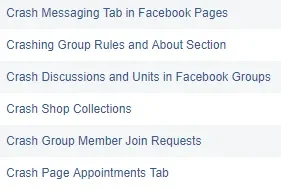
Other Bugs
What happened, in plain words
A security researcher found a way to make a Facebook Page stop working for the people who manage it. The attacker needed to be at least a Moderator on that page, and the page had to have the appointments feature turned on. By sending a very long piece of text in a form field that is used when creating an appointment, the attacker could cause the server to return errors (called 500 errors) again and again. After enough of these errors, the page would break completely for the Admins, Editors and Moderators. The researcher found seven similar problems on different parts of Facebook, but six were closed as duplicates of the first report because they all had the same root cause: Facebook was not limiting how long the text in certain fields could be. The page-breaking bug is the one described in detail here. The researcher was paid $500, then another $250 after Facebook acknowledged the bounty was originally meant to total $750.
Context
Facebook Pages are public profiles for businesses, organisations or public figures. They have different roles for people who manage them:
- Admins: full control over the page, including managing other roles.
- Editors: can create and edit content on the page.
- Moderators: can respond to comments and messages, and moderate interactions.
A page can also have the appointments feature enabled. This lets visitors book appointments (for example, a haircut or a consultation) through a button on the page. The page's inbox is where messages and appointments are managed. It includes a create appointment button in the bottom right corner.
The bug described here lets a user with at least Moderator privilege permanently break an entire page for the Admins, Editors and Moderators of that page. It was one of seven endpoints the researcher found vulnerable to a long-string denial of service, six of which were closed as duplicates of the first report.
What is an endpoint?
An endpoint is a specific URL on a server that performs a particular function when it receives a request. Think of it as a counter in a shop: you go to a specific counter for a specific service. In web applications, endpoints are often API URLs that accept data and return responses.
What is an API?
An API (Application Programming Interface) is a set of rules that lets one piece of software talk to another. In web applications, it usually means a URL that accepts data (like a form submission) and returns a response (like a confirmation or an error). When you fill in a form on a website and click submit, your browser sends a request to an API endpoint.
What is a parameter?
A parameter is a named piece of data sent in a request. For example, in a URL like https://example.com/search?q=hello, q is a parameter with the value hello. In a form submission, each field has a name (the parameter) and a value (what you typed).
What is a 500 error?
A 500 error (Internal Server Error) is a standard HTTP status code that means the server encountered an unexpected condition and could not complete the request. It is like a shop assistant saying "something went wrong on our side" instead of helping you. Repeated 500 errors can indicate that the server is struggling to handle the request.
What is a denial of service (DoS)?
A denial of service attack aims to make a service unavailable to its intended users. In this case, the attack does not flood the network with traffic; instead, it sends very large data in a parameter, causing the server to error out repeatedly until the feature breaks. This is sometimes called a long-string DoS.
Setup
To reproduce this bug, the researcher needed:
- A Facebook Page with the appointments function set up. The quickest way to get appointments, per the report, is to create a button and use the booking option to set up appointments through Facebook.
- An account with at least Moderator privilege on that page.
- Burp Suite, a tool used by security testers to intercept and modify web traffic. It has a component called the Intruder that can send many requests automatically.
- A large string of around 20 to 60 MB on the clipboard. A megabyte (MB) is a unit of digital information; 1 MB is about a million characters of text. So 20-60 MB is a huge amount of text, far more than a normal form field would ever need.
The researcher first tested the button and put in an appointment, then went to the inbox to carry out the rest of the attack.
Why these tools?
Burp Suite acts as a middleman between your browser and the server. It lets you see the exact request your browser sends, change it, and send it again many times. The Intruder is a part of Burp that automates sending a request with different payloads (in this case, the same huge payload repeated).
Finding it
The starting point was a report by a friend, Kassem, who had been able to completely block a user from using Facebook Messenger with a long string of text. The researcher went through Facebook endpoints to see whether the technique was still viable, and after a day or two found seven different endpoints vulnerable to this type of attack.
Six of the seven were flagged as duplicates of the first report made. The duplicate closure message read:
Thanks for reporting this issue to us. After investigating the issue, we have realized that this is a duple of your other report #2444785898871880. As such, this report will not be eligible for a bounty. I’m going to close this one and keep the conversation in the original report.
Line-by-line explanation:
- The first line is a thank-you for reporting the issue.
- The second line states that after investigation, Facebook realised this report is a duplicate (misspelled as "duple") of another report, identified by the number #2444785898871880.
- The third line says that because it is a duplicate, this report will not be eligible for a bounty (a monetary reward).
- The fourth line says the report will be closed and the conversation will continue in the original report.
This message is important because it shows how bug bounty programmes handle multiple reports of the same underlying issue: they group them together and reward only the first one.
Because the root cause was that Facebook was not limiting the length on parameters, all of them were classified into one bug. The page-breaking bug is the one written up in detail.
This one was found by accident while testing for other things. After firing big payloads at the endpoint the researcher kept getting 500 errors, and after enough 500 errors the page would completely break.
What is a bug bounty programme?
A bug bounty programme is a scheme where organisations reward security researchers for finding and reporting vulnerabilities. The rewards are called bounties and are often monetary. The programme sets rules, such as not testing on real user data and not publicly disclosing the bug until it is fixed.
What is a duplicate?
In bug bounty terms, a duplicate is a report that describes the same underlying issue as an earlier report. Programmes usually reward only the first report, so duplicates do not get a bounty.
Exploitation
The precondition is a page with appointments set up, and an attacker holding at least Moderator privilege on that page.
Step 1: Open the create appointment form
Once in the inbox of the victim's page, hit the create appointment button in the bottom right.
Why: This opens the form that will send the request we want to intercept. The form is part of the appointments feature, which is the target of the attack.
Step 2: Capture the request
Put some text in the box and intercept the request sent to Burp Suite.
Why: We need to see the exact request that the browser sends when creating an appointment. Burp Suite can intercept it so we can modify it before it reaches the server. The text we put in the box will appear in the request as the value of a parameter.
Step 3: Configure the Intruder
Send the request to the Intruder, highlight the text in the notes_for_customer parameter as the Intruder position, set the attack type to battering ram, and in the options turn off Make unmodified base request.
Why: The Intruder will automate sending the request many times with different payloads. We mark the notes_for_customer parameter as the position to be replaced by our payload. The battering ram attack type uses the same payload for all positions (here, only one position). Turning off "Make unmodified base request" is part of the reported configuration.
What is the notes_for_customer parameter? It is the field where the person creating the appointment can add notes for the customer. The server processes this text, and the report's root cause is that Facebook was not limiting the length on parameters.
Step 4: Build the payload list
Copy the text of a large string (around 20 to 60 MB) to the clipboard, go to payloads and hit paste until there are about 10 requests to be sent.
Why: We need multiple requests with the huge payload to cause enough errors to break the page. Pasting the same large string repeatedly creates a list of payloads. The Intruder will send each one in turn.
Step 5: Launch the attack
Start the attack. 500 errors should start appearing. After they all go through, the page should be broken.
Why: Each request sends a very large amount of data in the notes_for_customer parameter. The server tries to process it, fails, and returns a 500 error. After several such failures, the page's functionality breaks completely, and it stays broken for the Admins, Editors and Moderators.
Root cause
Facebook was not limiting the length of the parameters. The notes_for_customer parameter accepted a payload of tens of megabytes, and repeated requests carrying it produced 500 errors on the endpoint. After enough of those errors the page broke completely, and the breakage persisted for the Admins, Editors and Moderators of the page. The report does not describe the server-side mechanism behind the persistence.
In simple terms: The server should check that the text you send is not too long. Because it did not, an attacker could send a huge amount of text. The server tried to handle it, failed, and after several failures, something in the system broke in a way that lasted.
Impact
A malicious user with at least Moderator privilege could permanently break an entire page for the Admins, Editors and Moderators. The attack requires the appointments function to be set up on the target page. The researcher notes that some of these vulnerabilities still worked at the time of writing, as the fix was not in full effect.
What does "permanently break" mean? It means the page became unusable for its managers: they could not perform their duties. The breakage persisted after the attack stopped.
Fix
A short term fix was applied on February 18th, 2019. The report does not describe what the fix changed. The researcher was asked by the security team to include that anyone trying to emulate and report the same issues detailed here will be marked as duplicate.
Why a short term fix? Sometimes companies apply a quick patch to stop the immediate problem while they work on a more thorough solution.
Timeline
| Date | Event |
|---|---|
| January 14th, 2019 | Submitted |
| January 14th, 2019 | Team asked for clarification |
| January 14th, 2019 | More details provided |
| January 17th, 2019 | Team asked for clarification again |
| January 17th, 2019 | More details provided |
| January 23rd, 2019 | Team asked to reproduce it on a whitehat test account |
| January 23rd, 2019 | Whitehat IDs provided |
| February 18th, 2019 | Short term fix |
| February 21st, 2019 | Bounty awarded ($500) with the short term fix |
| February 21st, 2019 | Question about bounty amount |
| March 11th, 2019 | Facebook team awards another $250, as they were originally supposed to reward $750 total for the vulnerability but forgot to |
What is a whitehat test account? A whitehat is a security researcher who acts ethically, with permission. A test account is a separate account provided for testing, so the researcher does not touch real user data. Facebook asked the researcher to reproduce the bug on such an account to verify it.
Variants to test
The other six bugs used a similar attack type with different sized payloads to make it work. They were not written up because they were less impactful, but the researcher offered to discuss them on request.
Other Bugs
Always test within the rules of the bug bounty programme and on test accounts, not on real users.
Glossary
- API: A set of rules that lets software components communicate; in web context, a URL that accepts and returns data.
- Battering ram: An attack type in Burp Intruder that uses the same payload for all marked positions.
- Bounty: A monetary reward given for finding a security vulnerability.
- Burp Suite: A tool for intercepting and modifying web traffic, used in security testing.
- Denial of Service (DoS): An attack that makes a service unavailable to its intended users.
- Duplicate: A bug report that describes the same issue as an earlier report.
- Endpoint: A specific URL or function in a web application that handles requests.
- 500 error: An HTTP status code indicating an internal server error.
- Intruder: A component of Burp Suite that automates sending requests with varying payloads.
- Megabyte (MB): A unit of digital information, about one million characters of text.
- Moderator: A role on a Facebook Page that can moderate interactions.
- Parameter: A named piece of data sent in a request, like a form field.
- Payload: The data sent in a request, often malicious in security testing.
- Whitehat: An ethical security researcher who tests with permission.
notes_for_customer: The parameter in the appointment creation form where notes for the customer are entered.



