Join Facebook Group With Unpublish Page
An attacker could join a Facebook group using an unpublished page by changing the actor_id parameter in the join request. They could also post a limited status with that unpublished page by changing the actor_id in the create post feature.

To join group, you can use your primary Facebook profile or your Facebook page as long as the group admin allow it.
The full write-up lives on its author's site
It belongs to its author, so we link to it rather than copy it. The other two tabs are our own rewrites, checked against it.
Context
Facebook Groups let people communicate about shared interests. A group admin can allow members to join using either a personal profile or a Facebook page. The relevant admin setting lives at https://www.facebook.com/groups/{id}/edit, where the admin decides whether pages may join.
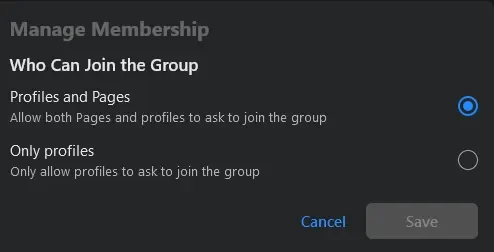
When page joining is allowed, clicking the "Join Group" button opens a profile selector so the user can choose whether to join as their profile or as one of their pages.
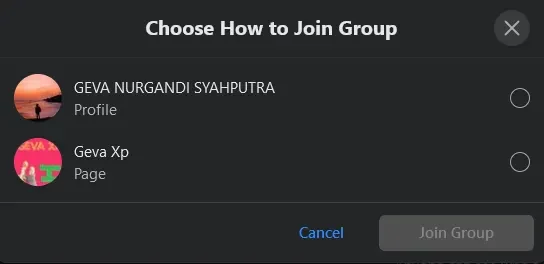
Only published pages are meant to be selectable. An unpublished page is not reachable directly: visiting its URL returns a "Not Found" message.

The write-up shows that an unpublished page could be made to join a group and to post by changing the actor_id value.
Setup
The researcher used their own Facebook account with several pages, including at least one unpublished page, plus a second "dummy" account that acted as the group admin. The group had the pre-approved members feature enabled, so join requests landed in the group's "Member Request" page for the admin to review. The only tool described is a request interception proxy, used to capture and modify the join and post requests.
Finding it
While testing group features, the researcher joined a group with one of their pages. Looking at the profile selector, they noticed that only a few of their many pages appeared. The missing ones were pages that were still unpublished, or pages where the account did not have enough permissions (for example, not being the page admin). That mismatch between what the account owned and what the selector offered was the signal that the join action might not apply the same filtering.
Exploitation
Step 1: capture the join request
With the proxy running, the researcher selected one of their pages in the profile selector and intercepted the resulting request. The report shows the request as an illustration:
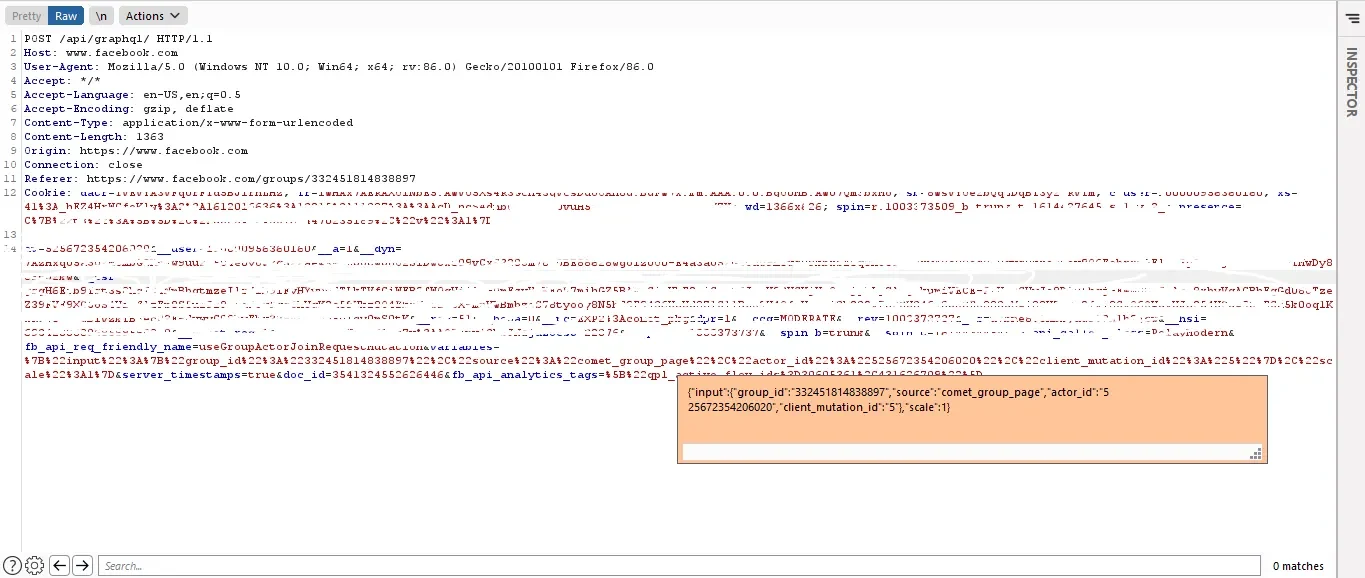
The important part is the actor_id parameter, whose value is the ID of the selected profile or page. The value is the ID of the selected profile or page, and changing it changed the acting identity.
Step 2: swap in the unpublished page ID
The researcher replaced the actor_id value with the ID of their unpublished page and sent the request. The join succeeded: the group admin's "Member Request" page showed the unpublished page as a pending member, and the researcher was able to approve it.
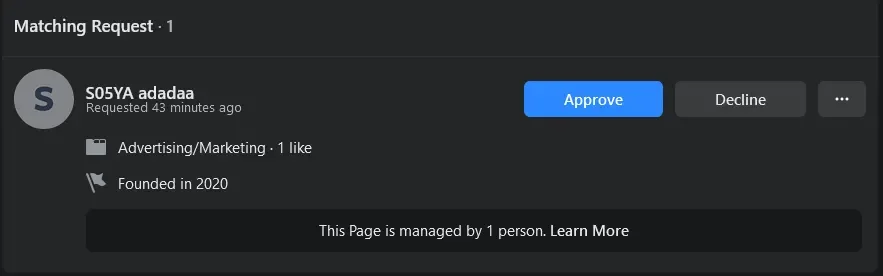
The page appeared in the "Member Request" list because the pre-approved feature was enabled.
Step 3: try to post as the unpublished page
After joining, the researcher could not post as the page through the normal interface, because the profile selector would not offer the unpublished page. To raise the impact, they tested the "Create Post" feature instead.
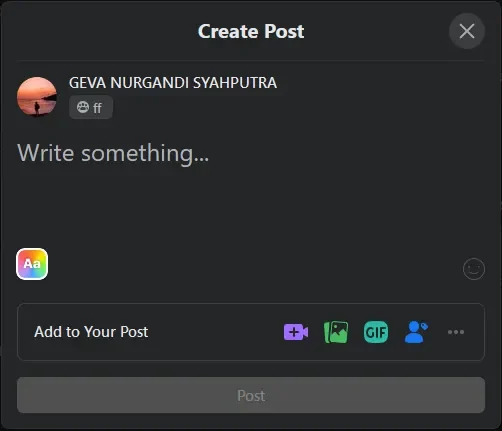
Intercepting the request sent after clicking the "Post" button revealed the same pattern:
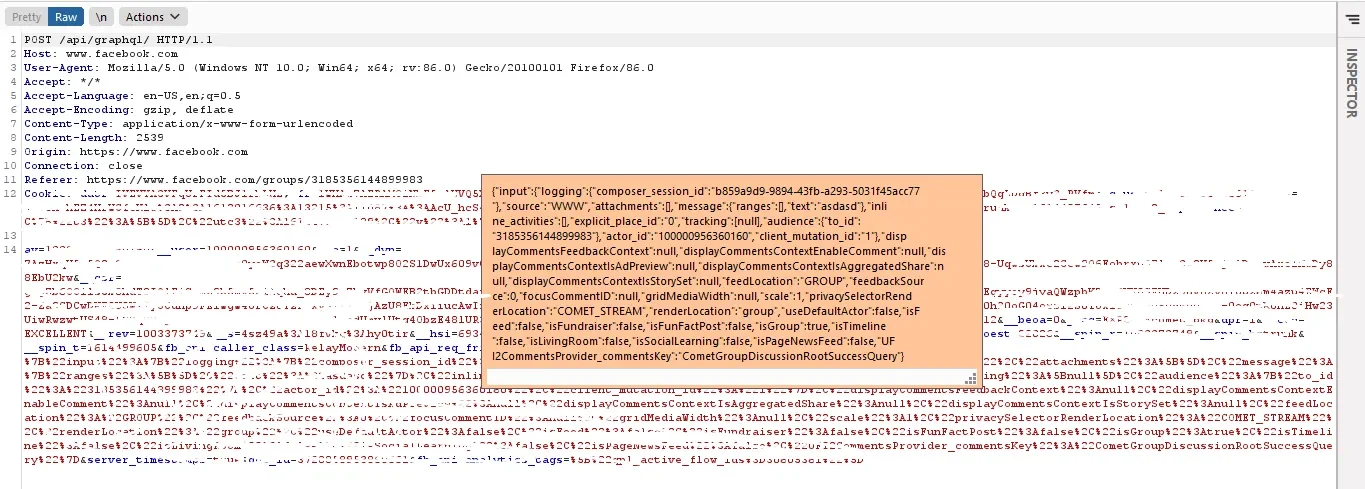
Again there is an actor_id parameter. Replacing its value with the unpublished page ID and sending the request worked: the post was created as the unpublished page.
The capability was limited. Attachments such as images, files and watchparty could not be posted, with the exception of GIFs, for which the researcher gives no explanation. The researcher also tried the same actor_id substitution on the "Like" and "Comment" features, but was only able to comment on their own post.
Root cause
Changing the actor_id value to the unpublished page ID made the join and post succeed, so the server did not reject the unpublished page. The profile selector hid unpublished pages, but that filtering was a UI convenience, not an access control. The same actor_id parameter appears in both features. The report does not describe the server-side code, so the exact check that was missing is inferred from behaviour.
Impact
An attacker who controls an unpublished page could make that page join a group that allows pages to join, and could create posts as that page. The join only lands in the member request list when pre-approved members are enabled, and still requires admin approval; without that setting the outcome may differ, which the report does not cover. Posting is restricted to text and GIFs, and the like and comment attempts only produced a comment on the attacker's own post. The practical effect is that an unpublished page, which is otherwise not reachable by URL, can be given a visible presence in a group and can publish content under its name.
Fix
Facebook patched the vulnerability on 15 October 2020, one day before the bounty was awarded. The report does not describe the patch. The fix should be server-side: derive the acting identity from the authenticated session, or explicitly verify that the user is an admin of the page named in actor_id and that the page is published, on every endpoint that accepts the parameter.
Variants to test
- Any feature with a profile or page selector: intercept the request and change the identifier to an entity the UI hides (unpublished, restricted, or one you do not administer). A positive result is the action succeeding as that entity.
- Endpoints that take an
actor_id,page_idor similar parameter: substitute an ID you do not own. A positive result is a successful action attributed to that ID. - Posting and commenting endpoints: repeat the substitution to see whether the same gap extends to content creation. A positive result is content appearing under the substituted identity.
- Attachment uploads: try the same substitution with media. A positive result is an attachment posted as the hidden entity, which would raise the impact beyond text and GIFs.
Timeline
| Date | Event |
|---|---|
| 16 September 2020 | Report sent |
| 19 September 2020 | Triaged by Facebook team |
| 29 September 2020 | Facebook team requested more info |
| 29 September 2020 | Researcher sent more info |
| 15 October 2020 | Vulnerability patched |
| 16 October 2020 | Bounty rewarded |
What happened, in plain words
Facebook lets people create two kinds of identity: a personal profile (the account you log in with) and a page (a public identity for a business, a club, a band, and so on). A Facebook group is a place where people with a shared interest talk to each other, and the person who runs the group (the admin) decides who may join.
The admin can allow members to join using a page instead of a personal profile. When that is allowed, clicking the "Join Group" button opens a small menu, called a profile selector, where you pick which identity you want to join with.
A page can be published (visible to everyone) or unpublished (hidden, not yet live). Only published pages are supposed to be selectable. The researcher found that the menu hid unpublished pages, but changing the actor_id value still let an unpublished page join. By intercepting the request the browser sends when you pick an identity, and changing one value in it, the researcher could make an unpublished page join a group and even publish a post under that page's name.
This kind of mistake is called broken authorisation: the server does not properly check whether you are allowed to do what you are asking. The specific flavour here is often called IDOR, short for Insecure Direct Object Reference, which means the server accepts an identifier sent by the browser and acts on it without checking that you own or control the thing it points to. A simple comparison: imagine a hotel where the receptionist hands you a key card with your room number written on it, and the door lock simply trusts whatever number is written on the card. If you scratch out 204 and write 305, the lock opens room 305. The lock should have checked with the reception desk, not trusted the card.
Background you need first
A few ideas come up again and again below, so here they are from zero.
- Request and response: when you click something in a browser, the browser sends a request to a server (a computer somewhere that runs the website), and the server sends back a response (the page, or a short confirmation). Think of it as posting a form to an office and getting a reply by post.
- API: the set of addresses and rules a website's own pages use to talk to its servers behind the scenes. When you click "Join Group", the page does not reload the whole site; it quietly sends a small request to an API address, and the server replies with a short answer. You never see this in normal use.
- Parameter: a named value attached to a request, like a field on a form. In the address
?colour=blue,colouris the parameter name andblueis its value. Servers read these values and act on them. - Session and cookie: when you log in, the server gives your browser a small piece of data called a cookie, which the browser sends back with every later request. It is like a wristband at an event: it proves you already showed your ticket, so you do not have to show it again at every door. The server uses it to know who you are.
- Intercepting a request: a proxy is a tool that sits between your browser and the server. With it running, you can pause a request before it leaves, read it, change it, and then let it go. It is like opening a letter before posting it, editing a line, and sealing it again.
- Client-side filtering: hiding something in the browser's menu. It is convenient, but it is not security, because the browser is under the user's control. Hiding the biscuit tin on a high shelf does not stop someone fetching a ladder; only a lock does.
- Published vs unpublished page: a published page is live and visible to anyone. An unpublished page is hidden and cannot be reached directly: if you type its address into a browser, you get a "Not Found" message.
The setup
The researcher used their own Facebook account, which had several pages, including at least one unpublished page. They also had a second, "dummy" account that acted as the group admin, so they could see what the admin sees. The group had a feature called pre-approved members enabled. With that feature on, a join request does not join the group immediately; it lands in a "Member Request" list that the admin reviews and approves. The only tool described is a request interception proxy, used to capture and change the join and post requests.
The group settings involved
The admin setting for page joining lives at this address, where {id} stands for the group's numeric identifier:
https://www.facebook.com/groups/{id}/edit
The screenshot shows the admin settings page for a group, where the admin decides whether pages may join.
When page joining is allowed, clicking "Join Group" opens the profile selector, so the user can choose whether to join as their personal profile or as one of their pages.
The screenshot shows that selector: a list of identities to pick from when joining.
Only published pages are meant to be offered. An unpublished page cannot be reached directly at all: visiting its address returns a "Not Found" message.
The screenshot shows that "Not Found" message, which is what you get when you try to open an unpublished page by its address.
The finding is that changing the actor_id value sent by the browser to an unpublished page ID made the join and post succeed. That let an unpublished page join a group and publish a post.
Finding it
While testing group features, the researcher joined a group with one of their pages. Looking at the profile selector, they noticed that only a few of their many pages appeared. The missing ones were pages that were still unpublished, or pages where the account did not have enough permissions (for example, the account was not an admin of that page).
That mismatch was the clue. The account owned those pages, yet the menu did not offer them. That suggested the menu was hiding those pages, but the join action behind it might not apply the same filtering. Whenever a menu hides something, it is worth asking whether the server also hides it, or whether the menu is the only thing standing in the way.
Exploitation
Step 1: capture the join request
With the proxy running, the researcher selected one of their pages in the profile selector and intercepted the request the browser sent. The report shows the request as an illustration:
The screenshot illustrates the request sent when choosing a profile or page in the selector.
The important part is the actor_id parameter. Its value is the identifier of the selected profile or page. The word "actor" here means "the identity performing the action", and _id means "identifier". So actor_id is the server's way of being told who is acting. The value is the identifier of the selected profile or page, and changing it changed the acting identity.
Step 2: swap in the unpublished page ID
The researcher replaced the actor_id value with the identifier of their unpublished page and sent the request. The join succeeded. On the dummy admin account, the "Member Request" page showed the unpublished page as a pending member, and the researcher was able to approve it.
The screenshot illustrates the result: the unpublished page appearing in the group's member request list.
The page appeared in the "Member Request" list because the pre-approved members feature was enabled. The admin still had to approve it, but the point is that the unpublished page, which is otherwise not reachable by address, was able to ask to join at all.
Step 3: try to post as the unpublished page
After joining, the researcher could not post as the page through the normal interface, because the profile selector would not offer the unpublished page. To raise the impact, they tested the "Create Post" feature instead.
The screenshot shows the "Create Post" feature, where a post is written and submitted.
Intercepting the request sent after clicking the "Post" button revealed the same pattern:
The screenshot illustrates the request sent when posting.
Again there is an actor_id parameter. Replacing its value with the unpublished page identifier and sending the request worked: the post was created as the unpublished page.
The capability was limited. Attachments such as images, files and watchparty could not be posted, with the exception of GIFs, for which the researcher gives no explanation. The researcher also tried the same actor_id substitution on the "Like" and "Comment" features, but was only able to comment on their own post.
Why it worked
Changing the actor_id value to the unpublished page identifier made the join and post succeed, so the server did not reject the unpublished page. The profile selector hid unpublished pages, but that hiding was a convenience in the browser, not an access control on the server. The same actor_id parameter appears in both features. The report does not describe the server-side code, so the exact check that was missing is inferred from behaviour.
Impact
An attacker who controls an unpublished page could make that page join a group that allows pages to join, and could create posts as that page. The join only lands in the member request list when pre-approved members are enabled, and still requires admin approval; without that setting the outcome may differ, which the report does not cover. Posting is restricted to text and GIFs, and the like and comment attempts only produced a comment on the attacker's own post. The practical effect is that an unpublished page, which is otherwise not reachable by address, can be given a visible presence in a group and can publish content under its name.
The fix
Facebook patched the vulnerability on 15 October 2020, one day before the bounty was awarded. The report does not describe the patch. The fix should be server-side: derive the acting identity from the logged-in session, or explicitly verify that the user is an admin of the page named in actor_id and that the page is published, on every endpoint that accepts the parameter. In the hotel comparison, the lock should call reception to confirm the room number, not trust the number written on the card.
Variants to test
- Any feature with a profile or page selector: intercept the request and change the identifier to an entity the menu hides (unpublished, restricted, or one you do not administer). A positive result is the action succeeding as that entity.
- Endpoints that take an
actor_id,page_idor similar parameter: substitute an identifier you do not own. A positive result is a successful action attributed to that identifier. - Posting and commenting endpoints: repeat the substitution to see whether the same gap extends to content creation. A positive result is content appearing under the substituted identity.
- Attachment uploads: try the same substitution with media. A positive result is an attachment posted as the hidden entity, which would raise the impact beyond text and GIFs.
Timeline
| Date | Event |
|---|---|
| 16 September 2020 | Report sent |
| 19 September 2020 | Triaged by Facebook team |
| 29 September 2020 | Facebook team requested more info |
| 29 September 2020 | Researcher sent more info |
| 15 October 2020 | Vulnerability patched |
| 16 October 2020 | Bounty rewarded |
Glossary
- Admin: the person who runs a group and decides its settings and members.
- Attachment: a file added to a post, such as an image, a file or a watchparty.
- Authorisation: the check that a logged-in user is allowed to perform a particular action.
- Broken authorisation: a flaw where the server does not properly check whether the user is allowed to do what they are asking.
- Client-side filtering: hiding or limiting options in the browser, which the user can bypass because the browser is under their control.
- Cookie: a small piece of data the server gives the browser at login, sent back with later requests to prove who you are.
- Create Post: the Facebook feature for writing and publishing a post.
- Dummy account: a second account used for testing, here acting as the group admin.
- Endpoint: a specific address on a server that accepts a particular kind of request.
- GIF: a short looping image format.
- IDOR (Insecure Direct Object Reference): a flaw where the server accepts an identifier sent by the browser and acts on it without checking that the user owns or controls the thing it points to.
- Intercepting a request: pausing a request between browser and server with a proxy so it can be read and changed.
- Member Request: the group admin's list of pending join requests, used when pre-approved members are enabled.
actor_id: the request parameter whose value is the identifier of the identity performing the action.- Pre-approved members: a group setting where join requests go to a list for the admin to review and approve.
- Profile: a personal Facebook identity, the account you log in with.
- Profile selector: the menu that appears when joining a group, letting you pick which identity to join with.
- Proxy: a tool that sits between browser and server and can pause, read and change requests.
- Published page: a page that is live and visible to anyone.
- Request and response: the message the browser sends to a server, and the reply the server sends back.
- Session: the server's record of your logged-in state, tied to your cookie.
- Triaged: reviewed by the security team and confirmed as a valid issue to investigate.
- Unpublished page: a page that is hidden and cannot be reached directly by its address.
- Watchparty: a Facebook feature for watching video together.





