XSS
Disclosed report
Reflected Self-XSS in Slack

- Triaged in 9 hours
- Fixed in 2 days
- Paid in 2 days
- Disclosed after 6 days
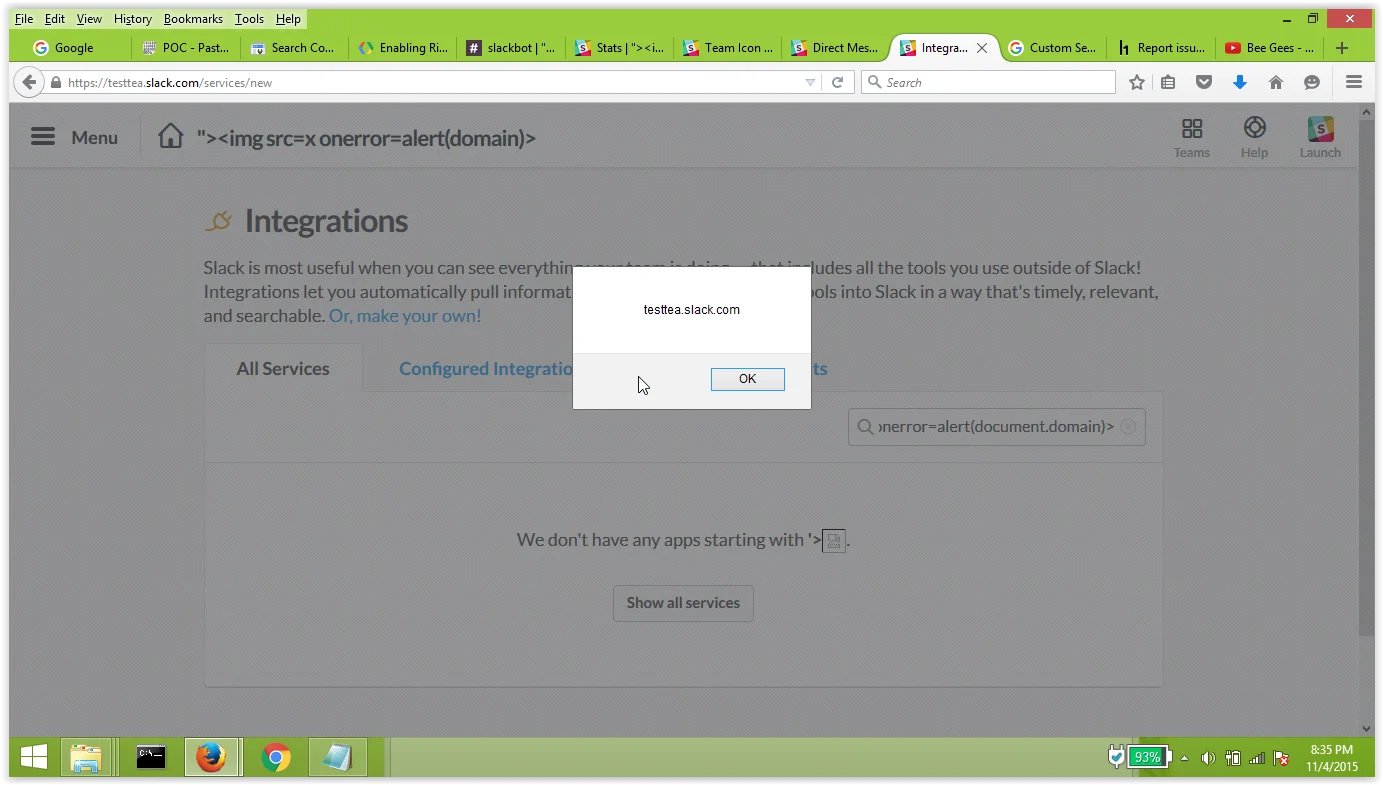
- Go to https://(domainname).slack.com/services/new
- In the searchbar, type an XSS payload (I used <img src=x onerror=alert(document.domain)>)
- Hit Enter
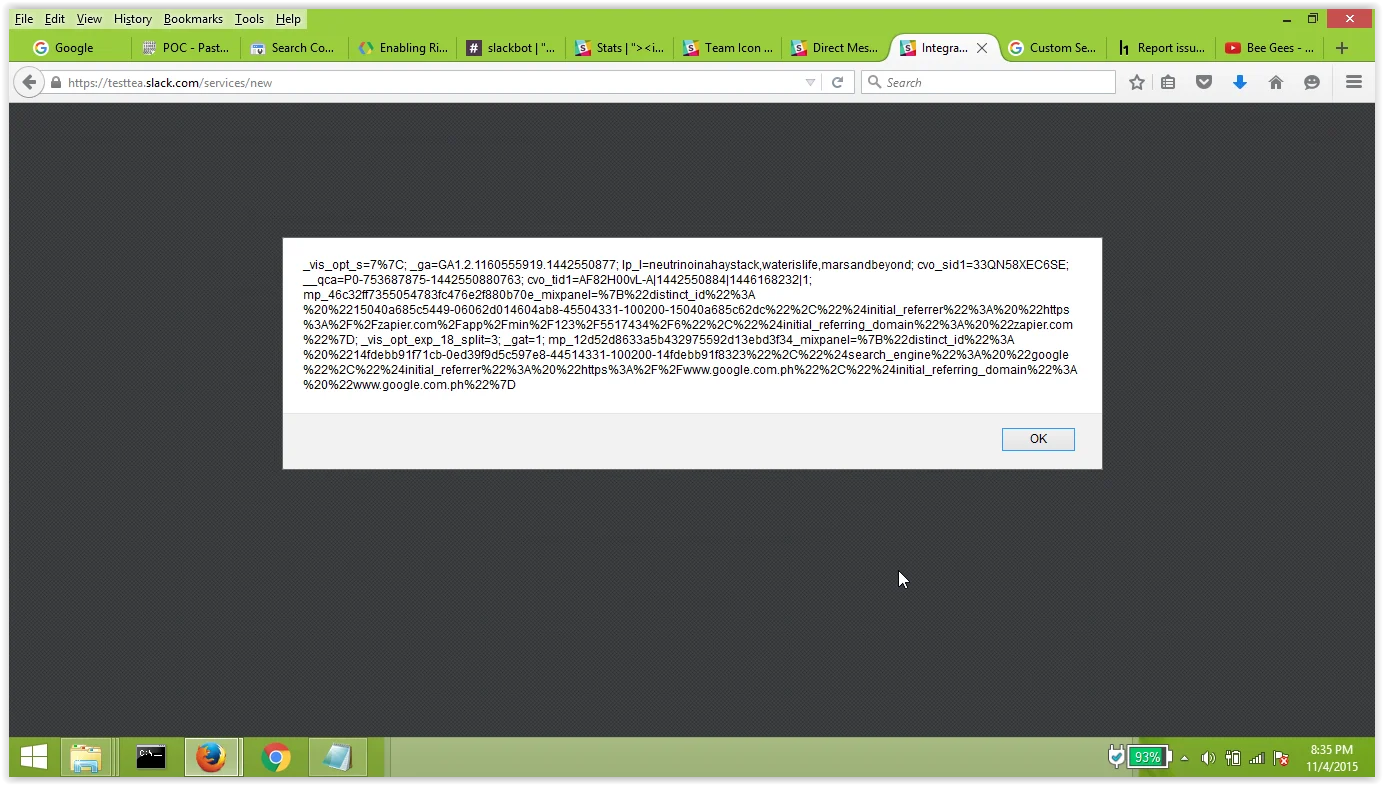
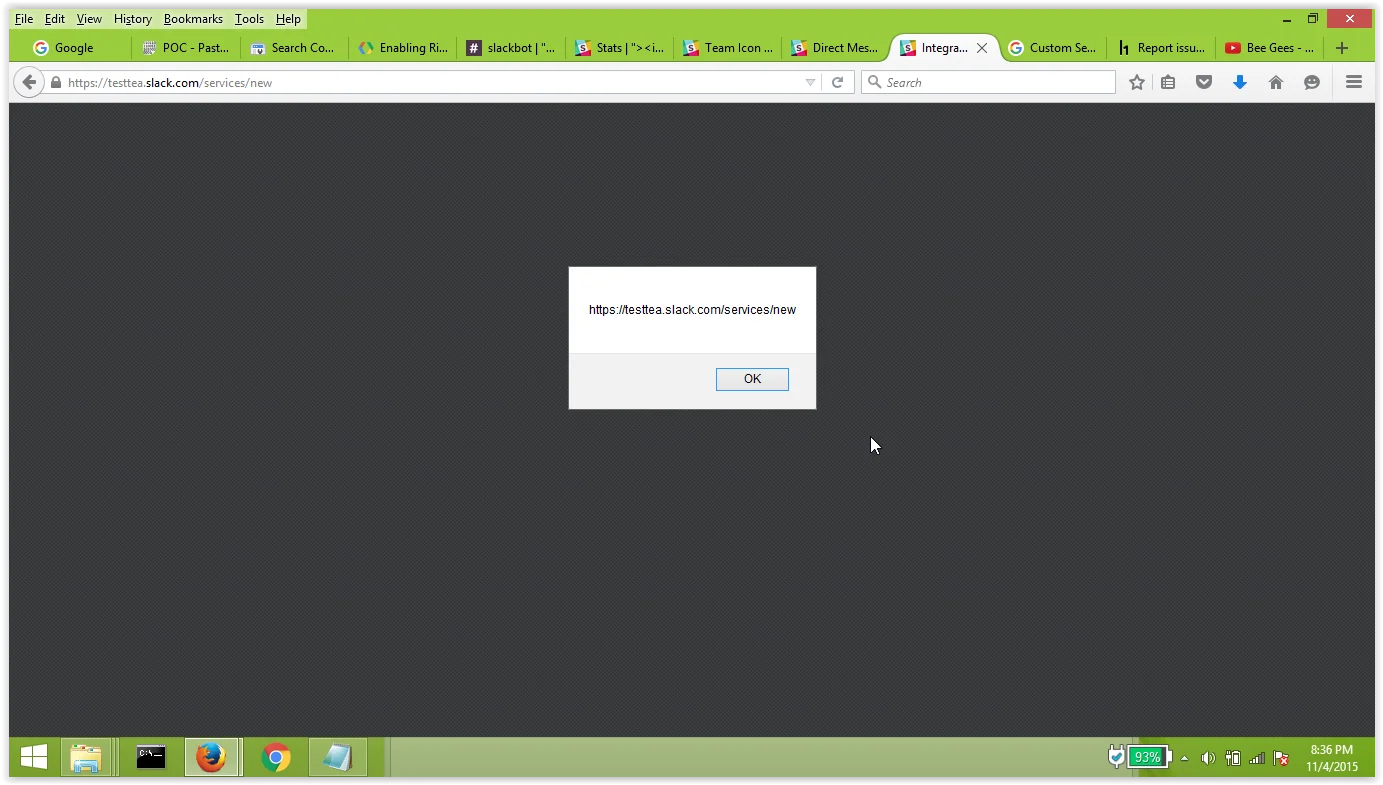
- XSS pop-up
Thanks!
I have provided POCs
Attachments
Not written yet. The AI write-up for this report has not been written yet. The Original tab links to the source.
What is known
A XSS bug in Slack. HackerOne made it public on 10 November 2015.
About XSS
Script an attacker supplies runs in another user's browser, on the target's origin, with that user's session.
Not written yet. The AI write-up for this report has not been written yet. The Original tab links to the source.
What is XSS?
Script an attacker supplies runs in another user's browser, on the target's origin, with that user's session.







