[invalid][false-positive] csrftoken on profile page
The reporter claimed that a profile name change request succeeded after removing the CSRF token in an intercepting proxy. The program explained that the token is validated from the form field or the X-CSRFToken header, not the cookie, and closed the report as not applicable because CSRF protection was working correctly.

- Disclosed after 3 days
Summary by the program
When testing csrf tokens on WakaTime's website, there are 2 ways we pass the csrf token in requests:
- form post-data
csrftoken, for HTML form submits - the
X-CSRFTokenheader, for AJAX requests
The csrftoken cookie is only used to pass the token to JavaScript, it's not used for validating the request.
Closing this as not applicable since csrf tokens are working correctly.
The report
step of reproduce-
- Go to https://wakatime.com and create account.
- login account after that go public profile.
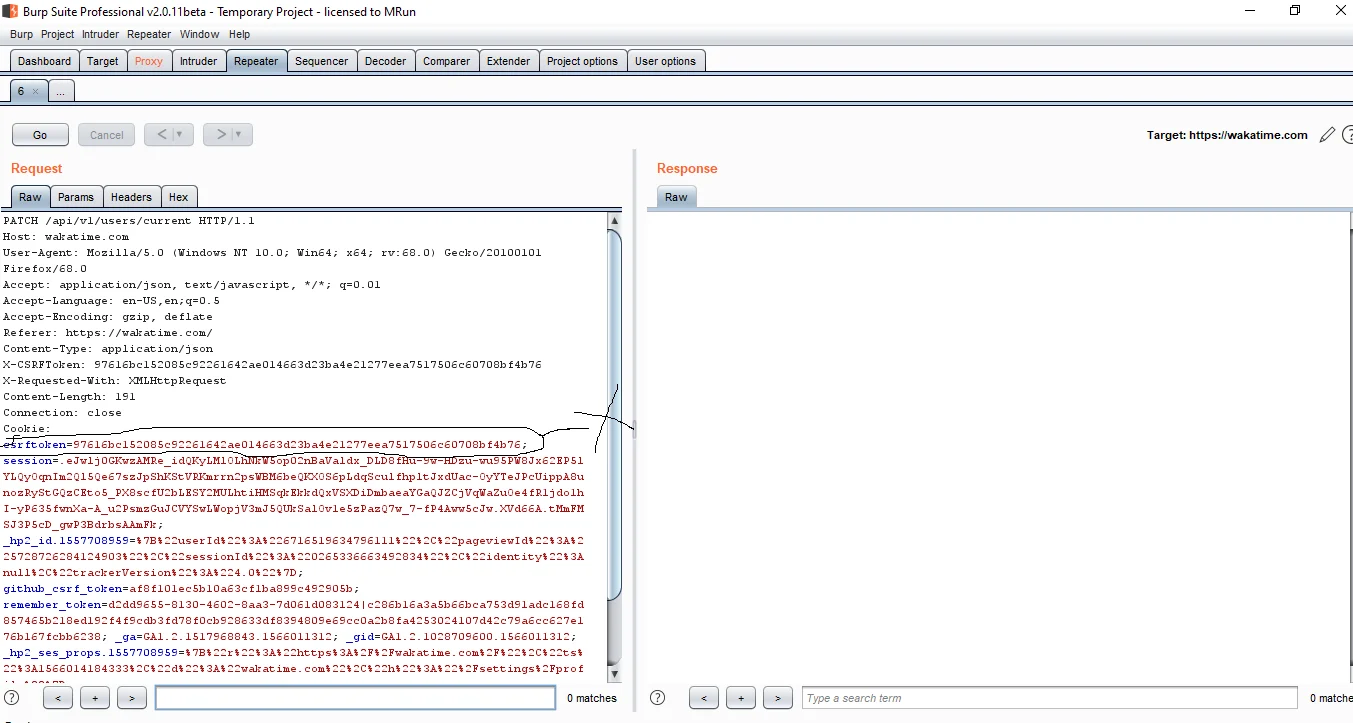
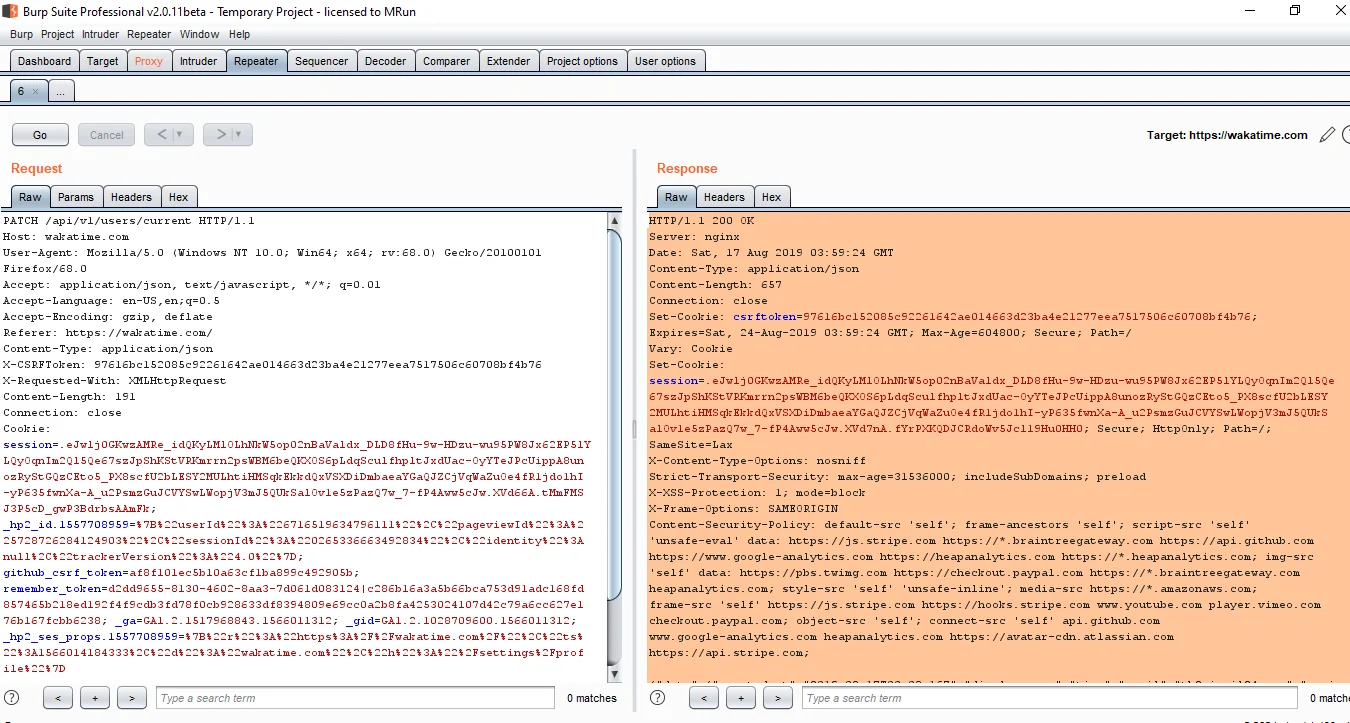
- after that change the full name and intercept brup suite and delete csrftoken.
- After forward then you see name was changed.
Impact
Violation of Secure Design Principles
Attachments
Not written yet. The AI write-up for this report has not been written yet. The Original tab links to the source.
How it worked
Root cause
Likely no vulnerability: the reporter removed the token from one location while the server validated it from another, so the request was still correctly protected.
What the attacker needed
A free account; an intercepting proxy
How it was found
- Create an account on the site and log in.
- Open the public profile page.
- Change the full name while intercepting the request in a proxy.
- Delete the CSRF token from the request and forward it.
- Observe that the name was changed.
Explained by bugbounty.wiki with AI from the original and checked against quotes from it; it can still be wrong. Read the original before relying on a detail.
Not written yet. The AI write-up for this report has not been written yet. The Original tab links to the source.
A CSRF token is a secret value a website puts into forms so it can tell a real request from one forged by another site. The reporter thought deleting the token from a request still let the name change, which would mean the protection was missing. The program showed the token is checked in a different place than the reporter assumed, so the protection was actually in place.
What is CSRF?
Another site makes a signed-in user's browser perform an action they did not intend.

