Clickjacking irclogs.wordpress.org
The report claims that the irclogs.wordpress.org site can be embedded in a frame by another site, which enables clickjacking. An attacker could trick a logged-in user into clicking hidden controls on the framed page, though the text gives no proof of a sensitive action being reachable.

- Disclosed after 34 days
Hello! @wordpress security team, I'm Md Sameull Soykot ( @sameull ). Recently I have tested you all sub-domain and got a domain which is vulnerable named as clickjacking. I have attached my video Poc for details. Hope you will fix this issue as soon as possible.
Reference: https://blogs.msdn.microsoft.com/ieinternals/2010/03/30/combating-clickjacking-with-x-frame-options/
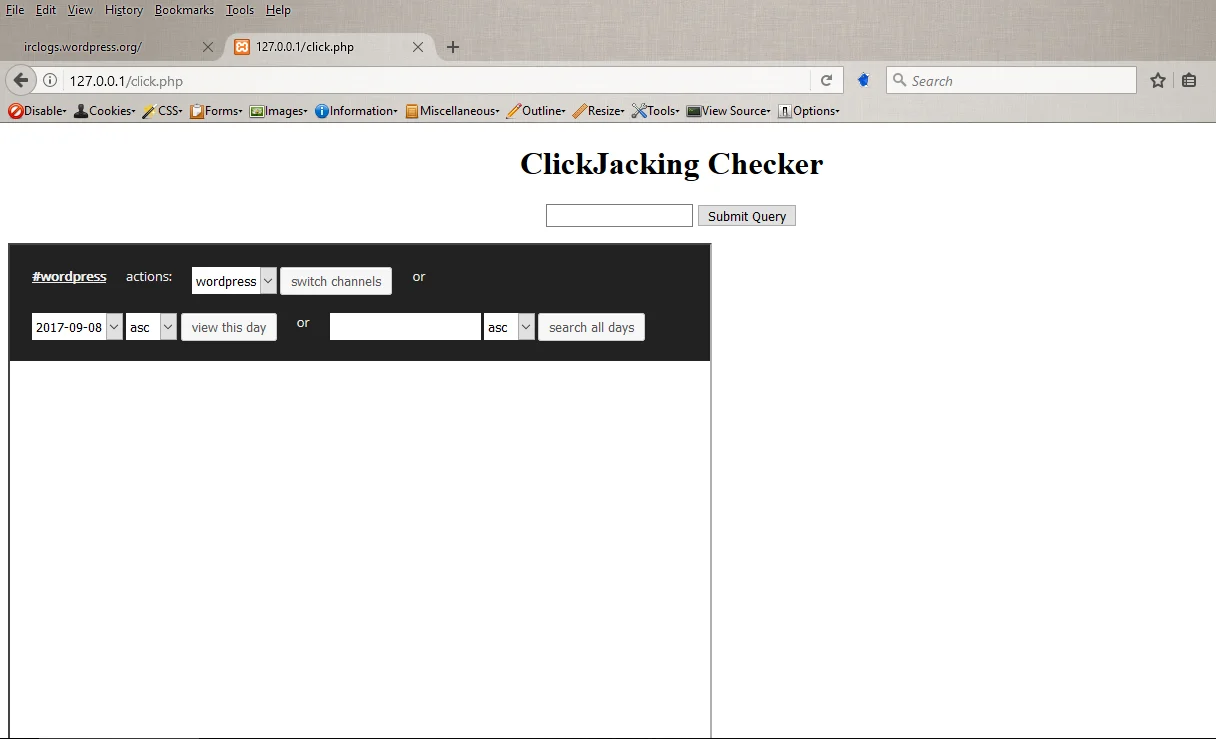
Thank you
Attachments
Not written yet. The AI write-up for this report has not been written yet. The Original tab links to the source.
How it worked
Root cause
Likely the site does not send an X-Frame-Options or Content-Security-Policy frame-ancestors header, so browsers allow it to be framed.
Impact
A user could be tricked into clicking controls on the framed page, but the report does not show any sensitive action or account change being possible.
What the attacker needed
Victim visits attacker page; victim is logged in
The fix
The site should send an X-Frame-Options header or a Content-Security-Policy frame-ancestors directive that blocks framing by other origins.
Explained by bugbounty.wiki with AI from the original and checked against quotes from it; it can still be wrong. Read the original before relying on a detail.
Not written yet. The AI write-up for this report has not been written yet. The Original tab links to the source.
Clickjacking is when a malicious site loads a real site invisibly on top of its own page, so your clicks land on the real site's buttons without you noticing. The reporter says this WordPress subdomain can be loaded inside another site's frame, which is the basic condition for that trick. They provide a video but no written steps or proof of a harmful action.
What is UI spoofing?
The interface lies to the user: a framed page catches their clicks, or a browser shows the wrong address or a fake prompt. Paid when it leads to a sensitive action or convincing phishing.


