Puny-Code, 0-Click Account Takeover
A parsing inconsistency between MySQL and SMTP servers allows an attacker to use a puny-coded email address that MySQL treats as the victim's email but SMTP delivers to the attacker, enabling account takeover via password reset or OAuth login. The attacker can obtain the victim's reset link or log in as the victim without any user interaction.
 Published on blog.voorivex.team
Last year, we found an interesting inconsistency between mail servers and databases — there was a parsing disagreement on some characters. We immediately set up a testbed to investigate, and it led to discovering a neat attack.
The full write-up lives on its author's site
It belongs to its author, so we link to it rather than copy it. The other two tabs are our own rewrites, checked against it.
Context
This is a story about inconsistency between two layers that both handle email addresses: the SMTP server that delivers mail and the MySQL database that stores users. The authors found that the two disagree about certain Unicode characters, and that this disagreement can be turned into a 0-click account takeover through the reset password flow.
The technique is not presented as a 0day. The authors say it had been discovered before them; their contribution was putting it into action, and they report making around $50k from it across many programs. Their most recent bug using the technique was about two weeks before the post.
The authors frame inconsistency as one of the most important root causes in security, pointing out that it sits at the centre of many bugs and even produced a whole vulnerability class, HTTP Request Smuggling. To illustrate the idea, they give two URLs where different layers can disagree about which host is being addressed:
https://attacker.com%bf:@benign.com
https://attacker.com\@benign.com
If a security function checks whether the host is legitimate and a cURL function sends the request, which host is it: attacker.com or site.com? The authors say it does not even matter for the point being made: the layers must never disagree on host extraction, and if they do, there is a high chance of a vulnerability.
Amir had tweeted about this case about a year earlier as a white-box challenge, as he often does. Many hunters got involved, but the authors never disclosed that it is actually a profitable vulnerability. They call it a money-maker because it is easy to test, not a complex gadget-chaining exploit. It can appear in different parts of web applications; the post focuses on the reset password functionality using an arbitrary mail server and MySQL.
Setup
The normal reset password workflow the authors review is:
- The user enters their email address.
- The web app checks the database to see if the user exists.
- To check, it runs a select query with the user's input.
- If the user is found, a token gets saved in the database.
- The token is also emailed to the user.
The workflow is simple and clear, but it hides the question that decides everything: which email is passed to the SMTP server, the one the user typed in, or the one stored in the database? If it is pulled from the database, the web app is safe. If it is pulled from the user input, the web app is vulnerable.
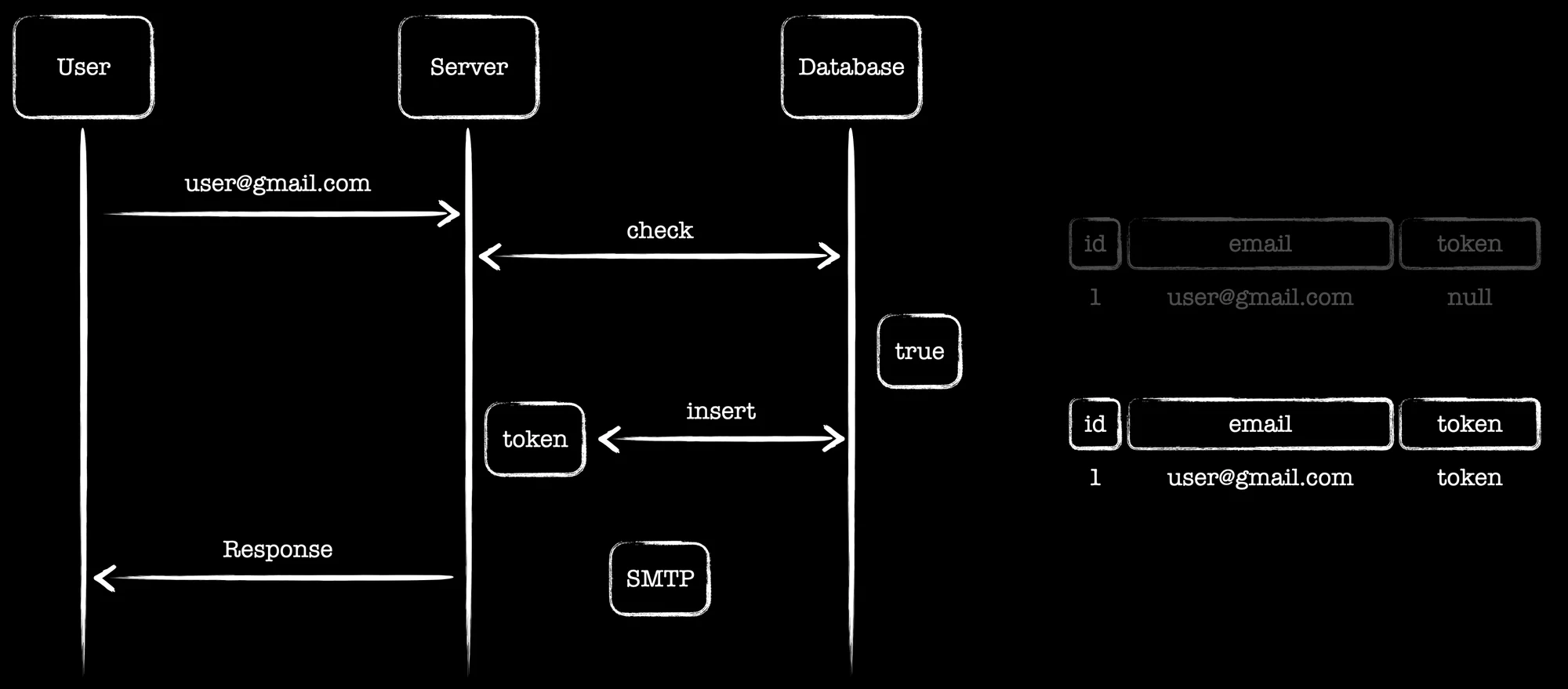
The diagram shows the reset-password workflow: user input, a database lookup, token generation, and the email being sent.
To investigate, the authors set up a testbed. The fuzzer in the post connects to MySQL from Python through mysql.connector, configured for localhost, user test, password test, database test. The authors also later published a deliberately vulnerable web application that can be started with a single docker compose up command.
Finding it
The authors compare how an SMTP server and MySQL each treat a normal a and a visually similar but different character (the post calls it the odd a).
The SMTP server treats a and the odd a as completely different. They are two separate email addresses and never conflict with each other:
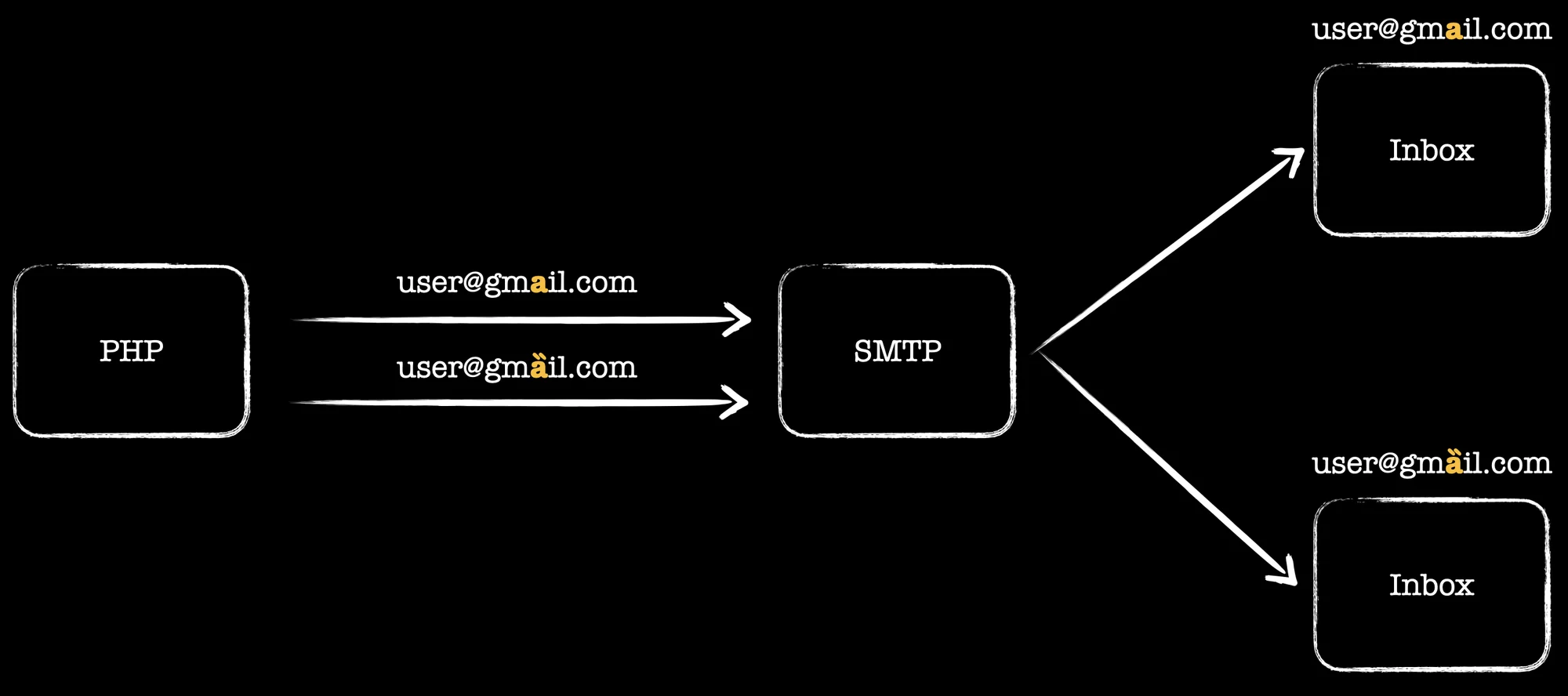
The screenshot shows the SMTP server treating the ASCII a and the puny-coded a as distinct addresses.
MySQL behaves differently. It casts the odd a to the normal a, and that is where the story begins:
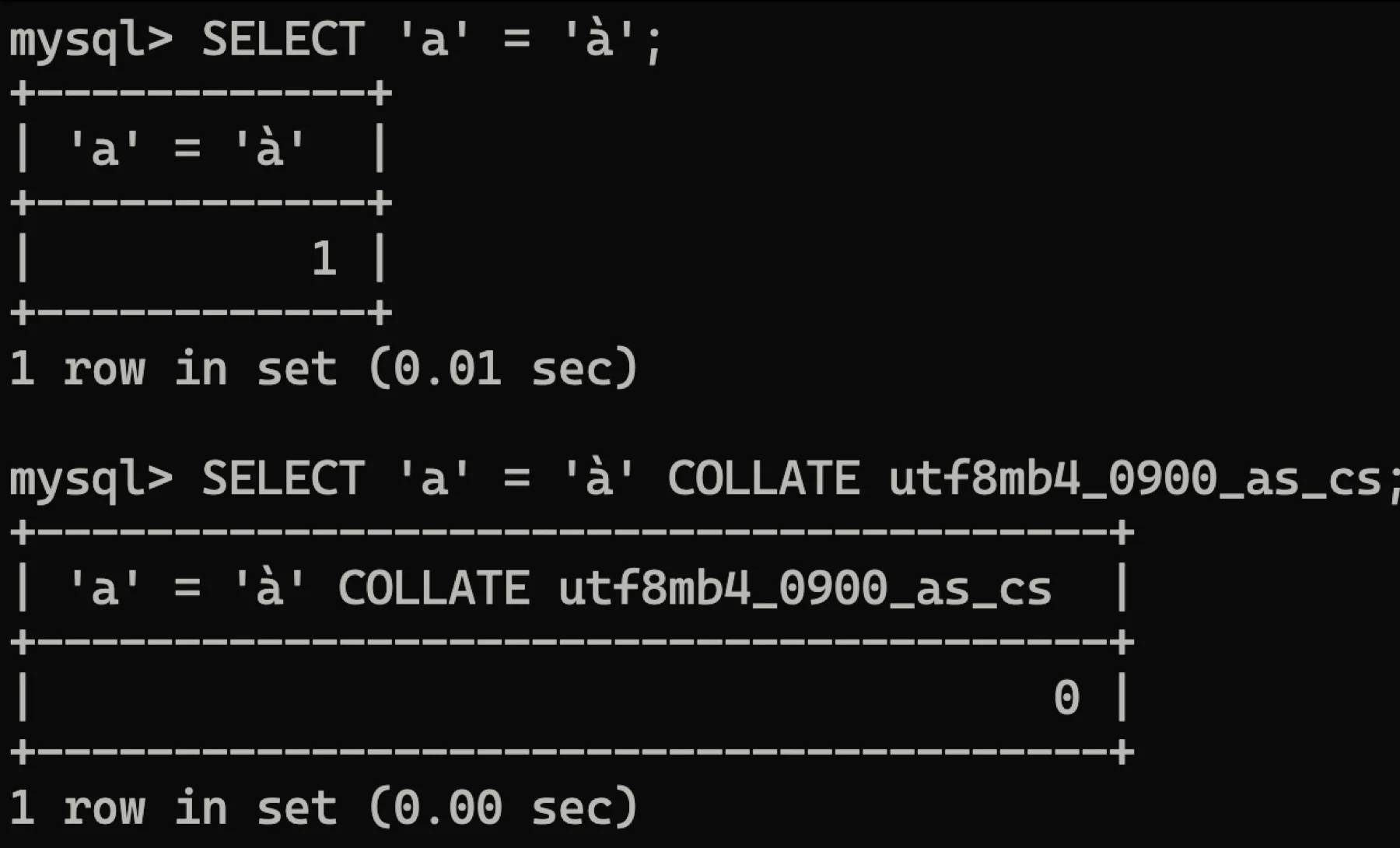
The screenshot shows MySQL casting the puny-coded character back to plain a under the default collation.
In the first query, MySQL casts the odd a to the normal a, so they end up equal. In the second query, a does not match the odd a because of the collation settings. The good news for hunters is that MySQL's default settings handle that casting automatically, so if developers just code things the usual way, the inconsistency comes in.
To find the odd characters, the authors pick a letter, a, and run a simple fuzzer. It quickly finds all the characters that get treated like a:
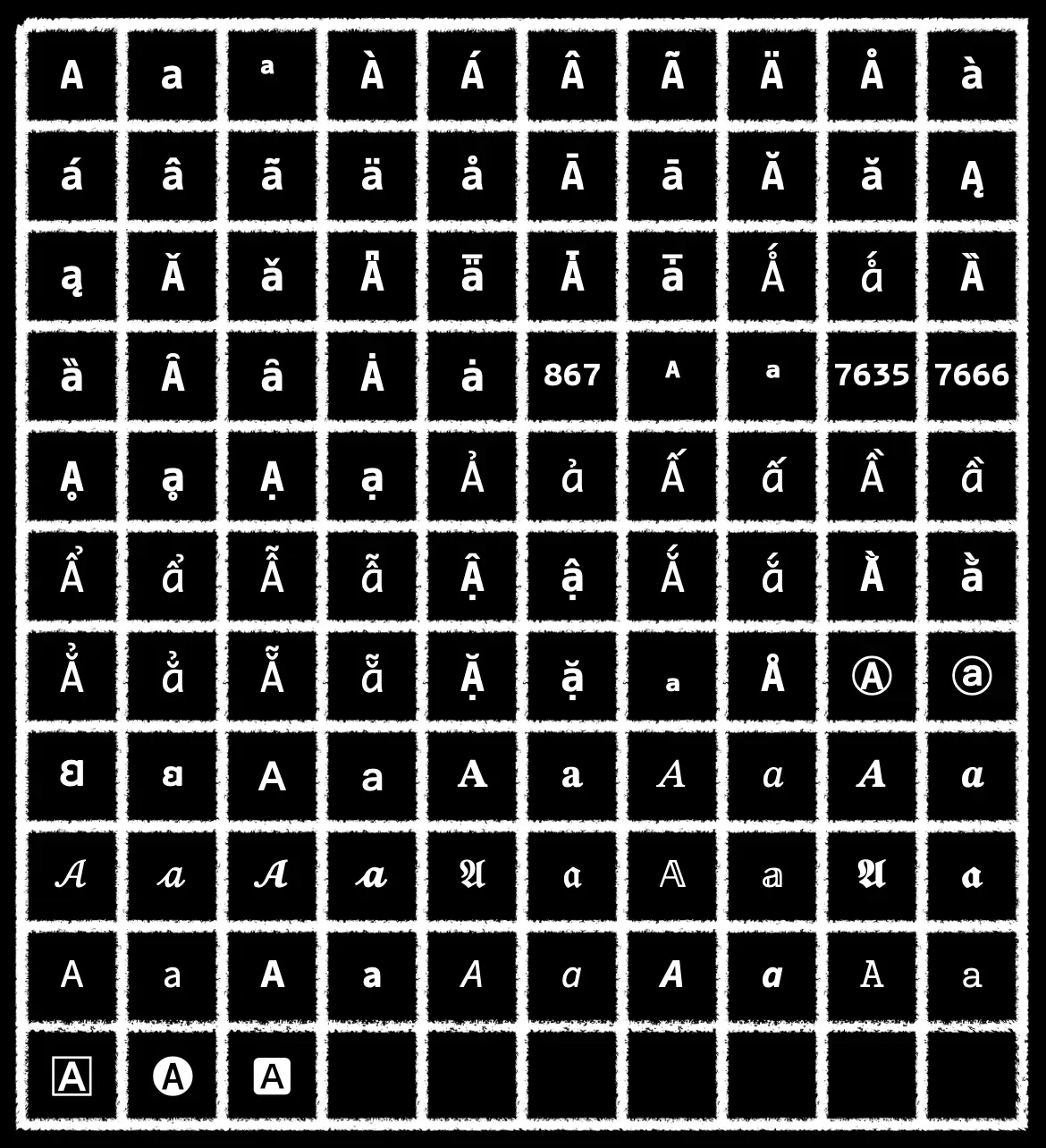
The screenshot shows fuzzer output listing the characters that MySQL collates equal to a.
Here is the fuzzer code:
import mysql.connector

conn = mysql.connector.connect(
    host="localhost",
    user="test",
    password="test",
    database="test"
)

cursor = conn.cursor()

for i in range(0, 0x10ffff + 1):
    char = chr(i)

    cursor.execute("SELECT %s = 'a' AS is_equal", (char,))
    result = cursor.fetchone()

    if result[0]:
        print(f"Unicode Character {i} ({char}) is equal to 'a' in MySQL")

cursor.close()
conn.close()
Those are the candidates that a database will treat as the victim's address while an SMTP server will treat as a different address.
The authors pick three attack scenarios to discuss:
- Forgot Password Section
- OAuth Provider Email Trust
- OAuth Provider Redirect URL
Exploitation
Step 1: Enter the victim's address in the puny-coded form
In the forgot password section, the attacker enters the victim's email address, intercepts the HTTP request, and changes the email to the puny-coded version. The attacker enters [redacted] but with the odd a, which is not a normal a. This email actually belongs to the attacker.
Step 2: The database lookup matches the victim
The web app runs a SQL query to check if the email exists. MySQL casts the odd a into a normal a, so the attacker's email turns into the real victim's email address. Since the email does exist in the database, a token is issued and saved.
Step 3: The reset link goes to the attacker
The SMTP server sends the reset link to [redacted], but with the odd a, which goes to the attacker's mailbox. The attacker now has the victim's reset link.
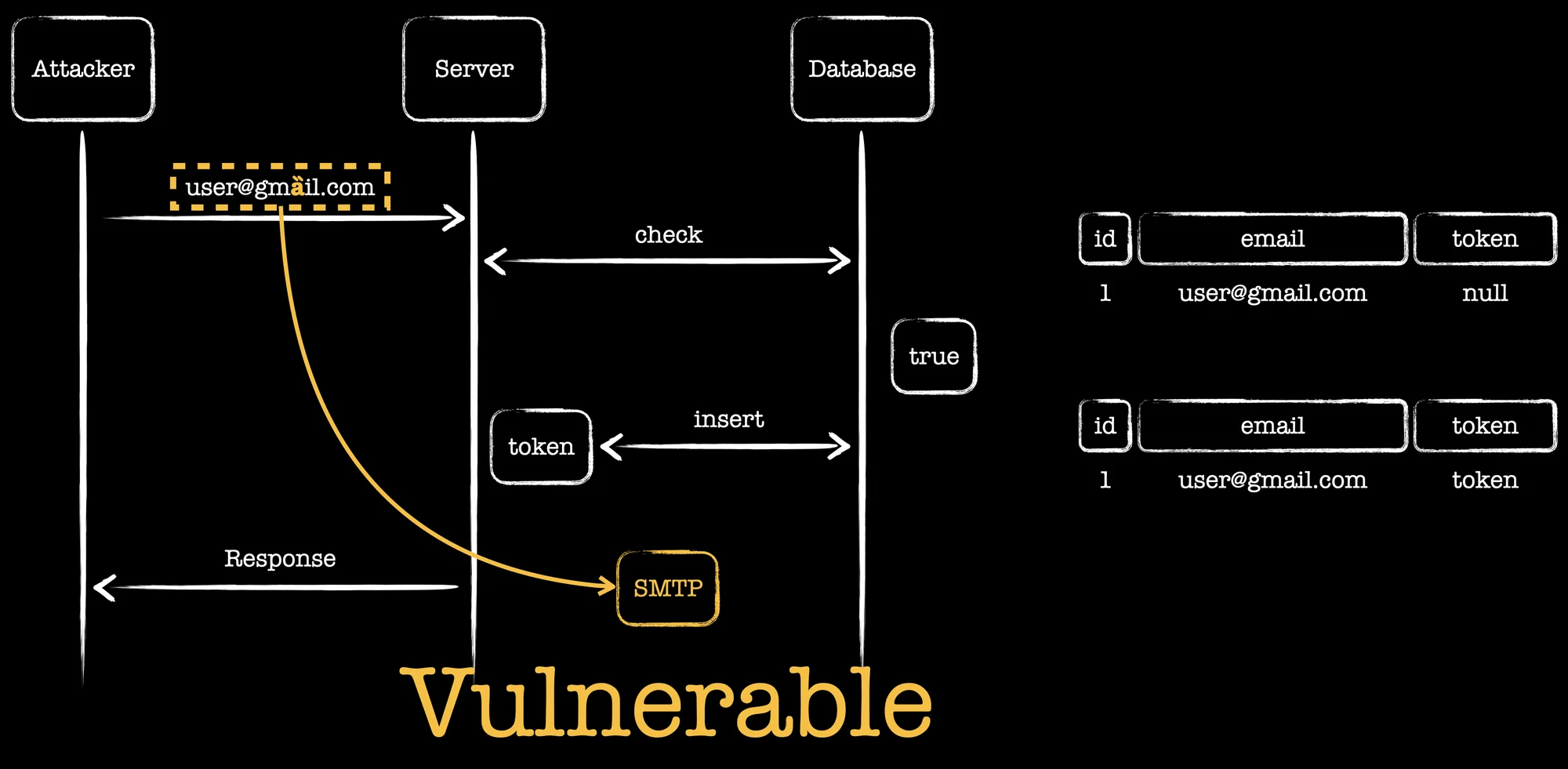
The diagram shows the end-to-end flow: the puny-coded address is entered, the database casts it equal to the victim's address, and the SMTP server delivers the reset link to the attacker.
Simple. Practical. 0-click ATO. The authors show an example from a public program on HackerOne, where the full attack scenario was laid out in the report. They say they have actually found a bunch of websites vulnerable to this:
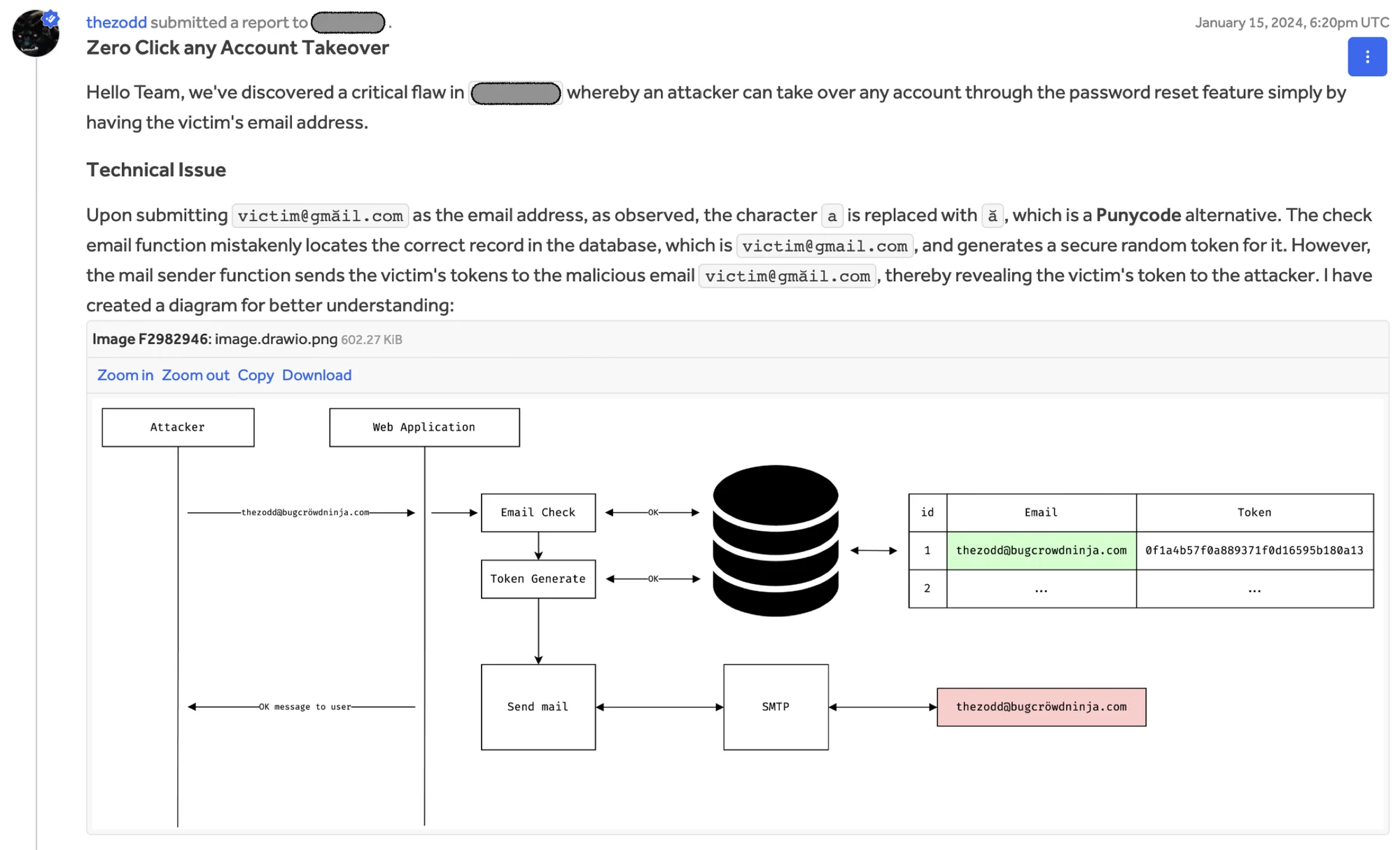
The screenshot shows the HackerOne report describing the full puny-code account takeover scenario.
In that case, the authors say they should have been paid 25k, but the asset was not considered a main one. They received 6k and say they are good with it:
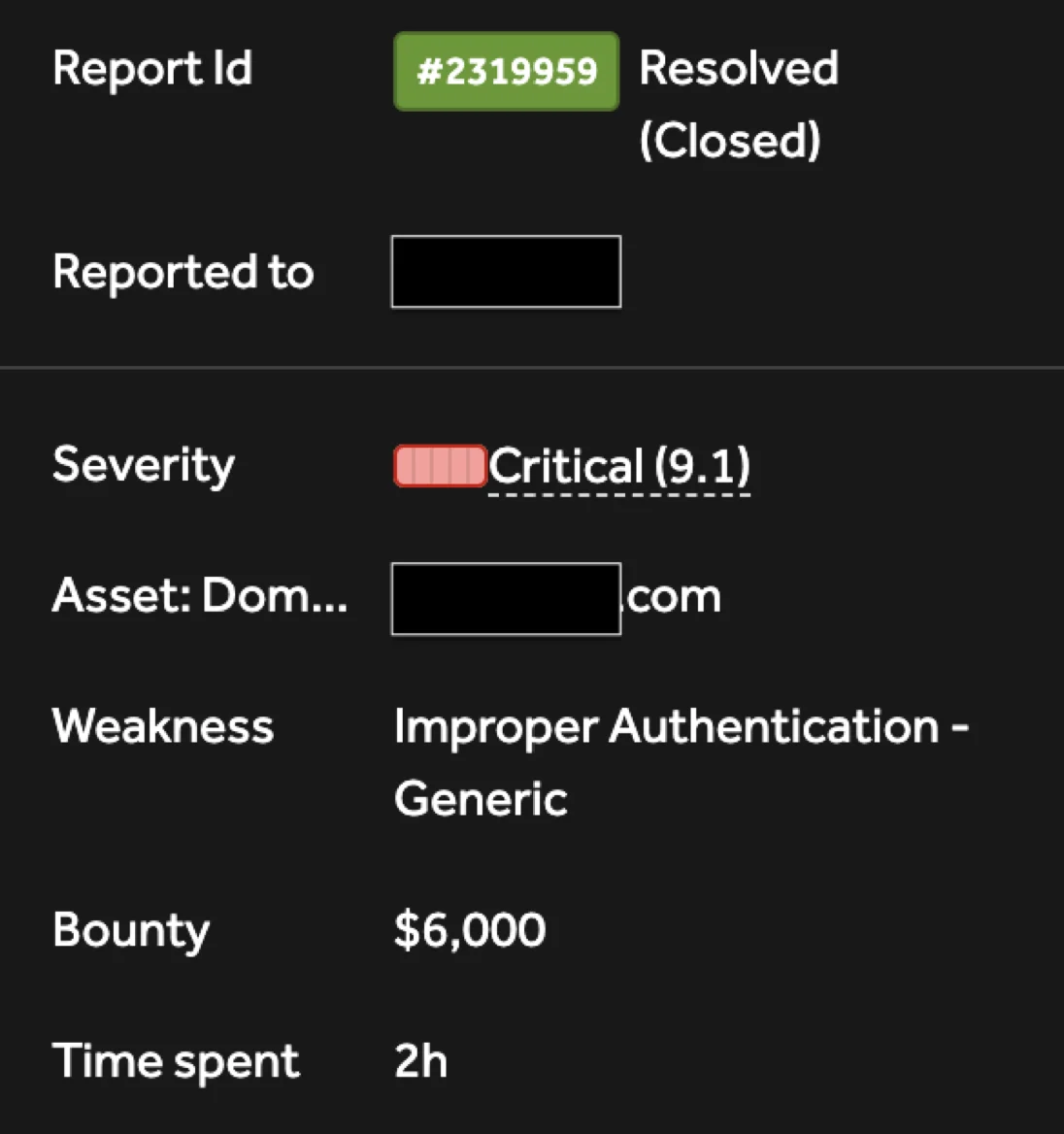
The screenshot shows the bounty awarded for the puny-code account takeover.
Is WordPress safe?
The authors went further and started checking WordPress. It turns out WordPress is not vulnerable, even when using the risky collation, and they show this secure case because it is interesting.
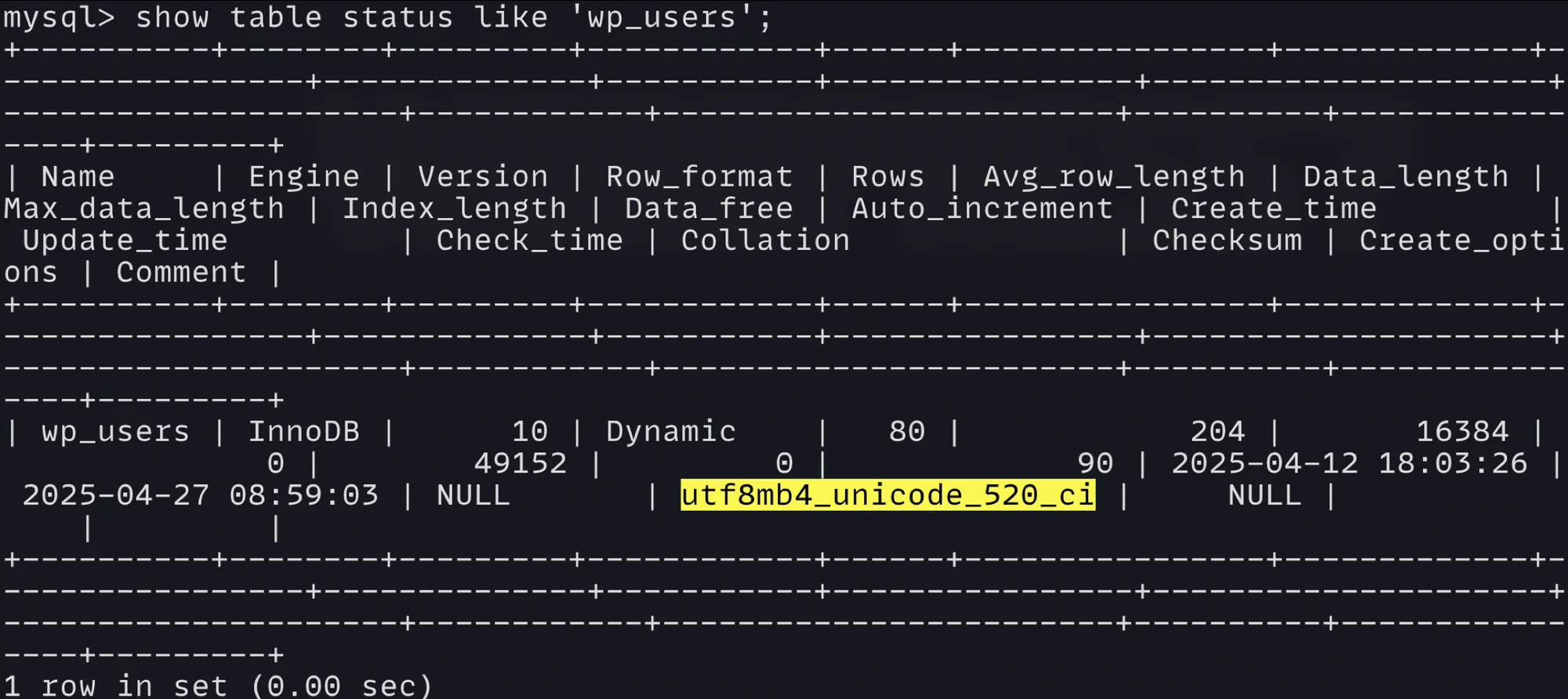
The screenshot shows WordPress using the risky collation.
WordPress uses this collation, and a is equal to the odd a. At first glance that might be dangerous:
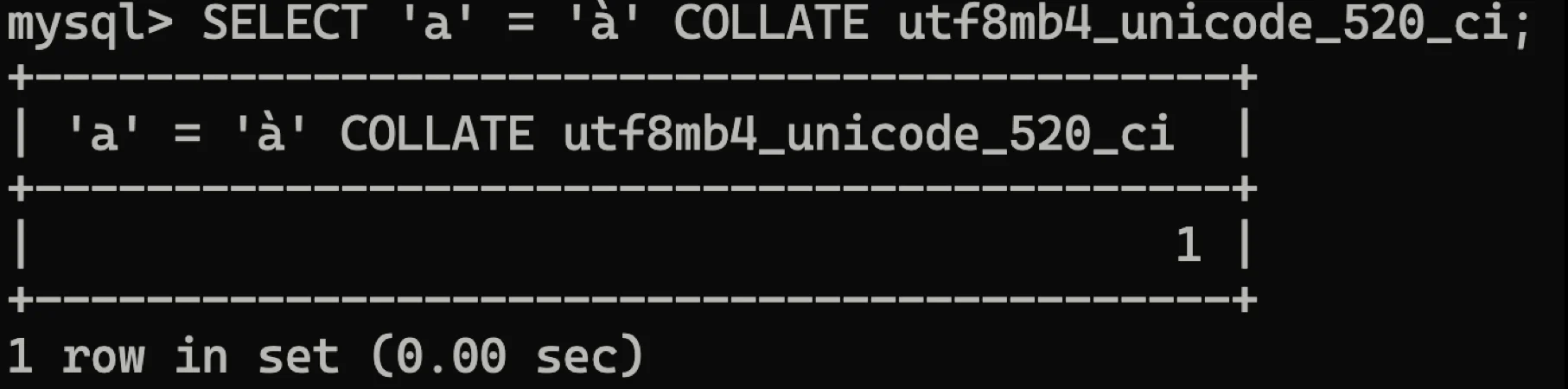
The screenshot shows a MySQL = comparison under the WordPress collation matching the normal and puny-coded a.
But WordPress is not vulnerable. It uses the user's input to query the database, but when it comes to sending the email, it uses the email pulled from the database. This is the important part: even if you enter a puny-coded version of [redacted], WordPress generates the reset link for the real [redacted] and sends the reset password link to the legitimate email address:
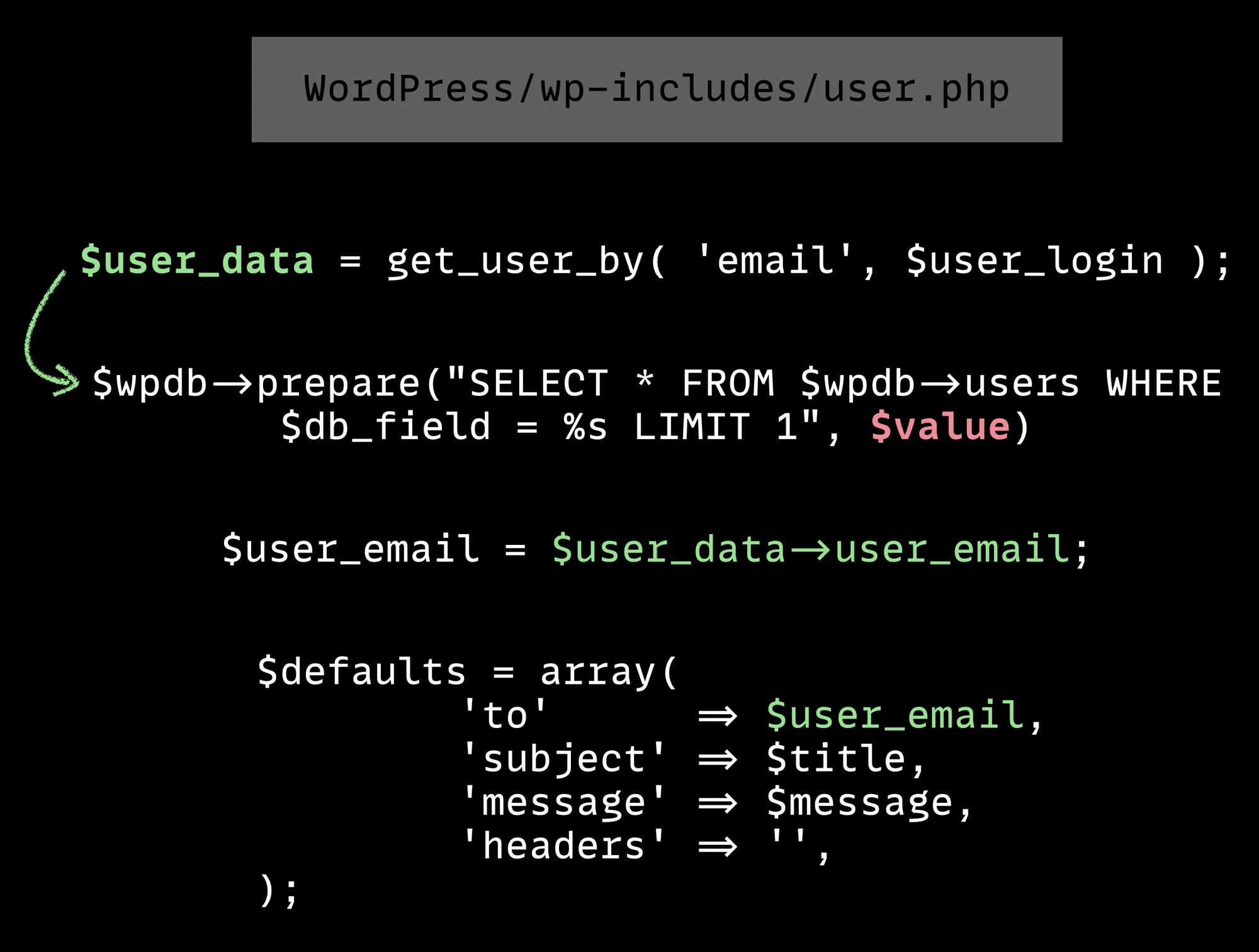
The screenshot shows WordPress sending the reset link to the legitimate, database-stored email.
OAuth Provider Email Trust
Some websites are safe in the forgot password flow but still vulnerable in other areas, such as OAuth login. If the provider responds with a puny-coded version of the email during the callback phase of login, the web application can become vulnerable to the same attack.
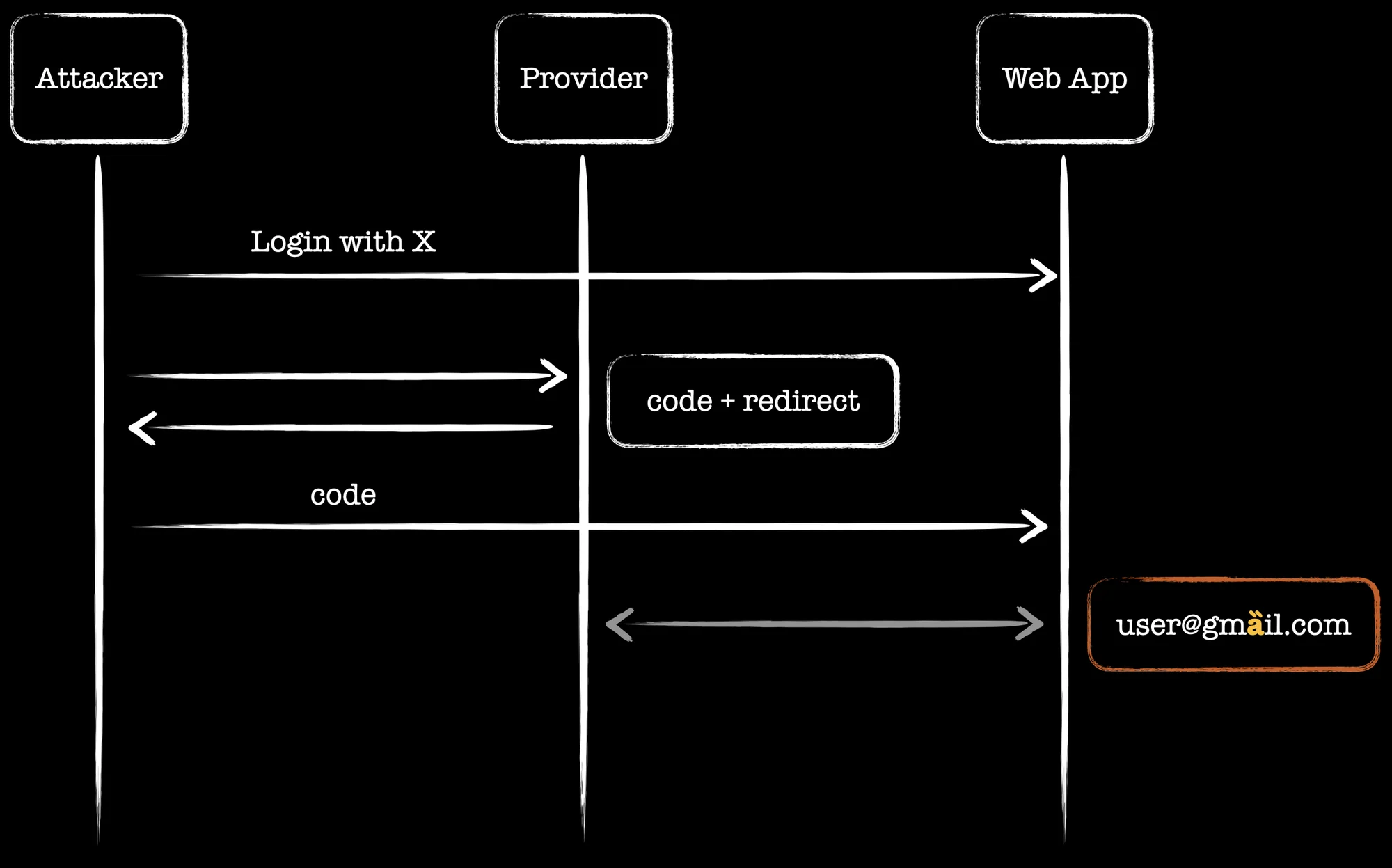
The diagram shows the OAuth callback flow, where the provider returns a puny-coded email and the application trusts it.
In the final step, the web app calls the provider's API and grabs the malicious email. That is where the vulnerability kicks in. The app runs a query to find that email in the database, and if MySQL casts the odd a to a normal a, the attacker ends up logging in as the victim.
The authors checked Google, which delivers the email safely. They do not comment on Apple and Facebook and suggest testing those yourself. What surprised them is that Login with GitLab is actually vulnerable: it delivers the puny-coded email to the application, which leads to the vulnerability. That is only the case if the application does not validate the email properly or is using a risky collation. The practical result they state is that if you go to a website and see a "login with gitlab" button, it is likely vulnerable.
OAuth Provider Redirect URL
The attack can also be carried out in the OAuth provider's callback URL. The authors do not dive into it; they only introduce the idea. The concept is basically the same as the OAuth provider email trust scenario.
Root cause
The mistake is a parser differential between two layers that both process the same email address. MySQL, under its default collation settings, casts the odd a to a normal a, so a lookup with the puny-coded address matches the victim's stored record. The SMTP server does not perform that cast: it treats the odd a as a different address entirely, so the message is delivered to a mailbox the attacker controls.
The application logic then decides the outcome. If the reset link is sent to the address taken from user input, the attacker receives it. If it is sent to the address pulled from the database, the attacker gets nothing. The same split applies to OAuth: if the application trusts the email returned by the provider and looks it up in the database, the cast makes the attacker's address resolve to the victim's account.
The inconsistency only becomes a vulnerability when the application passes user-controlled input to the mail layer instead of the stored value.
Impact
Under the conditions described, an attacker can take over an account without any interaction from the victim: a 0-click account takeover. The attacker enters the victim's address with the odd a, an address that belongs to the attacker. The reset link is then delivered to the attacker's mailbox.
In the OAuth variant, the attacker ends up logging in as the victim if the provider returns a puny-coded email and the application does not validate it properly or uses a risky collation. The authors note that Login with GitLab is vulnerable in this way, while Google delivers the email safely; they do not comment on Apple and Facebook.
The authors report finding a number of vulnerable websites and earning around $50k from the technique overall. In the HackerOne example shown, the bounty was 6k rather than the 25k they say should have been paid, because the asset was not considered a main one.
Fix
The secure pattern is the one WordPress follows: use the user's input to query the database, but when sending the email, use the email pulled from the database. That way, even a puny-coded version of [redacted] results in the reset link being generated for the real [redacted] and sent to the legitimate address.
The report says the OAuth variant applies only if the application does not validate the email properly or uses a risky collation. The authors frame the GitLab case as exploitable only when the application does not validate the email properly or uses a risky collation.
Variants to test
The authors list three scenarios and invite others to look for more attack vectors with puny-code:
- Forgot password. Submit the victim's address with a character that MySQL casts to the same value, then check whether the reset link arrives at the attacker-controlled mailbox. A positive result is a reset link for the victim's account in the attacker's inbox.
- OAuth provider email trust. Complete the OAuth callback with a provider that returns a puny-coded email, and see whether the application logs the attacker in as the victim. A positive result is a session for the victim's account. The authors note that Login with GitLab is vulnerable in this way, while Google delivers the email safely.
- OAuth provider redirect URL. The authors introduce the idea without details, saying the concept is basically the same as the email trust scenario.
To find candidate characters, pick a letter and run the fuzzer to collect every character that compares equal to it. The authors also published a deliberately vulnerable web application that can be started with docker compose up, available at the link in the post, for practising the attack.
The screenshot shows the Voorivex white-box-challenges puny-code testbed on GitHub.
There are more attack vectors with puny-code, and the authors encourage sharing anything new online. They conclude that while they have discovered several bugs, there are likely many more yet to be found, and that puny-code presents additional attack vectors that need attention.
What happened, in plain words
Two pieces of software that both deal with email addresses disagreed about what counts as the same address. One was the mail server, the software that actually delivers email. The other was the database, the software that stores the list of users. Because they disagreed, an attacker could ask a website to reset the password of somebody else's account, and the reset link would arrive in the attacker's own inbox instead. The victim does not have to click anything, so this is called a 0-click account takeover.
The authors say they did not discover the idea first. Someone had found it before them; their contribution was turning it into something practical, and they report making around $50k from it across many programs. Their most recent bug using the technique was about two weeks before the post.
They describe inconsistency, two parts of a system reading the same input differently, as one of the most important root causes in security. It sits at the centre of many bugs and even produced a whole class of vulnerabilities called HTTP Request Smuggling. To show the idea, they give two web addresses where different layers can disagree about which host is being addressed:
https://attacker.com%bf:@benign.com
https://attacker.com\@benign.com
A web address (URL) is what you type in the browser bar. The host is the part that names the machine, here either attacker.com or benign.com. The trick in these two lines is that one piece of software might read the host as attacker.com and another as benign.com. If a security check decides the host is fine and a separate piece of code then sends the request, which host did it really go to? The authors say it does not even matter for the point they are making: the layers must never disagree on which host they extracted. If they do, there is a high chance of a vulnerability.
Amir had tweeted about this case about a year earlier as a white-box challenge, a puzzle where you are given the code and asked to find the flaw, as he often does. Many hunters got involved, but the authors never said publicly that it is actually a profitable vulnerability. They call it a money-maker because it is easy to test, not a complex exploit built from many chained tricks. It can appear in different parts of web applications; the post focuses on the reset password feature, using an ordinary mail server and MySQL, a very common database.
The reset password feature, step by step
Almost every website with accounts has a "forgot password" link. You type your email address, the site sends you a special link, and opening that link lets you set a new password. The special link contains a token: a long random string that proves you are the person who received the email. Think of it as a temporary key that the site hands out by post; whoever holds the key can open the door.
The normal workflow the authors review is:
- The user enters their email address.
- The web app checks the database to see if the user exists.
- To check, it runs a select query with the user's input. A query is a question written in SQL, the language databases understand; a select query asks the database to find rows matching a condition.
- If the user is found, a token gets saved in the database.
- The token is also emailed to the user.
The workflow is simple and clear, but it hides the question that decides everything: which email is passed to the mail server, the one the user typed in, or the one stored in the database? If it is pulled from the database, the web app is safe. If it is pulled from the user input, the web app is vulnerable.
The diagram shows the reset-password workflow: user input, a database lookup, token generation, and the email being sent.
To investigate, the authors set up a testbed, a small controlled environment where they could try things safely. The tooling shown in the post is a MySQL database reached from Python, a programming language, through a library called mysql.connector. The connection is configured for localhost (the same machine), user test, password test, database test. The authors also later published a deliberately vulnerable web application that can be started with a single docker compose up command. Docker is a tool that runs ready-made software packages in isolated boxes called containers, so one command can bring up a whole test site.
Finding the odd character
The authors compare how a mail server and MySQL each treat a normal a and a visually similar but different character, which the post calls the odd a. This is the heart of the whole story, so it is worth slowing down.
Computers store text as numbers. A standard called Unicode assigns a number, called a code point, to every character in every writing system. The ordinary letter a has one number. But Unicode also contains many characters that look identical or almost identical to a but have a different number. To a computer they are different characters; to your eye they may look the same. Puny-code, in the title of the post, refers to this idea of lookalike characters being used to trick software or people.
The mail server treats a and the odd a as completely different. They are two separate email addresses and never conflict with each other:
The screenshot shows the mail server treating the ordinary a and the puny-coded a as distinct addresses.
MySQL behaves differently. It casts the odd a to the normal a, and that is where the story begins:
The screenshot shows MySQL casting the puny-coded character back to plain a under the default collation.
Casting means converting one value into another. Collation is the set of rules a database uses to decide when two pieces of text count as equal, for example whether capital and lowercase letters match, or whether accented letters match their plain versions. MySQL's default collation is generous: it treats many lookalike characters as equal to the plain letter.
In the first query, MySQL casts the odd a to the normal a, so they end up equal. In the second query, a does not match the odd a because of the collation settings. The good news for hunters is that MySQL's default settings handle that casting automatically, so if developers just code things the usual way, the inconsistency comes in without anyone doing anything unusual.
To find the odd characters, the authors pick a letter, a, and run a simple fuzzer. A fuzzer is a program that tries a huge number of inputs automatically and reports which ones produce an interesting result. It quickly finds all the characters that get treated like a:
The screenshot shows fuzzer output listing the characters that MySQL collates equal to a.
Here is the fuzzer code:
import mysql.connector

conn = mysql.connector.connect(
    host="localhost",
    user="test",
    password="test",
    database="test"
)

cursor = conn.cursor()

for i in range(0, 0x10ffff + 1):
    char = chr(i)

    cursor.execute("SELECT %s = 'a' AS is_equal", (char,))
    result = cursor.fetchone()

    if result[0]:
        print(f"Unicode Character {i} ({char}) is equal to 'a' in MySQL")

cursor.close()
conn.close()
Line by line, in plain words:
import mysql.connectorloads the library that lets Python talk to MySQL.conn = mysql.connector.connect(...)opens a connection to the database. The four settings say which machine to talk to (localhost), which user to log in as (test), the password (test), and which database to use (test). These are test values on the authors' own machine.cursor = conn.cursor()creates a cursor, an object that sends queries and reads back results, a bit like a pointer that walks through the answers.for i in range(0, 0x10ffff + 1):loops over every possible Unicode code point.0x10ffffis the highest code point Unicode defines, written in hexadecimal, a base-16 way of writing numbers.char = chr(i)turns the number into the actual character it represents.cursor.execute("SELECT %s = 'a' AS is_equal", (char,))asks the database one question: is this character equal to'a'? The%sis a placeholder that the library fills in safely with the character.result = cursor.fetchone()reads the single answer row.if result[0]:checks whether the answer is true, meaning MySQL considers the character equal toa.print(...)prints the code point and the character, so you get a list of every lookalike that MySQL treats asa.cursor.close()andconn.close()tidy up and close the connection.
The script walks every code point from 0 to 0x10ffff, asks MySQL whether the character equals 'a', and prints every character for which the comparison is true. Those are the candidates that a database will treat as the victim's address while a mail server will treat as a different address. That difference is the whole opportunity.
The authors pick three attack scenarios to discuss:
- Forgot Password Section
- OAuth Provider Email Trust
- OAuth Provider Redirect URL
Attack 1: the forgot password section
Step 1: enter the victim's address in the puny-coded form
In the forgot password section, the attacker enters the victim's email address, intercepts the HTTP request, and changes the email to the puny-coded version. Intercepting means catching the request on its way from the browser to the website, usually with a proxy tool, so you can edit it before it is sent. The attacker enters [redacted] but with the odd a, which is not a normal a. This email actually belongs to the attacker.
Why this step: the attacker needs the website to receive an address that the database will match to the victim but the mail server will deliver to the attacker.
Step 2: the database lookup matches the victim
The web app runs a SQL query to check if the email exists. MySQL casts the odd a into a normal a, so the attacker's email turns into the real victim's email address. Since the email does exist in the database, a token is issued and saved.
Why this step matters: the website now believes a legitimate user asked for a password reset, so it creates a valid reset token for the victim's account.
Step 3: the reset link goes to the attacker
The mail server sends the reset link to [redacted], but with the odd a, which goes to the attacker's mailbox. The attacker now has the victim's reset link.
Why this works: the mail server never does the casting. For it, the lookalike address is simply a different address, and that address belongs to the attacker.
The diagram shows the end-to-end flow: the puny-coded address is entered, the database casts it equal to the victim's address, and the mail server delivers the reset link to the attacker.
Simple. Practical. 0-click account takeover. The authors show an example from a public program on HackerOne, a platform where companies invite researchers to report bugs, where the full attack scenario was laid out in the report. They say they have actually found a bunch of websites vulnerable to this:
The screenshot shows the HackerOne report describing the full puny-code account takeover scenario.
In that case, the authors say they should have been paid 25k, but the asset was not considered a main one. A bounty is the reward a company pays for a valid report, and an asset is the specific website or system the program covers. They received 6k and say they are good with it:
The screenshot shows the bounty awarded for the puny-code account takeover.
Is WordPress safe?
WordPress is a very popular software for building websites and blogs. The authors went further and started checking it. It turns out WordPress is not vulnerable, even when using the risky collation, and they show this secure case because it is interesting.
The screenshot shows WordPress using the risky collation.
WordPress uses this collation, and a is equal to the odd a. At first glance that might be dangerous:
The screenshot shows a MySQL = comparison under the WordPress collation matching the normal and puny-coded a.
But WordPress is not vulnerable. It uses the user's input to query the database, but when it comes to sending the email, it uses the email pulled from the database. This is the important part: even if you enter a puny-coded version of [redacted], WordPress generates the reset link for the real [redacted] and sends the reset password link to the legitimate email address:
The screenshot shows WordPress sending the reset link to the legitimate, database-stored email.
So the database still matches the lookalike to the victim, but the email is addressed using the stored value, not the typed one. The attacker's mailbox never receives anything. This is the safe pattern, and it is worth remembering: query with what the user typed, but send to what the database holds.
Attack 2: trusting the email an OAuth provider returns
OAuth is a way to log in to a website using an account you already have somewhere else, for example "Login with Google" or "Login with GitLab". You are sent to the other company, called the provider, you approve, and you come back to the original site. The step where you come back is called the callback. During the callback the provider tells the site who you are, including your email address, usually through an API. An API is a way for two programs to talk to each other, like a waiter taking your order to the kitchen and bringing back the dish.
Some websites are safe in the forgot password flow but still vulnerable in other areas, such as OAuth login. If the provider responds with a puny-coded version of the email during the callback phase of login, the web application can become vulnerable to the same attack.
The diagram shows the OAuth callback flow, where the provider returns a puny-coded email and the application trusts it.
In the final step, the web app calls the provider's API and grabs the malicious email. That is where the vulnerability kicks in. The app runs a query to find that email in the database, and if MySQL casts the odd a to a normal a, the attacker ends up logging in as the victim.
Why this is serious: no password reset is needed at all. If MySQL casts the odd a to a normal a, the attacker ends up logging in as the victim. A session is the state of being logged in, usually kept alive by a cookie, a small piece of data the browser stores and sends back with every request.
The authors checked Google, which delivers the email safely. They do not comment on Apple and Facebook and suggest testing those yourself. What surprised them is that Login with GitLab is actually vulnerable: it delivers the puny-coded email to the application, which leads to the vulnerability. That is only the case if the application does not validate the email properly or is using a risky collation. The practical result they state is that if you go to a website and see a "login with gitlab" button, it is likely vulnerable.
Attack 3: the OAuth provider redirect URL
The attack can also be carried out in the OAuth provider's callback URL. A redirect URL is the address the provider sends you back to after you approve the login. The authors do not dive into it; they only introduce the idea. The authors do not dive into it; they only introduce the idea, saying the concept is basically the same as the previous one.
Why it works, and what it can do
The mistake is a parser differential between two layers that both process the same email address. A parser is the part of a program that reads and interprets input; a parser differential means two parsers read the same input differently. MySQL, under its default collation settings, casts the odd a to a normal a, so a lookup with the puny-coded address matches the victim's stored record. The mail server does not perform that cast: it treats the odd a as a different address entirely, so the message is delivered to a mailbox the attacker controls.
The application logic then decides the outcome. If the reset link is sent to the address taken from user input, the attacker receives it. If it is sent to the address pulled from the database, the attacker gets nothing. The same split applies to OAuth: if the application trusts the email returned by the provider and looks it up in the database, the cast makes the attacker's address resolve to the victim's account.
The inconsistency only becomes a vulnerability when the application passes user-controlled input to the mail layer instead of the stored value.
Under the conditions described, an attacker can take over an account without any interaction from the victim: a 0-click account takeover. The attacker enters the victim's address with the odd a, an address that belongs to the attacker. The reset link is then delivered to the attacker's mailbox.
In the OAuth variant, the attacker ends up logging in as the victim if the provider returns a puny-coded email and the application does not validate it properly or uses a risky collation. The authors note that Login with GitLab is vulnerable in this way, while Google delivers the email safely; they do not comment on Apple and Facebook.
The authors report finding a number of vulnerable websites and earning around $50k from the technique overall. In the HackerOne example shown, the bounty was 6k rather than the 25k they say should have been paid, because the asset was not considered a main one.
How to fix it
The secure pattern is the one WordPress follows: use the user's input to query the database, but when sending the email, use the email pulled from the database. That way, even a puny-coded version of [redacted] results in the reset link being generated for the real [redacted] and sent to the legitimate address.
The report says the OAuth variant applies only if the application does not validate the email properly or uses a risky collation. The authors frame the GitLab case as exploitable only when the application does not validate the email properly or uses a risky collation.
Variants to test
The authors list three scenarios and invite others to look for more attack vectors with puny-code:
- Forgot password. Submit the victim's address with a character that MySQL casts to the same value, then check whether the reset link arrives at the attacker-controlled mailbox. A positive result is a reset link for the victim's account in the attacker's inbox.
- OAuth provider email trust. Complete the OAuth callback with a provider that returns a puny-coded email, and see whether the application logs the attacker in as the victim. A positive result is a session for the victim's account. The authors note that Login with GitLab is vulnerable in this way, while Google delivers the email safely.
- OAuth provider redirect URL. The authors introduce the idea without details, saying the concept is basically the same as the email trust scenario.
To find candidate characters, pick a letter and run the fuzzer to collect every character that compares equal to it. The authors also published a deliberately vulnerable web application that can be started with docker compose up, available at the link in the post, for practising the attack.
The screenshot shows the Voorivex white-box-challenges puny-code testbed on GitHub.
There are more attack vectors with puny-code, and the authors encourage sharing anything new online. They conclude that while they have discovered several bugs, there are likely many more yet to be found, and that puny-code presents additional attack vectors that need attention.
Glossary
- 0-click account takeover: taking over someone's account without the victim doing anything, not even clicking a link.
- Account takeover (ATO): gaining control of another person's account, for example by getting their password reset link.
- API: a way for two programs to talk to each other, like a waiter carrying orders to a kitchen and bringing back the result.
- Asset: the specific website or system that a bug bounty program covers.
- Bounty: the reward a company pays for a valid security report.
- Callback: the step in an OAuth login where the provider sends you back to the original website, carrying information about you.
- Casting: converting one value into another, for example turning a lookalike character into a plain letter.
- Code point: the number Unicode assigns to a character.
- Collation: the rules a database uses to decide when two pieces of text count as equal.
- Container: an isolated box in which software runs, managed by a tool such as Docker.
- Cookie: a small piece of data a browser stores for a website and sends back with each request, often used to keep you logged in.
- Cursor: an object in a database library that sends queries and reads back results.
- Database: software that stores and organises data, here the list of users and their email addresses.
- Docker: a tool that runs ready-made software packages in isolated containers.
- Fuzzer: a program that tries a huge number of inputs automatically and reports which ones produce an interesting result.
- Hexadecimal: a base-16 way of writing numbers, often used for code points.
- Host: the part of a web address that names the machine, such as
benign.com. - HTTP request: the message a browser sends to a website to ask for something or submit data.
- HTTP Request Smuggling: a class of vulnerabilities where two layers disagree about where one request ends and the next begins.
- Intercept: to catch a request on its way from the browser to the website, usually with a proxy tool, so it can be edited.
- Library: a collection of ready-made code that a program can use.
- Mail server (SMTP server): the software that delivers email; SMTP is the protocol it uses.
- MySQL: a very common database system.
- OAuth: a way to log in to a website using an account you already have elsewhere, such as "Login with Google".
- Parser: the part of a program that reads and interprets input.
- Parser differential: two parsers reading the same input differently.
- Provider: the company whose account you use to log in through OAuth, such as Google or GitLab.
- Puny-code: the use of lookalike characters that appear the same to a person but are different to a computer.
- Python: a popular programming language.
- Query: a question written in SQL asking a database to find or change data.
- Redirect URL: the address a provider sends you back to after an OAuth login.
- Session: the state of being logged in, usually kept alive by a cookie.
- SQL: the language databases understand.
- Testbed: a small controlled environment where researchers can try things safely.
- Token: a long random string that proves you are the person who received an email, like a temporary key.
- Unicode: the standard that assigns a number to every character in every writing system.
- URL: a web address, such as the one you type in the browser bar.
- White-box challenge: a puzzle where you are given the code and asked to find the flaw.
- WordPress: a very popular software for building websites and blogs.



