Trellix Advanced Research Center Discovers a New Privilege Escalation Bug Class on macOS and iOS
Apple's NSPredicate expression language, used in inter-process communication, could be abused to run arbitrary code in privileged system services because the safety checks (NSPredicateVisitor) trusted a property set by the sender. An attacker with code execution in a less privileged process could escalate privileges and access sensitive data such as messages, location, photos, and call history.
 Published on trellix.com
Register Now Learn More
The full write-up lives on its author's site
It belongs to its author, so we link to it rather than copy it. The other two tabs are our own rewrites, checked against it.
Context
Apple restricts what software can run on iOS. Since the first version of iOS on the original iPhone, only applications cryptographically signed by a developer certificate trusted by Apple could be executed, and scripting languages such as AppleScript were not present on iOS. The ability to execute code dynamically was almost completely removed, which is a strong barrier for exploits: to run a malicious program they first have to find a way around these mitigations. As macOS has adopted more features of iOS it has also come to enforce code signing more strictly.
The Trellix Advanced Research Center vulnerability team found a large new class of bugs that bypass code signing and execute arbitrary code in the context of several platform applications, leading to privilege escalation and sandbox escape on both macOS and iOS. The issues range from medium to high severity, with CVSS scores between 5.1 and 7.1. They could be used by malicious applications and exploits to reach sensitive information such as a user's messages, location data, call history and photos.
The feature at the centre of it is NSPredicate, a class that lets developers filter lists of arbitrary objects. Its syntax is in reality a full scripting language, so the ability to generate and run code dynamically had been an official feature all along. The building blocks of an NSPredicate are NSExpression objects, and those can be used to call arbitrary methods on arbitrary classes and objects. Apple's mitigation for this is a protocol called NSPredicateVisitor: classes that implement it can check every expression to make sure it is safe to evaluate. The primary method of high-level inter-process communication on macOS and iOS is XPC Services, and many processes with XPC Services accept NSPredicate arguments and use an NSPredicateVisitor to validate them.
Setup
The write-up describes research rather than a single target with accounts and roles. The relevant preconditions are:
- Code execution in a process that holds the entitlements needed to talk to the vulnerable XPC service, for example Messages or Safari.
- For the services reachable by any app, no entitlements at all are necessary.
- The issues were addressed in macOS 13.2 and iOS 16.3.
The work builds on two earlier public sources. In September 2021 Citizen Lab revealed FORCEDENTRY, a 0-click iOS remote code execution exploit that targeted a Saudi activist to infect their iPhone with the Pegasus malware. Citizen Lab collaborated with Google Project Zero on the analysis, producing two posts: Part 1 on the initial exploitation of PDF parsing code, and Part 2 on the sandbox escape. The second post described a way to execute arbitrary code dynamically in another process, completely sidestepping code signing, using NSPredicate.
Earlier still, CodeColorist, an iOS userspace security researcher, designed a Real World CTF 2019 challenge around the mechanics of NSPredicate and in January 2021 published the blog post See No Eval, which detailed how to use them to run arbitrary code. That research showed that NSExpression objects could call arbitrary methods on arbitrary classes and objects, and that using existing classes in Apple's private frameworks it was possible to bypass pointer authentication (PAC) and every other mitigation to call any function. The post also described how Apple had mitigated the danger through NSPredicateVisitor, and noted at the end that "Without a proper validation, it could be an inter-process attack surface to bypass TCC."
Finding it
The See No Eval post appeared to be the main idea behind the sandbox escape used in FORCEDENTRY. Since then Apple had removed the features used in that exploit and in CodeColorist's post, and added new mitigations to restrict what could be done with NSPredicate. Those mitigations used a large denylist to prevent the use of certain classes and methods that could clearly jeopardise security.
The team found that the new mitigations could be bypassed. By using methods that had not been restricted it was possible to empty these lists, which re-enabled all the same methods that had been available before. Apple assigned CVE-2023-23530 to this bypass.
More significantly, they found that nearly every implementation of NSPredicateVisitor could be bypassed. There is no single implementation, because nearly every process has its own version, but most use the expressionType property to filter out function expressions. The problem is that this property can be set in the sending process and is trusted to be accurate by the receiving process, which renders the checks useless. Apple assigned CVE-2023-23531 to this bypass. Together the two techniques opened a wide range of potential vulnerabilities that the team was still exploring at the time of writing.
Exploitation
Step 1: Reach a privileged daemon through its XPC service
The first vulnerability in this class was found in coreduetd, a process that collects data about behaviour on the device. An attacker with code execution in a process holding the proper entitlements, such as Messages or Safari, can send a malicious NSPredicate and execute code with the privileges of this process. It runs as root on macOS and gives the attacker access to the user's calendar, address book and photos. A very similar issue with the same impact also affects contextstored, a process related to CoreDuet. The result resembles FORCEDENTRY: a vulnerable XPC service is used to execute code from a process with more access to the device.
Step 2: Install applications through the App Store daemons
The appstored daemon, and appstoreagent on macOS, also possess vulnerable XPC Services. An attacker who controls a process that can communicate with these daemons could exploit the vulnerabilities to gain the ability to install arbitrary applications, potentially even including system apps.
Step 3: Reach services that need no entitlements
There were also vulnerabilities of this class in services accessible by any app, with no entitlements necessary. The first of these was in OSLogService, an XPC service that can be used to read potentially sensitive information from the syslog.
Step 4: Escape into SpringBoard on iPad
More significantly, an attacker can exploit an NSPredicate vulnerability in UIKitCore on the iPad. By setting malicious scene activation rules, an app can achieve code execution inside SpringBoard, a highly privileged app that can access location data, the camera and microphone, call history, photos and other sensitive data, as well as wipe the device.
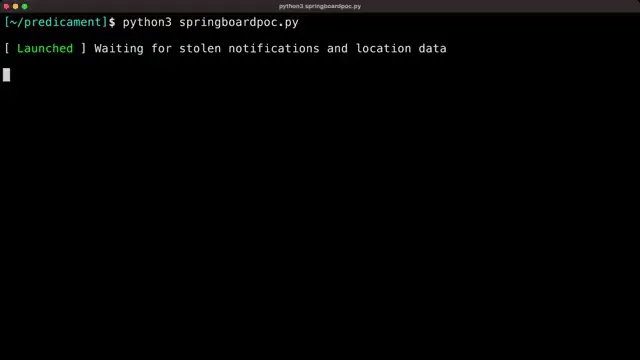
The write-up embeds a video at this point, after describing the SpringBoard issue.
Root cause
The design flaw is trust in data supplied by the sender. Services accept NSPredicate arguments over XPC and validate them with an NSPredicateVisitor, but most implementations rely on the expressionType property to filter out function expressions. Because that property can be set in the sending process and the receiver trusts it to be accurate, the validation does not reflect what will actually be evaluated, and the checks become useless. The denylist approach Apple added after FORCEDENTRY has a related weakness: it only blocks the classes and methods someone thought to list, and unrestricted methods can be used to empty the lists, restoring everything that had been blocked before. Both of Apple's newer mitigations could be bypassed.
Impact
On macOS and iOS before the fixes, the issues could be used by malicious applications and exploits to gain access to sensitive information such as a user's messages, location data, call history and photos. Concretely, code execution in coreduetd runs as root on macOS and exposes calendar, address book and photos; the App Store daemons could allow installation of arbitrary applications, potentially including system apps; OSLogService could expose sensitive syslog content; and on iPad, code execution inside SpringBoard reaches location data, the camera and microphone, call history, photos and other sensitive data, and can wipe the device. The vulnerabilities range from medium to high severity, with CVSS scores between 5.1 and 7.1. The write-up frames the whole set as a significant breach of the macOS and iOS security model, which relies on individual applications having fine-grained access to the subset of resources they need and querying higher-privileged services for anything else.
Fix
Apple addressed the issues in macOS 13.2 and iOS 16.3. The write-up thanks Apple for working quickly with Trellix to fix them. It does not describe the code changes themselves.
Variants to test
- Look for XPC services that accept
NSPredicatearguments and validate them with anNSPredicateVisitor. A positive result is a service that evaluates an expression the visitor was meant to reject, for example a function expression whoseexpressionTypewas set by the sender. - Audit each
NSPredicateVisitorimplementation separately, since nearly every process has its own version. A positive result is any implementation that trusts sender-controlled properties instead of inspecting the expression structure itself. - Probe denylist-based restrictions for classes and methods that were not listed. A positive result is an unrestricted method that can empty the denylist and restore previously blocked methods.
- Check services reachable by any app with no entitlements, starting with logging services such as
OSLogService. A positive result is reading sensitive syslog content from an unprivileged app. - On iPad, test scene activation rules supplied by an app to
UIKitCore. A positive result is code execution inside SpringBoard.
What happened, in plain words
Apple designs its phones and computers so that the apps you install cannot do whatever they like. Each app runs in its own little box, and if it needs something outside that box, such as your photos or your location, it has to ask a more powerful part of the system to fetch it. This report is about a family of bugs that let an app climb out of its box and get a more powerful part of the system to run the app's own instructions instead of just fetching data.
The researchers at Trellix Advanced Research Center found that a built-in Apple feature for filtering lists, called NSPredicate, is in reality a small programming language. Many privileged parts of macOS and iOS accept these filters from other apps and check them with a guard called NSPredicateVisitor before running them. The guard was supposed to reject anything dangerous, but the researchers found ways to make the guard approve code it should have refused. Apple fixed the problems in macOS 13.2 and iOS 16.3.
A few terms before we start, because the rest of the article leans on them:
- An operating system is the software that runs the whole device and manages apps, files, cameras and so on. macOS is Apple's desktop operating system; iOS is the one on iPhone and iPad.
- A process is a running program. Each app is usually one process, and the system itself runs many background processes. Think of each process as a separate office with its own locked filing cabinet.
- Code execution means getting a computer to run instructions that you, the attacker, wrote. In security, "we got code execution in process X" means "we can now make process X do whatever we want".
- A privilege is a permission to do something, such as read all files or install software. Privilege escalation means going from a low-permission position to a higher one.
- A sandbox is the box an app is confined to. Sandbox escape means getting out of that box.
The starting point: Apple locks down what can run
Since the first version of iOS on the original iPhone, Apple has enforced careful restrictions on the software that can run on its mobile devices. Only applications that were cryptographically signed by a developer certificate trusted by Apple could be executed, and scripting languages like AppleScript were not found on iOS.
Two ideas there need unpacking.
Code signing is like a wax seal on a letter. When a developer builds an app, Apple's system attaches a cryptographic signature proving who made it and that it has not been altered. The device checks the seal before running the app. If the seal is missing or broken, the app does not run. This stops random code from the internet from executing on your phone.
A scripting language is a way to write instructions as text and have the computer interpret them on the spot, rather than compiling them into a fixed program first. AppleScript is an old Apple scripting language for automating Mac apps. The point the report makes is that iOS had no such thing: you could not hand the phone a piece of text and have it run as code.
The ability to dynamically execute code was nearly completely removed, creating a powerful barrier for exploits which would need to find a way around these mitigations to run a malicious program. As macOS has continually adopted more features of iOS it has also come to enforce code signing more strictly.
So the security model rests on two walls: only signed apps run, and there is no easy way to feed new instructions to a running program. The bugs in this report knock a hole in the second wall.
The feature at the centre: NSPredicate
The Trellix Advanced Research Center vulnerability team has discovered a large new class of bugs that allow bypassing code signing to execute arbitrary code in the context of several platform applications, leading to escalation of privileges and sandbox escape on both macOS and iOS. The vulnerabilities range from medium to high severity with CVSS scores between 5.1 and 7.1. These issues could be used by malicious applications and exploits to gain access to sensitive information such as a user's messages, location data, call history, and photos.
A bug class is a family of bugs that share the same underlying mistake. Finding one instance is useful; finding the pattern behind it means you can look for the same mistake everywhere it might occur. That is what happened here.
CVSS is a standard scoring system for how serious a vulnerability is. Scores run from 0 to 10, with higher meaning worse. The report puts these issues between 5.1 and 7.1, which it describes as medium to high severity.
Now the feature itself. NSPredicate is a class that lets developers filter lists of arbitrary objects. In reality the syntax of NSPredicate is a full scripting language.
A class in programming is a blueprint for an object: a bundle of data plus the operations you can perform on it. An object is one thing built from that blueprint. A list here just means a collection of objects, such as a set of photos or messages.
Filtering a list is a familiar idea: you have a list of photos and you want only the ones taken in 2022. NSPredicate lets a developer write that condition as a piece of text, and the system evaluates it against each item. The everyday comparison is a search box: you type a condition and the program returns matching rows. The catch is that the "condition" language is powerful enough to be a programming language in its own right.
The building blocks of an NSPredicate are NSExpression objects, and those can be used to call arbitrary methods on arbitrary classes and objects. A method is an action an object can perform. "Call a method on an object" means "ask that object to do something". If an attacker can control which method gets called on which object, they can often chain harmless-looking actions into something harmful, the way a series of ordinary kitchen steps can end with a fire.
Apple's mitigation for this is a protocol called NSPredicateVisitor. A protocol in programming is a contract: a list of operations a class promises to support. Classes that implement NSPredicateVisitor can be used to check every expression to make sure it is safe to evaluate. Think of it as a security guard at a door who reads each visitor's badge and turns away anyone not on the list.
The primary method of high-level inter-process communication on macOS and iOS is XPC Services, and many processes with XPC Services accept NSPredicate arguments and use an NSPredicateVisitor to validate them.
Inter-process communication, or IPC, is how two separate programs talk to each other. Since each process is a locked office, IPC is the internal mail system between offices. XPC is Apple's version of that mail system: one process sends a structured message to a service run by another process, and the service does the work and replies. An argument is a value passed along with such a message, like an item enclosed with a letter. So the picture is: a low-privilege app mails a filter to a high-privilege service, the service's guard inspects the filter, and if it passes, the service runs it.
Where the idea came from
In September 2021 Citizen Lab revealed FORCEDENTRY, a 0-click iOS remote code execution exploit that targeted a Saudi activist in order to infect their iPhone with the Pegasus Malware. They further collaborated with Google Project Zero to analyse the exploits, leading to a pair of posts detailing the methods used in the attack. Part 1 described the initial exploitation of PDF parsing code and Part 2 laid out the sandbox escape.
A 0-click exploit is one that needs no action from the victim: no link to tap, no file to open. Remote code execution means running your code on someone else's device over a network. Malware is malicious software. PDF parsing code is the part of the system that reads PDF documents; documents are data, but the code that reads them can have bugs that turn data into instructions.
While much attention was given to the first exploit, the Trellix team was much more interested in the second, as it described a way to dynamically execute arbitrary code in another process which completely sidestepped code signing. It involved NSPredicate, an innocent looking class that allows developers to filter lists of arbitrary objects. The ability to dynamically generate and run code on iOS had been an official feature this whole time. However, this was just the beginning, as this feature revealed an entirely new bug class that completely breaks inter-process security in macOS and iOS.
The FORCEDENTRY sandbox escape was not the first exploration of this behaviour. CodeColorist, a prolific iOS userspace security researcher, designed a challenge for Real World CTF 2019 that involved exploiting the mechanics of NSPredicate. He subsequently gave a talk and published the blog post See No Eval in January 2021 which detailed how to use them to run arbitrary code.
Userspace means the ordinary part of the system where apps run, as opposed to the kernel, the innermost core. A CTF, or capture the flag, is a security competition where contestants solve deliberately planted challenges.
The gist of this research was that NSExpression objects, the building blocks of an NSPredicate, could be used to call arbitrary methods on arbitrary classes and objects. Using existing classes in Apple's private frameworks, it was possible to bypass pointer authentication (PAC) and every other mitigation to call any function.
Pointer authentication, or PAC, is a hardware defence on modern Apple chips. A pointer is a value that says "the data you want is at this address in memory". PAC attaches a cryptographic check to pointers so that an attacker who overwrites one cannot make it point somewhere useful. Bypassing it means getting around that check.
However, the post also describes ways in which Apple has mitigated the dangerousness of these objects, namely through a protocol called NSPredicateVisitor. Classes that implement this protocol can be used to check every expression to make sure they were safe to evaluate. CodeColorist notes at the end of his post that "Without a proper validation, it could be an inter-process attack surface to bypass TCC."
An attack surface is the total set of places where an attacker can try to send input. TCC is Apple's privacy permission system, the thing that asks "may this app access your photos?" and remembers your answer. Bypassing TCC means getting at private data without the user ever granting permission.
Finding the new bug class
The See No Eval post seemed to have been the main idea behind the sandbox escape used in FORCEDENTRY. Since then, Apple has removed features used in this exploit and CodeColorist's blog post and added new mitigations to attempt to restrict what could be done with NSPredicate. These mitigations used a large denylist to prevent the use of certain classes and methods that could clearly jeopardize security.
A denylist is a list of things that are forbidden, as opposed to an allowlist, which names the only things permitted. The everyday comparison: a nightclub with a list of banned guests at the door versus one that only admits people on the guest list. A denylist only works if you thought of every dangerous guest in advance.
However, the team discovered that these new mitigations could be bypassed. By using methods that had not been restricted it was possible to empty these lists, enabling all the same methods that had been available before. This bypass was assigned CVE-2023-23530 by Apple.
A CVE is a public identifier for a specific vulnerability, like a case number. Assigning one lets everyone refer to the same issue unambiguously. The trick here is worth spelling out: the denylist blocked some methods, but not all of them, and among the methods left open were ones that could clear the list itself. Once the list is empty, nothing is blocked any more, and everything Apple had tried to forbid is available again.
Even more significantly, the team discovered that nearly every implementation of NSPredicateVisitor could be bypassed. There are many processes with XPC Services that accept NSPredicate arguments and use NSPredicateVisitor to ensure that the provided expression is safe to evaluate. While there is no single implementation as nearly every process has its own version, most use the expressionType property to filter out function expressions.
An implementation is one particular piece of code that fulfils a contract. Since each process wrote its own guard, there is no single guard to fix. A property is a named value attached to an object, like a field on a form. expressionType is a property that says what kind of expression this is. A function expression is the kind that calls a function, which is exactly the dangerous kind.
The issues reside in the fact that this property can be set in the sending process and is trusted to be accurate by the receiver, rendering the checks useless. This bypass was assigned CVE-2023-23531.
The flaw is a classic one: the guard asks the parcel to describe itself, and believes the description. If the sender writes "this is a harmless kind of expression" on the label, the receiver's guard waves it through, even though the contents are a function call. The everyday comparison is a courier who asks the sender to tick a box saying "no liquids" and never opens the box. These two techniques opened a huge range of potential vulnerabilities that the team was still exploring.
The vulnerabilities
The first vulnerability found within this new class of bugs is in coreduetd, a process that collects data about behaviour on the device. An attacker with code execution in a process with the proper entitlements, such as Messages or Safari, can send a malicious NSPredicate and execute code with the privileges of this process. This process runs as root on macOS and gives the attacker access to the user's calendar, address book, and photos.
An entitlement is a permission slip baked into an app that says what it is allowed to do, such as talk to a particular system service. Root is the all-powerful account on a Unix-style system; a process running as root can do almost anything. So the chain is: get a small foothold in an app like Messages, use it to mail a booby-trapped filter to coreduetd, and end up running code as root with access to calendar, contacts and photos.
A very similar issue with the same impact also affects contextstored, a process related to CoreDuet. This result is similar to that of FORCEDENTRY, where the attacker can use a vulnerable XPC service to execute code from a process with more access to the device.
The appstored daemon (and appstoreagent on macOS) also possess vulnerable XPC Services. A daemon is a background process that runs without a visible window, doing system work. An attacker with control over a process that can communicate with these daemons could exploit these vulnerabilities to gain the ability to install arbitrary applications, potentially even including system apps. Being able to install arbitrary applications, potentially including system apps, is a serious step up.
There were also vulnerabilities of this class in services that could be accessed by any app, with no entitlements necessary. The first of these found was in OSLogService, an XPC service that can be used to read potentially sensitive information from the syslog. A syslog is the system's running diary of events, and diaries often contain more than their authors intended.
More significantly, an attacker can exploit an NSPredicate vulnerability in UIKitCore on the iPad. By setting malicious scene activation rules an app can achieve code execution inside of SpringBoard, a highly privileged app that can access location data, the camera and microphone, call history, photos, and other sensitive data, as well as wipe the device.
UIKitCore is the framework where the iPad vulnerability was found; scene activation rules are the input an app sets to trigger it. SpringBoard is a highly privileged iOS app that can access location data, the camera and microphone, call history, photos and other sensitive data, and wipe the device.
The write-up embeds a video at this point, after describing the SpringBoard issue.
Why it worked
The design flaw is trust in data supplied by the sender. Services accept NSPredicate arguments over XPC and validate them with an NSPredicateVisitor, but most implementations rely on the expressionType property to filter out function expressions. Because that property can be set in the sending process and the receiver trusts it to be accurate, the validation does not reflect what will actually be evaluated, and the checks become useless.
The denylist approach Apple added after FORCEDENTRY has a related weakness: it only blocks the classes and methods someone thought to list, and unrestricted methods can be used to empty the lists, restoring everything that had been blocked before. Both of Apple's newer mitigations could be bypassed. In both cases the lesson is the same: a check that trusts the attacker's own description of their input is not a check.
What an attacker could reach
On macOS and iOS before the fixes, the issues could be used by malicious applications and exploits to gain access to sensitive information such as a user's messages, location data, call history, and photos. Concretely:
| Where the code ran | What it gave access to |
|---|---|
coreduetd |
Root on macOS; calendar, address book and photos |
appstored / appstoreagent |
Installing arbitrary applications, potentially including system apps |
OSLogService |
Potentially sensitive syslog content |
| SpringBoard on iPad | Location data, camera and microphone, call history, photos and other sensitive data; wiping the device |
The write-up frames the whole set as a significant breach of the macOS and iOS security model, which relies on individual applications having fine-grained access to the subset of resources they need and querying higher-privileged services for anything else. That model is the office-and-mail analogy again: apps stay in their rooms and ask the front desk for things. These bugs let an app write its own instructions onto the request form.
The fix
Apple addressed the issues in macOS 13.2 and iOS 16.3. The write-up thanks Apple for working quickly with Trellix to fix them. It does not describe the code changes themselves.
How to look for the same thing elsewhere
If you are learning to audit software, the report lays out a repeatable method:
- Look for XPC services that accept
NSPredicatearguments and validate them with anNSPredicateVisitor. A positive result is a service that evaluates an expression the visitor was meant to reject, for example a function expression whoseexpressionTypewas set by the sender. - Audit each
NSPredicateVisitorimplementation separately, since nearly every process has its own version. A positive result is any implementation that trusts sender-controlled properties instead of inspecting the expression structure itself. - Probe denylist-based restrictions for classes and methods that were not listed. A positive result is an unrestricted method that can empty the denylist and restore previously blocked methods.
- Check services reachable by any app with no entitlements, starting with logging services such as
OSLogService. A positive result is reading sensitive syslog content from an unprivileged app. - On iPad, test scene activation rules supplied by an app to
UIKitCore. A positive result is code execution inside SpringBoard.
Glossary
- 0-click exploit: an attack that works without the victim doing anything, such as tapping a link or opening a file.
- Argument: a value sent along with a message or command.
- Attack surface: all the places where an attacker can try to send input to a system.
- Bug class: a family of bugs that share the same underlying mistake.
- Class: a programming blueprint for objects, defining their data and operations.
- Code execution: getting a computer to run instructions written by an attacker.
- Code signing: a cryptographic seal proving who made a program and that it has not been altered; devices check it before running the program.
coreduetd: a macOS/iOS background process that collects data about behaviour on the device.- CTF (capture the flag): a security competition with deliberately planted challenges.
- CVE: a public identifier assigned to a specific vulnerability.
- CVSS: a standard 0 to 10 score for the severity of a vulnerability.
- Daemon: a background process that runs without a visible window.
- Denylist: a list of forbidden items; anything not listed is allowed.
- Entitlement: a permission baked into an app that says which system services it may use.
expressionType: a property on an expression saying what kind of expression it is, used by guards to filter out function expressions.- Function expression: an expression that calls a function, the dangerous kind in this context.
- Implementation: one particular piece of code that fulfils a contract or protocol.
- Inter-process communication (IPC): how separate running programs exchange messages.
- Kernel: the innermost core of an operating system, with the highest privileges.
- List: a collection of objects, such as photos or messages.
- Malware: malicious software.
- Method: an action an object can perform.
NSPredicate: an Apple class for filtering lists of objects, whose syntax is effectively a scripting language.NSExpression: the building block of anNSPredicate; can call methods on classes and objects.NSPredicateVisitor: a protocol whose implementations check whether an expression is safe to evaluate.- Object: one instance built from a class.
- Operating system: the software that runs the whole device and manages apps and resources.
OSLogService: an XPC service that can read from the syslog.- Pointer authentication (PAC): a hardware defence that cryptographically checks pointers so they cannot be usefully overwritten.
- Privilege: a permission to perform an action.
- Privilege escalation: moving from lower permissions to higher ones.
- Process: a running program with its own memory and permissions.
- Property: a named value attached to an object.
- Protocol: a programming contract listing operations a class promises to support.
- Remote code execution: running attacker code on someone else's device over a network.
- Root: the all-powerful account on a Unix-style system.
- Sandbox: the restricted environment an app is confined to.
- Sandbox escape: getting out of that restricted environment.
- Scene activation rules: instructions describing how and when a part of the interface is brought to the foreground.
- Scripting language: a language whose text instructions are interpreted and run on the spot.
- SpringBoard: the highly privileged iOS app that manages the home screen and app switching.
- Syslog: the system's running log of events.
- TCC: Apple's privacy permission system that controls access to data such as photos and location.
UIKitCore: the framework providing the building blocks of the on-screen interface.- Userspace: the ordinary part of the system where apps run, as opposed to the kernel.
- XPC Services: Apple's mechanism for high-level inter-process communication between apps and system services.

