No Restriction on password
The password reset form did not limit the length of the password, so a very long password could be submitted. The reporter claims this could cause resource exhaustion and a denial of service, but only an internal server error was observed.

- Disclosed after 3 days
Note- 1: When I report this issue to another program, the triaged expert said ( The server is now only hashing a reasonable size password, this should not cause a Denial of Service . Since there does not appear to be evidence of DoS occurring here)
So they will take action, Only when ddos appear.
Note- 2: (For Gitlab) while seeing (Note-1), You will also consider as same but here the interesting is happened.
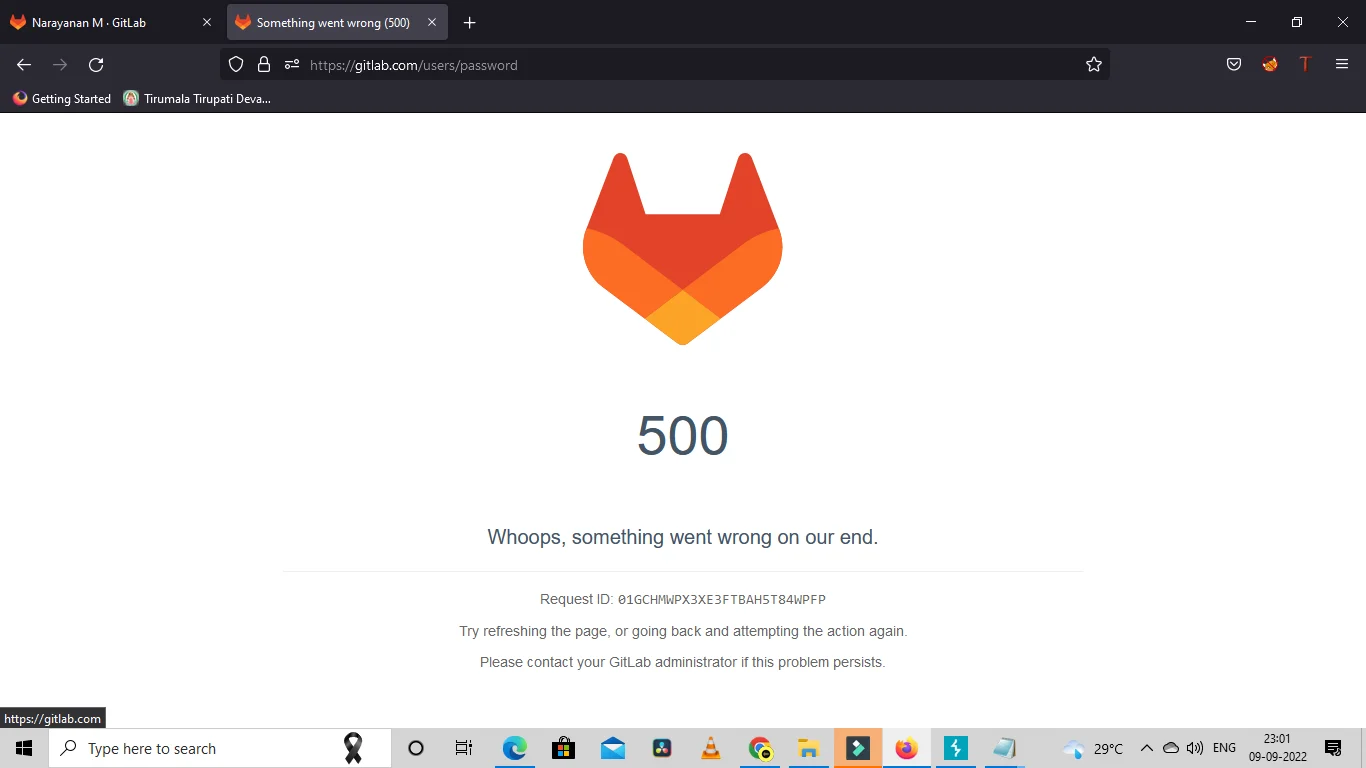
My scope is not to attempt ddos to your server, because you exclude any activity related to denial of service to your assets. But without proof there is no way prove, so that I have put payloads to password field and I got internal server error from your side.
Description:
Hey, When I tried to reset the password, I noticed that you haven't kept any password limit.
You need to decrease password length: There are two reasons for limiting the password size. For one, hashing a large amount of data can cause significant resource consumption on behalf of the server and would be an easy target for a Denial Of Service attack.
Normally all sites have a password minimum to maximum lengths like 72 characters limit or 48 limits to prevent Denial Of Service attack.
All valid POC has been attached, So Investigate and fix the problem soon.
Impact
The server might not be able to handle such characters coming from different machines simultaneously. The attacker can perform a DDOS attack by using this vulnerability.
Attachments
Not written yet. The AI write-up for this report has not been written yet. The Original tab links to the source.
How it worked
Root cause
Likely the password reset endpoint accepted passwords of unlimited length and hashed them without a size cap.
Impact
The reporter claims an attacker could cause a denial of service by sending many very long passwords at once, but the text only shows a single internal server error and no actual denial of service.
What the attacker needed
Access to the password reset form
The fix
The password field should be capped at a reasonable maximum length before hashing.
How it was found
- Open the password reset form.
- Submit a very long password in the password field.
- Observe an internal server error response.
Explained by bugbounty.wiki with AI from the original and checked against quotes from it; it can still be wrong. Read the original before relying on a detail.
Not written yet. The AI write-up for this report has not been written yet. The Original tab links to the source.
When you set a password, the server usually stores only a scrambled version of it, called a hash. Making that hash takes work, and the work grows with the length of the password. If there is no maximum length, someone could send an enormous password and make the server do a lot of unnecessary work.
What is DoS?
A request that exhausts resources or crashes a component. Many programs forbid testing it; reports usually show it from code, not by attacking.


