[h1-415 2020] finally
The write-up describes a chain in a CTF challenge where an email leaked on the login page could be manipulated with brace characters to register a new account, then the recovery feature was abused to take over another user's account. It then describes a blind XSS in a support form and an XSS in a name field rendered into a PDF that reached a local Chromium debugger port to read a secret.

- Triaged in under an hour
- Fixed in 13 days
- Disclosed after 13 days
- add { or } chars behind Joberts email, which leaks on the login page
- register a new account using that email
- sign out and use the recover feature with the just generated qr code. this will get you into Joberts account
- head to /support and submit a blind XSS payload which extracts the document.location
- submit the form on this feedback review page
- change the user id to your own account you created at step 2
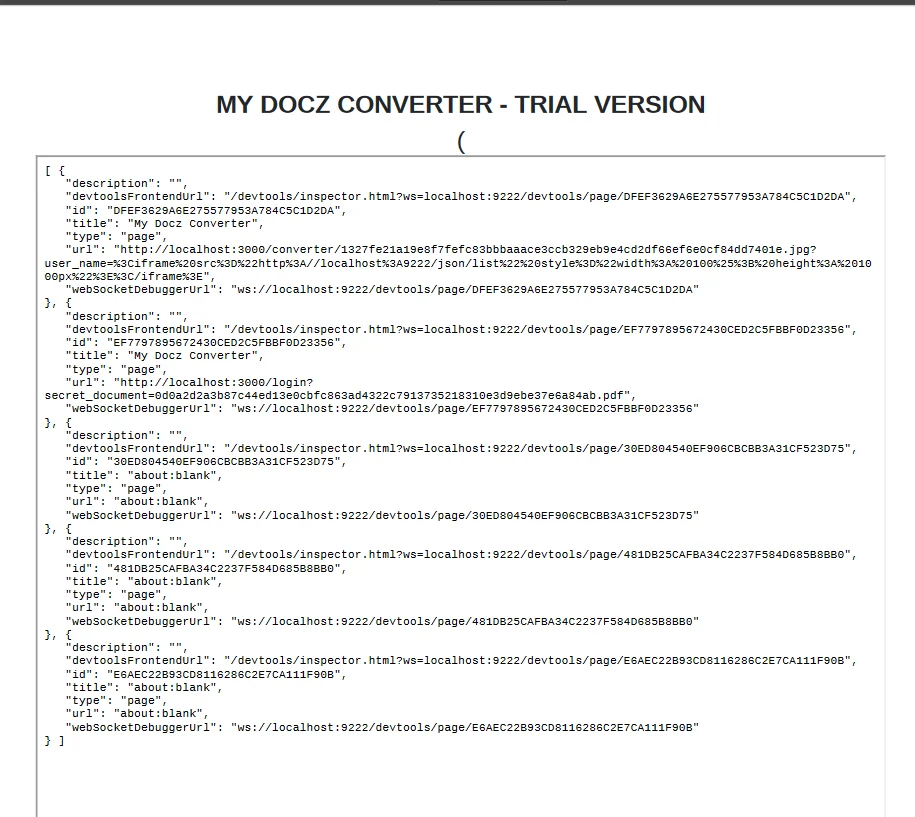
- place an XSS payload in the user's name field and generate a pdf. payload:
I hope you like my writeup, and may I be the winner. lmao, I'm kidding, I'm only submitting this because it took me like 40 hours to finish this CTF. (from which a lot consisted of frustration and depression because of the 80% downtime or the core functions not working :( )
Not doing an actual write-up since I got some hints from 2 friends of mine, so I didn't 100% do this on my own. may Bayo and Jllis be the winners. BBAC represent :muscle:
Flag: https://h1-415.h1ctf.com/documents/1327fe21a19e8f7fefc83bbbaaace3ccb329eb9e4cd2df66ef6e0cf84dd7401e
Impact
Big impact. Bounty pls
Attachments

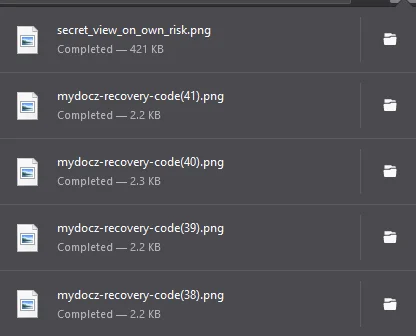
Not written yet. The AI write-up for this report has not been written yet. The Original tab links to the source.
How it worked
Root cause
Likely the application normalised or parsed the email inconsistently between registration and recovery, and rendered user-controlled fields into a PDF using a browser with a debug port exposed.
Impact
An attacker could take over another user's account and, through rendered PDFs, read a secret value from a local debugging endpoint.
What the attacker needed
CTF challenge account; victim email visible on login page; PDF rendering with debug port open
How it was found
- Add brace characters to the email leaked on the login page.
- Register a new account using that email.
- Sign out and use the recover feature with the generated QR code to enter the other account.
- Submit a blind XSS payload via the support form that extracts the document location.
- Change the user id to the newly created account and place an XSS payload in the name field, then generate a PDF.
- View the PDF and copy the id containing 'secret' from the URL.
Explained by bugbounty.wiki with AI from the original and checked against quotes from it; it can still be wrong. Read the original before relying on a detail.
Not written yet. The AI write-up for this report has not been written yet. The Original tab links to the source.
A website showed another person's email address on its login page. By adding brace characters to that email, the author could register a new account that the site treated as belonging to that person, and the account recovery feature then let them get into that person's account. Later, text they entered was rendered as a PDF by a browser with a debugging port open, letting them read a secret value.
What is Account takeover?
Getting into someone else's account through a flaw in sign-in, password reset, second factor, single sign-on or session handling.




