Stored XSS on https://apps.topcoder.com/wiki/plugins/socialbookmarking/updatebookmark.action
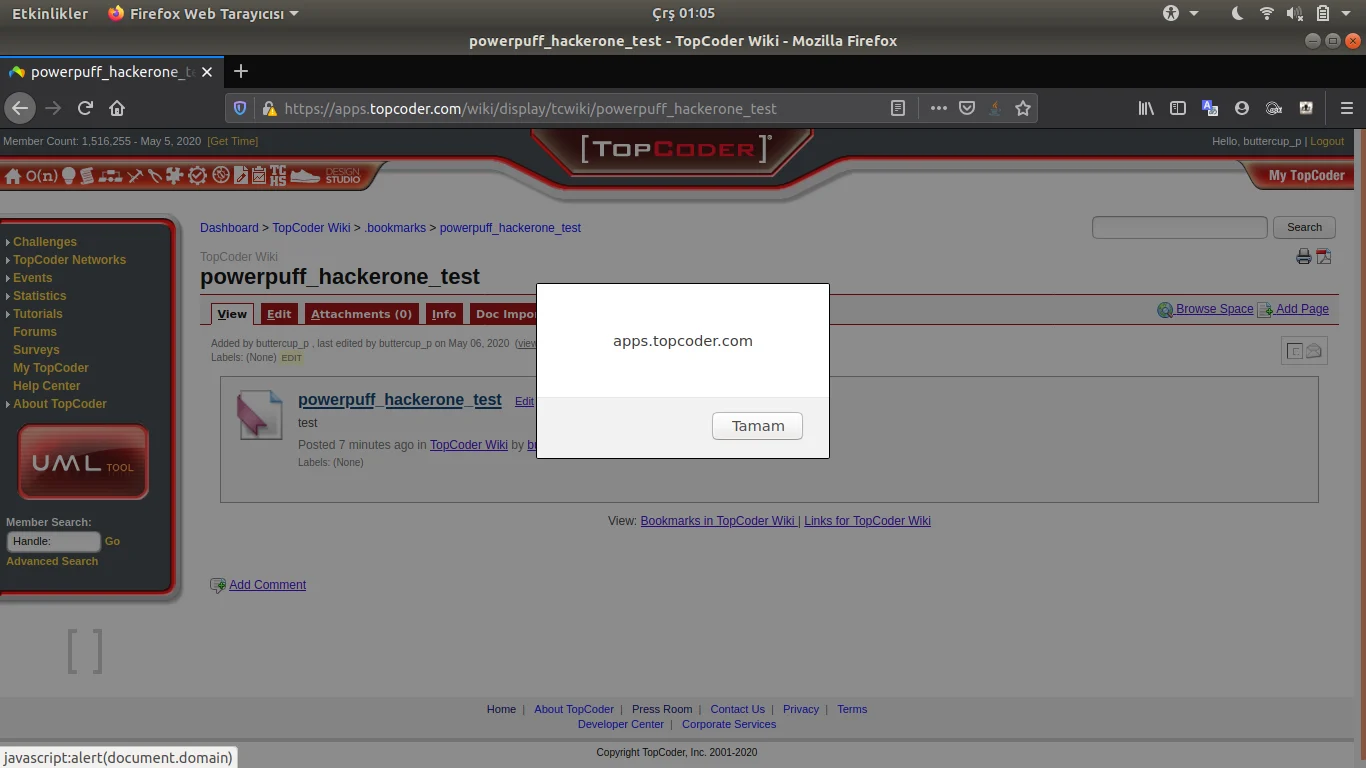
A bookmark creation form accepted a javascript: URL and stored it without validation. When a victim clicked the bookmark title on the wiki page, the script executed in their browser.

- Triaged in 14 hours
- Fixed in 6 days
- Disclosed after 7 days
Summary:
Hi :) Adding javascript url causes to stored XSS when creating bookmark.
Steps To Reproduce:
Go to https://apps.topcoder.com/wiki/plugins/socialbookmarking/updatebookmark.action . Write javascript:alert(document.domain) on url input and fill other areas. After create, go https://apps.topcoder.com/wiki/display/tcwiki/<TITLE> and when you click the title on this page, XSS will execute.
PoC: https://apps.topcoder.com/wiki/display/tcwiki/powerpuff_hackerone_test
Impact
XSS can use to steal cookies or to run arbitrary code on victim's browser.
Not written yet. The AI write-up for this report has not been written yet. The Original tab links to the source.
How it worked
Impact
An attacker could steal cookies or run arbitrary code in a victim's browser when the victim clicks the bookmark title.
What the attacker needed
Ability to create a bookmark; victim clicks the bookmark title
How it was found
- Open the bookmark creation page.
- Enter a javascript: URL in the URL field and fill the other fields.
- Create the bookmark.
- Go to the wiki display page for the bookmark title.
- Click the title to trigger the script.
Explained by bugbounty.wiki with AI from the original and checked against quotes from it; it can still be wrong. Read the original before relying on a detail.
Not written yet. The AI write-up for this report has not been written yet. The Original tab links to the source.
A bookmark is a saved link. The site let someone save a link that starts with 'javascript:' instead of 'http:', and later ran that code when the link was clicked. This is called stored cross-site scripting (XSS): harmful code saved on the site and run in another visitor's browser.
What is XSS?
Script an attacker supplies runs in another user's browser, on the target's origin, with that user's session.




