[serve] Directory index of arbitrary folder available due to lack of sanitization of %2e and %2f characters in url
The serve module fails to sanitise encoded dot and slash characters in URLs, allowing directory traversal. An attacker can list the contents of any directory on the server, though not read files.

- Triaged in 19 hours
- Fixed in 48 hours
- Disclosed after 2 days
Hi,
This report is about Arbitrary Directory Listing vulnerability I found in serve module.
Vulnerability does not allow to open arbitrary file due to send module which handles file reading and implements its own validation and protection against Path Traversal attacks.
However serve handles directory listing on its own and does not protect against listing of any directory on the remote server.
Module:
Serve is a module which allows to server static files and browse directories in the browser. The vulnerability exists in the latest available version (6.4.8)
Link to npm page: https://www.npmjs.com/package/serve
Summary:
Serve does not handle %2e (.) and %2f (/) and allows to use them in paths, which can be used do go up through directory tree and lists content of any directory.
Steps To Reproduce:
- install
serve
$ npm install serve
- create simple application which uses
http-pagesfor serving static files from local server:
const serve = require('serve')

const server = serve(__dirname, {
    port: 4444,
    ignore: []
})
- run application:
$ node app.js
- open the browser and go to
http://localhost:4444You should see all directories and files in the directory, whereapp.jswas run:
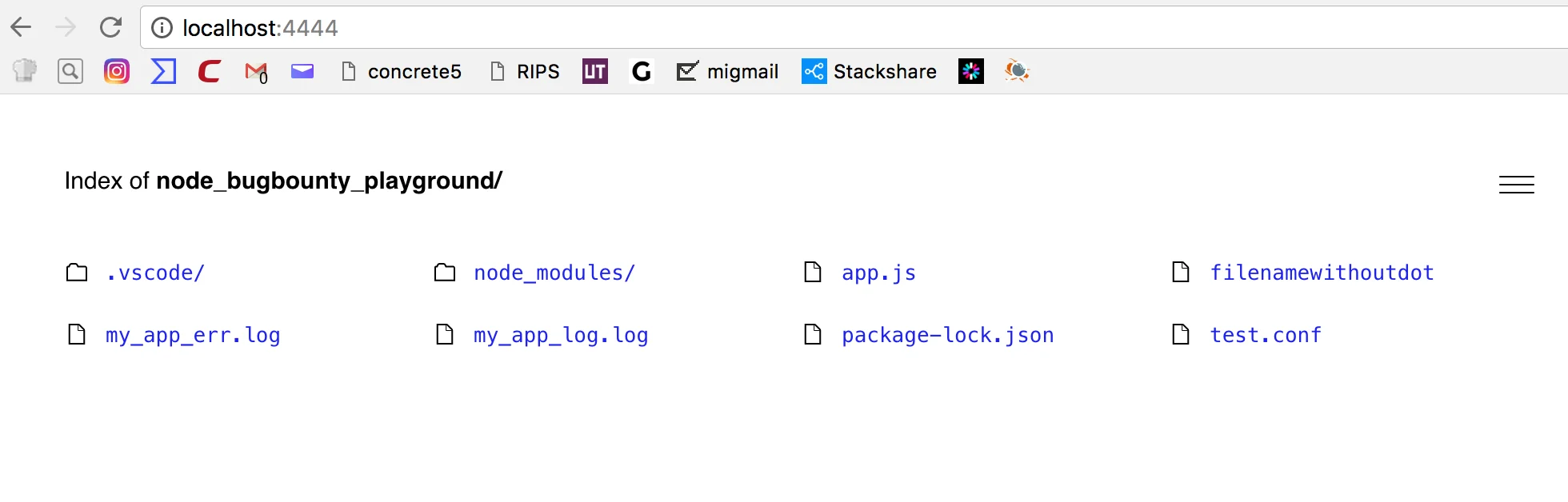
- now, open the following url:
http://localhost:4444/..%2f/..%2f/..%2f/..%2f/etc/(please adjust the number of ..%2f/ to reflect your system). You'll be able to see the content of/etcdirectory:
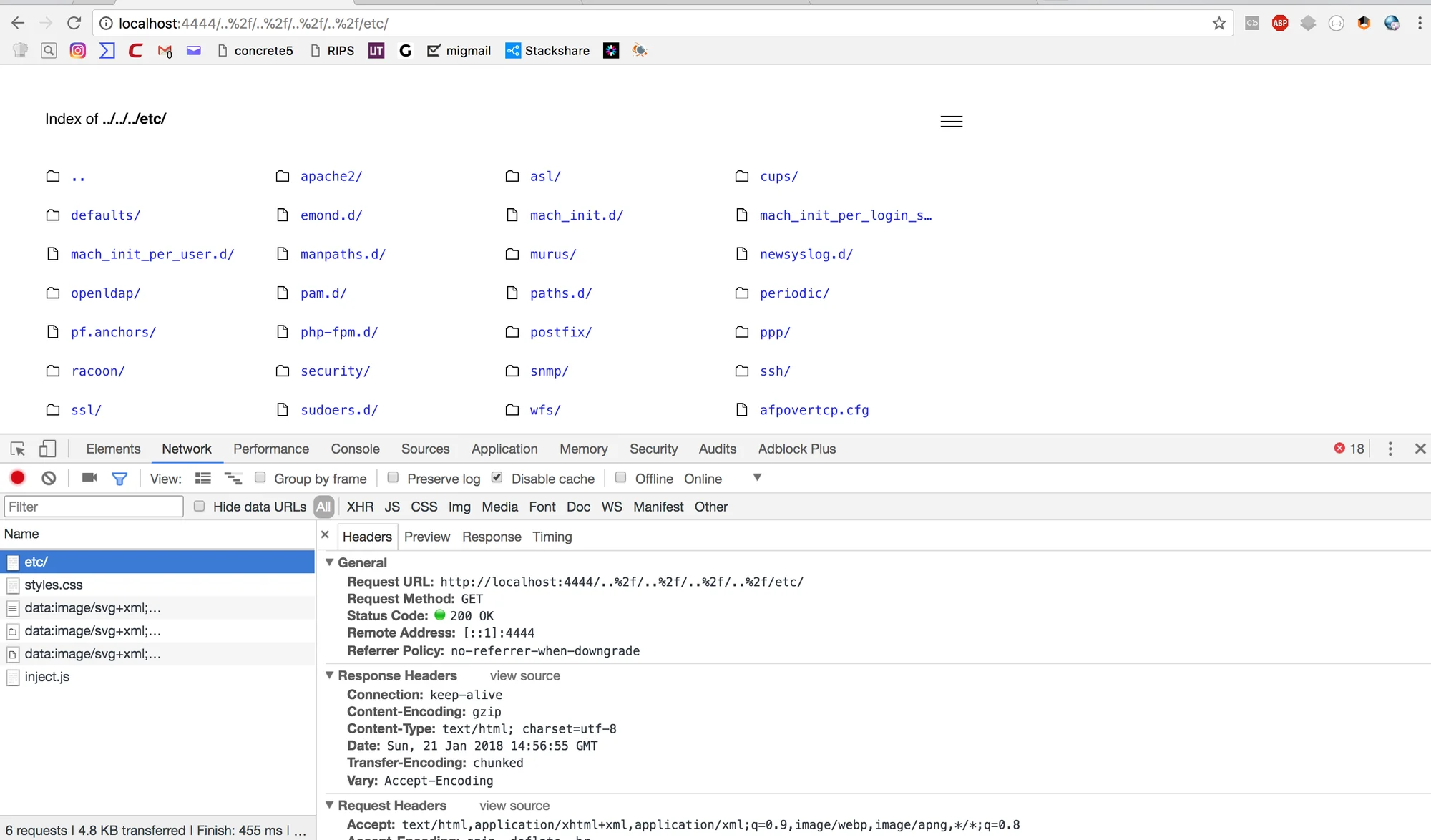
Supporting Material/References:
Configuration I've used to find this vulnerability:
- macOS HighSierra 10.13.2
- node 8.9.3
- npm 5.5.1
- curl 7.54.0
Wrap up
I hope this report will help to keep Node ecosystem more safe. If you have any questions about any details of this finding, please let me know in comment.
Thank you
Regards,
Rafal 'bl4de' Janicki
Impact
This vulnerability allows malisious user to list content of any directory on the remote machine, where serve runs. Although it's not enough to open and read arbitrary files, this still might expose some sensitive information which can be used in different attacks.
Not written yet. The AI write-up for this report has not been written yet. The Original tab links to the source.
How it worked
Root cause
Likely the serve module does not decode and normalise URL-encoded path traversal sequences before using them to resolve directory paths for listing.
Impact
An attacker could list the contents of any directory on the server, potentially exposing sensitive information for use in further attacks, but cannot read files.
What the attacker needed
Serve module running; network access to the server
How it was found
- Install the serve module.
- Create a simple application that uses serve to serve static files from the current directory.
- Run the application.
- Open the browser and go to the local server address to see the directory listing.
- Open a URL with multiple encoded '../' sequences to navigate up the directory tree and list the contents of /etc.
Explained by bugbounty.wiki with AI from the original and checked against quotes from it; it can still be wrong. Read the original before relying on a detail.
Not written yet. The AI write-up for this report has not been written yet. The Original tab links to the source.
The serve tool shows files from a folder on a website. It did not properly block special encoded characters that mean 'go up a folder', so someone could browse folders outside the intended one and see what files are there, but not open them.
What is Path traversal?
Input that builds a file path escapes the intended folder, reading or writing files the application should never touch.





