Cross-site-Scripting
The application did not properly sanitise user input in the 'display name' field, allowing a stored cross-site scripting payload to be saved. An attacker could execute arbitrary JavaScript in the context of other users who view the profile, potentially leading to account takeover.

- Triaged in 3 hours
- Fixed in 22 hours
- Paid in 23 hours
- Disclosed after 23 hours
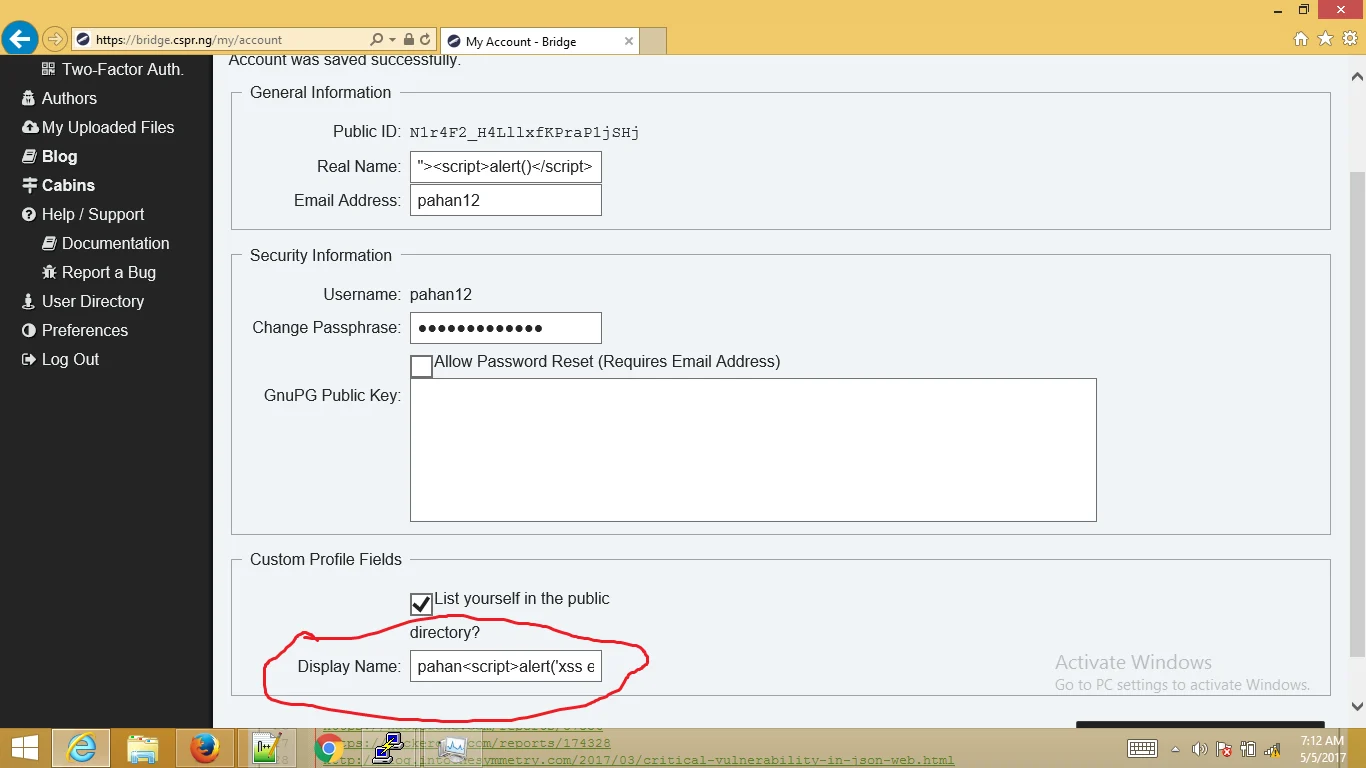
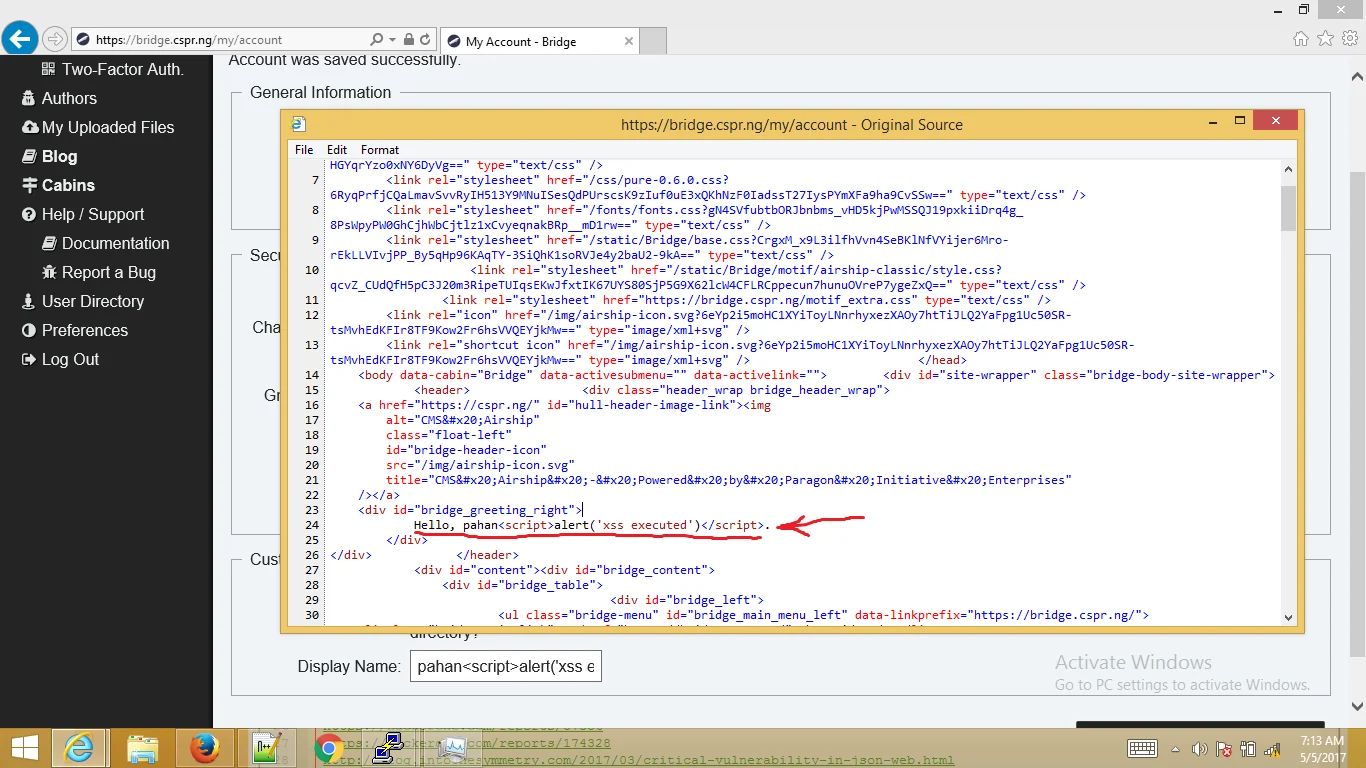
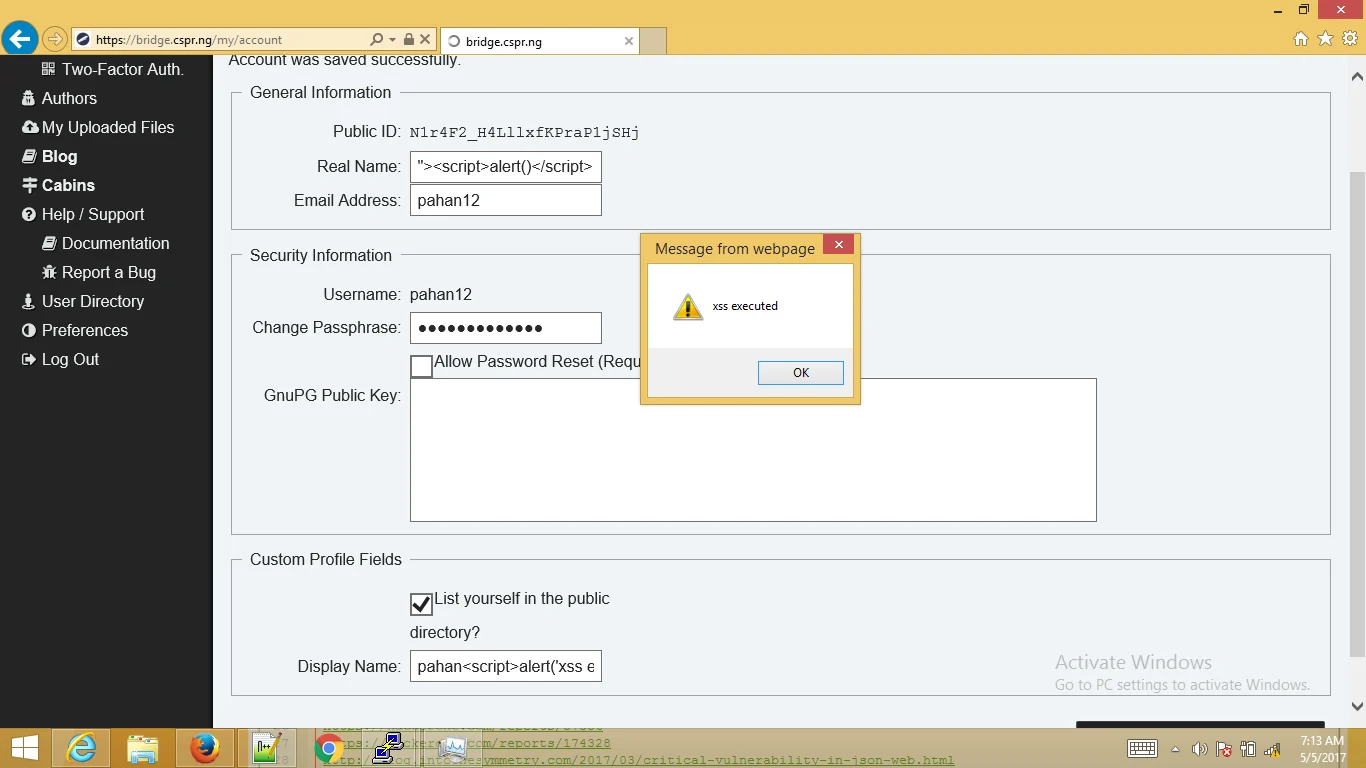
step: 1: goto https://bridge.cspr.ng/my/account of your account 2. in "Custom Profile field option" check the box and enter xss payload in "display name" field payload: "p<script>alert('xss')</script>" 3. update the information 4. open the account in INTERNET EXPLORER 11 and xss will executed
note: here server is not sanitize the user input properly, payload will not work in firefox,chrome browser due to "content-security-policy" But internet explorer does not Support "Content-Security-Policy" so xss will execut
this is stored xss and the display name will visible to everywhere, so its possible to account takeover of ther user
Attachments
Not written yet. The AI write-up for this report has not been written yet. The Original tab links to the source.
How it worked
Root cause
Likely the server failed to sanitise or encode user-supplied input in the 'display name' field before storing and reflecting it.
Impact
The stored XSS could allow an attacker to take over other users' accounts, but it only works in Internet Explorer 11 because other browsers enforce Content-Security-Policy.
What the attacker needed
A user account; victim uses Internet Explorer 11; victim views the profile
How it was found
- Go to the account page at bridge.cspr.ng/my/account.
- In 'Custom Profile field option', check the box and enter an XSS payload in the 'display name' field.
- Update the information.
- Open the account in Internet Explorer 11 and the XSS will execute.
Explained by bugbounty.wiki with AI from the original and checked against quotes from it; it can still be wrong. Read the original before relying on a detail.
Not written yet. The AI write-up for this report has not been written yet. The Original tab links to the source.
The website let users save a display name without cleaning it up. A malicious user could put a small script in their name, and when other people viewed it, the script would run in their browser. This could possibly let the attacker take over the victim's account.
What is XSS?
Script an attacker supplies runs in another user's browser, on the target's origin, with that user's session.




