Stored XSS in dev-ucrm-billing-demo.ubnt.com In Client Custom Attribute
A client custom attribute field in a billing demo application stored user-supplied HTML without sanitisation, so a crafted value executed script when the client page was viewed. An attacker with an admin account could store a payload that runs in another admin's or user's browser when they expand the attribute, potentially taking over their account.

- Triaged in 5 days
- Fixed in 8 days
- Paid in 5 days
- Disclosed after 3 months
Hey,
Was Testing the subdomins when I came Accross the subdomain https://dev-ucrm-billing-demo.ubnt.com/ I logged in as an Administrator and while testing i added a User and In Client Custom Attribute 1 i added the Payload: "><IMG src=x onerror=prompt(1);>"">><marquee><img src=x onerror=confirm(3)></marquee>"/ and Save the Client and Then on client page i.e: https://dev-ucrm-billing-demo.ubnt.com/client/24 When User click on Show more (under Custom Attribute 1) The XSS payload executes :)
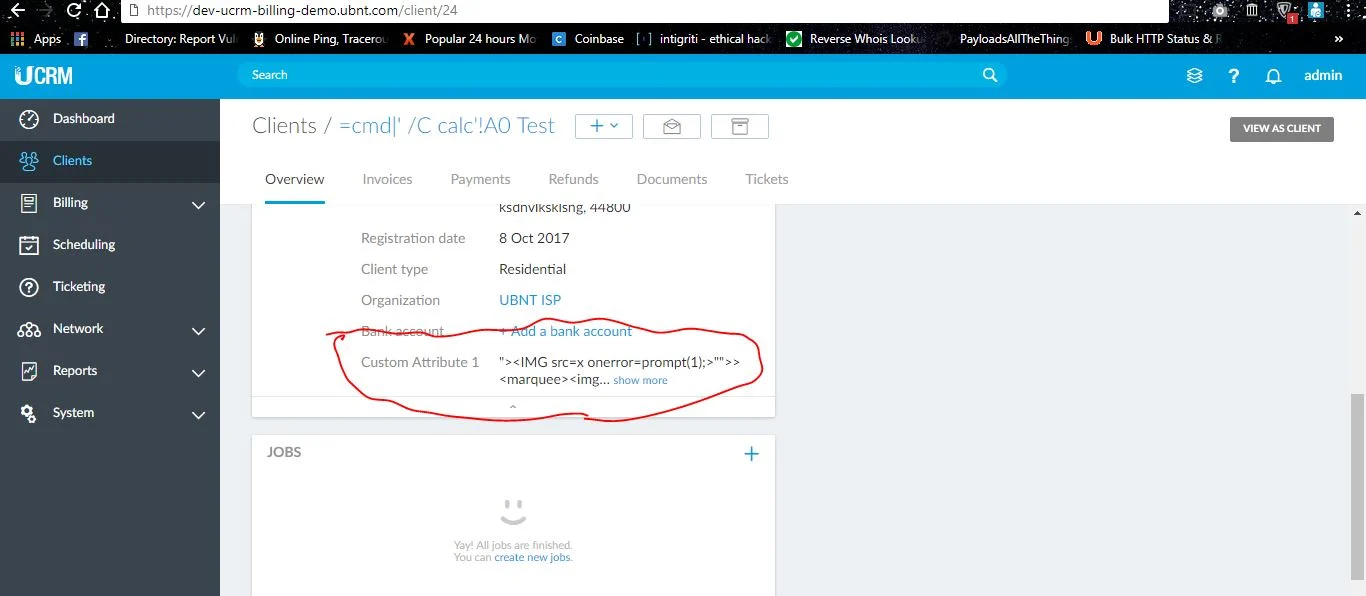
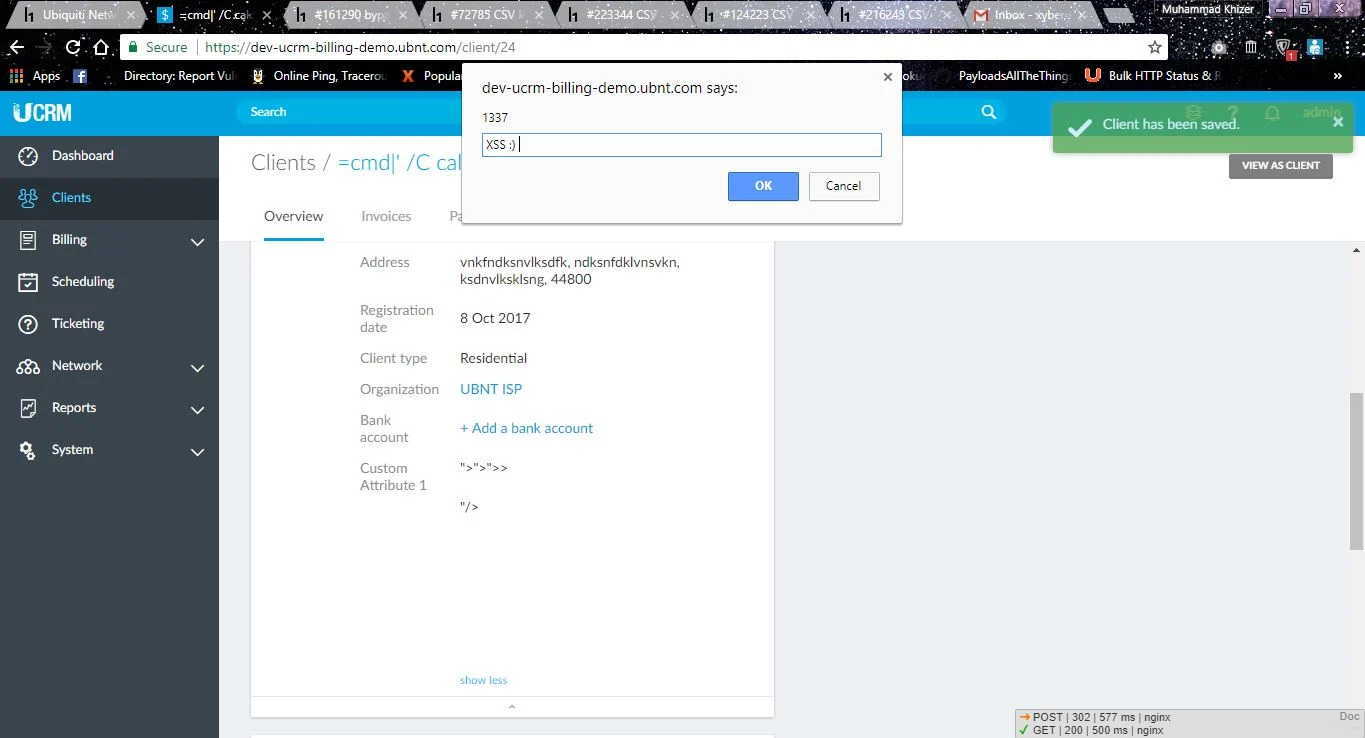
If another Admin or A user will perform the steps to see the custo atributes his/her account can be takenover By Such Pentest XSS By using tools like https://xsshunter.com/app etc :)
Not written yet. The AI write-up for this report has not been written yet. The Original tab links to the source.
How it worked
Root cause
Likely the custom attribute value was rendered into the page as raw HTML without output encoding or sanitisation.
Impact
Another admin or user viewing the stored attribute could have their session or account taken over via the executed script.
What the attacker needed
An administrator account; victim views the client page and clicks Show more
How it was found
- Log in to the billing demo application as an administrator.
- Create a user and put an HTML/script payload into Client Custom Attribute 1.
- Save the client.
- Open the client page and click 'Show more' under Custom Attribute 1.
- The script runs in the browser.
Explained by bugbounty.wiki with AI from the original and checked against quotes from it; it can still be wrong. Read the original before relying on a detail.
Not written yet. The AI write-up for this report has not been written yet. The Original tab links to the source.
A web page sometimes shows text that a user typed in earlier. If the page treats that text as code instead of plain text, the browser will run it. Here, a value saved in a custom attribute field ran as script when someone clicked 'Show more', which lets an attacker act as the victim in their browser.
What is XSS?
Script an attacker supplies runs in another user's browser, on the target's origin, with that user's session.








