My First Bug ($500)
The researcher found that some domains lacked a valid SPF record, allowing an attacker to send spoofed emails from those domains. They reported this to three programs, and two were accepted as valid, earning a bounty.
 Published on medium.com
Curated list of Bug Bounty programs — https://bugbountydirectory.com
The full write-up lives on its author's site
It belongs to its author, so we link to it rather than copy it. The other two tabs are our own rewrites, checked against it.
Context
This is a write-up of a beginner-level finding: a missing SPF record that allowed email spoofing. The researcher had spent two to three months looking for bugs without success, then turned to HackerOne's Hacktivity page, where disclosed reports are published, and found a report he had not known about: a Chainlink disclosure titled "No Valid SPF Records". The vulnerability described there is that an attacker can spoof a domain's email address and send messages that appear to come from it, which can lead to fake emails or phishing attempts.
The asset named in the platform metadata is medium.com, which is where the write-up itself was published, not the target of the testing. The report does not name the three websites the researcher tested.
Setup
No accounts, roles or special tooling were needed. The whole process uses two public web services:
- An SPF record validator, to check whether a domain publishes a valid SPF record.
- An email sending service, to attempt to send mail that appears to come from that domain.
A precondition is that you have an email address at the target domain in mind, or at least the domain part of one, since the check is performed on the domain.
Finding it
While reading disclosed reports on Hacktivity, the researcher came across the Chainlink report on missing SPF records. The concept was new to him, so he read up on it. SPF (Sender Policy Framework) is a DNS record that states which hosts are authorised to send mail for a domain. If a domain has no valid SPF record, receiving mail servers have nothing to compare the sending host against, and mail claiming to come from that domain is more likely to be accepted.
He then applied the same check to websites he had previously tested.
Exploitation
Step 1: Check the SPF record
Visit the SPF validator at https://www.kitterman.com/spf/validate.html, enter the domain name and click "Get SPF Record (if any)". The researcher notes there are many sites that do this, and that he found this one simple to use. The domain to enter is the part after the @ in an address at the target: if you receive email like [redacted], type example.com.
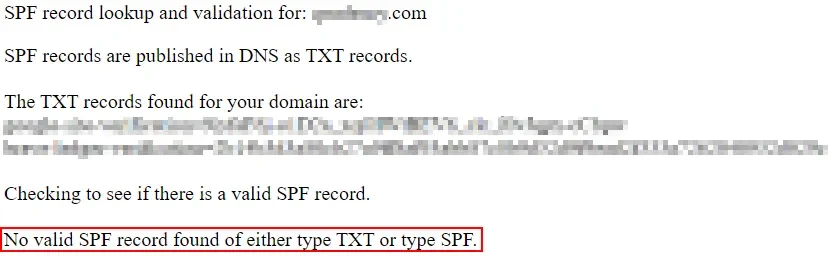
The screenshot shows the validator's response for the domain that was checked.
Step 2: Interpret the result
If the validator returns No valid SPF record, the researcher's conclusion is that you can probably send email using that domain. This is the signal that the domain is worth testing further.
Step 3: Attempt to send spoofed mail
Go to https://emkei.cz, fill in all the details and hit send. The researcher notes that many sites offer this, and that he found this one easy to use and that the emails arrive fairly quick. If an email from that domain arrives, the domain is vulnerable.
Step 4: Report
He ran this against the websites he used to hack. Three of them had no SPF record, so he reported all three. After a few days they replied.

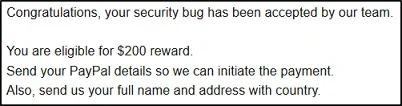
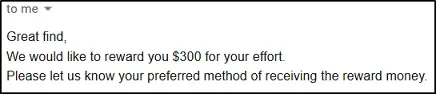
The screenshots are included after the note that the three organisations replied.
The first report turned out to be a duplicate. That made him think the other two would be duplicates as well, given how easy the check was, but they were accepted as valid and he received a bounty.
Root cause
The root cause is a DNS configuration gap: the domain publishes no valid SPF record, so there is no policy telling receiving mail servers which hosts may send mail for it. Without that policy, a message sent through a third-party sending service with the target's domain in the From address is not contradicted by anything in DNS, and can be delivered looking like legitimate mail from the domain. The report does not discuss DMARC or DKIM, so it is not stated whether those were present or would have changed the outcome.
Impact
An attacker can send email that appears to come from the affected domain. The researcher frames the consequence as fake emails or phishing attempts: recipients see a message from the organisation's address and may trust its content. The researcher's test is whether the spoofed email actually arrives; if it does, he treats the domain as vulnerable.
Fix
The report does not describe what the affected organisations changed. The implied fix is to publish a valid SPF record for the domain, listing the hosts that are authorised to send mail for it, so that receiving servers can reject or flag mail sent from anywhere else.
Variants to test
- Check other domains owned by the same organisation, including subdomains and regional domains, with the same validator. A positive result is No valid SPF record for a domain that sends mail.
- A positive result is a validator response that the record is not valid, followed by a successful spoofed send.
- A positive result is being able to send from a host outside the organisation's real mail infrastructure and still have the message delivered.
- A positive result is the same: the message arrives with the target domain in the From address.
What happened, in plain words
A security researcher spent two to three months hunting for bugs and found nothing. He then visited HackerOne's Hacktivity page, a public list of bug reports that companies have agreed to make public, and read a report about a problem he had never heard of: a missing SPF record. That report was about Chainlink and was titled "No Valid SPF Records". The issue is that an attacker can send email that looks like it comes from a company's address, which can trick people into trusting fake messages or handing over information in a phishing attack.
He learned how to check for the problem, tried it on websites he had tested before, and found three that were missing the record. He reported all three. The first turned out to be a duplicate, but the other two were valid and he received a bounty.
This guide walks through exactly what he did, in the same order, explaining every term from scratch. You only need a web browser and an internet connection.
Background: what is SPF and why does it matter?
When you send an email, the message includes a "From" address, such as [redacted]. The receiving mail server has no built-in way to verify that the message really came from example.com. Anyone can configure their email software to put any address in the From field. This is called email spoofing.
To help receiving servers decide whether a message is legitimate, a domain owner can publish a DNS record called SPF (Sender Policy Framework). DNS is the system that turns domain names like example.com into IP addresses, and it can also hold other information. An SPF record is a list of servers that are allowed to send email for that domain. When a receiving server gets a message claiming to be from example.com, it looks up the SPF record for example.com and checks whether the server that sent the message is on the list. If the record is missing or invalid, the receiving server has nothing to check against, so it is more likely to accept the message even if it came from an unauthorised sender.
Think of SPF like a guest list at a party: if there is no list, the bouncer has no way to know who belongs, so anyone can walk in.
What you need
No accounts, no special software, no programming. You will use two public websites:
- An SPF record validator, to check whether a domain has a valid SPF record.
- An email sending service, to try to send an email that appears to come from that domain.
You also need to know the domain you want to test. A domain is the part after the @ in an email address. For example, in [redacted], the domain is example.com.
Step 1: Check the SPF record
Open your browser and go to the SPF validator at https://www.kitterman.com/spf/validate.html. There are many sites that do this; the researcher found this one simple to use. In the box, type the domain name (for example, example.com) and click the button labelled "Get SPF Record (if any)".
The screenshot shows the validator's response for the domain that was checked.
Why this step? You want to know whether the domain publishes a valid SPF record. If it does, the domain publishes a valid SPF record. If it does not, the domain may be vulnerable to spoofing.
Step 2: Understand the result
If the validator returns No valid SPF record, the researcher's conclusion is that you can probably send email using that domain. That is the signal that the domain is worth testing further. If the validator shows a valid record, the researcher's check does not flag the domain.
Step 3: Try to send a spoofed email
Go to https://emkei.cz. This is an email sending service the researcher found easy to use. Fill in all the details and hit send. Then click send. The researcher notes that many such services exist, that he found this one easy to use, and that the emails arrive fairly quickly.
Why this step? The SPF check only tells you that the domain lacks a record. To confirm the vulnerability, you need to see whether an email with a forged From address actually arrives in an inbox. If it does, the domain is vulnerable.
Step 4: Report the issue
The researcher ran this test on websites he had previously worked on. Three of them had no SPF record, so he reported all three to the respective companies. After a few days, they replied.
The screenshots are included after the note that the three organisations replied.
The first report turned out to be a duplicate. That made him think the other two would also be duplicates, given how easy the check was. However, the other two were accepted as valid, and he received a bounty.
Why does this happen?
The root cause is a gap in DNS configuration: the domain does not publish a valid SPF record. Without that record, there is no policy telling receiving mail servers which servers are allowed to send email for the domain. When someone sends a message through a third-party service with the target's domain in the From address, nothing in DNS contradicts it, so the message can be delivered looking like legitimate mail from that domain. The report does not discuss DMARC or DKIM, so it is not stated whether those were present or would have changed the outcome.
What is the impact?
An attacker can send email that appears to come from the affected domain. The researcher frames the consequence as fake emails or phishing attempts: recipients see a message from the organisation's address and may trust its content. The researcher's test is whether the spoofed email actually arrives; if it does, he treats the domain as vulnerable.
How to fix it
The report does not describe what the affected organisations changed. The implied fix is to publish a valid SPF record for the domain, listing the servers that are authorised to send mail for it, so that receiving servers can reject or flag mail sent from anywhere else.
Other things to test
- Check other domains owned by the same organisation, including subdomains and regional domains, with the same validator. A positive result is No valid SPF record for a domain that sends mail.
- A positive result is a validator response that the record is not valid, followed by a successful spoofed send.
- A positive result is being able to send from a host outside the organisation's real mail infrastructure and still have the message delivered.
- A positive result is the same: the message arrives with the target domain in the From address.
Glossary
- SPF (Sender Policy Framework): A DNS record that lists which servers are allowed to send email for a domain.
- DNS (Domain Name System): The system that translates domain names into IP addresses and stores other records like SPF.
- Email spoofing: Forging the From address of an email so it appears to come from someone else.
- Phishing: A fraudulent attempt to obtain sensitive information by disguising as a trustworthy entity in an email or other message.
- HackerOne: A platform where organisations run bug bounty programs and researchers submit vulnerability reports.
- Hacktivity: HackerOne's public feed of disclosed vulnerability reports.
- Bug bounty: A program where organisations reward researchers for finding and reporting security issues.
- Duplicate: A report that describes an issue that has already been reported.
- Bounty: The reward paid to a researcher for a valid report.
- Validator: A tool that checks whether a DNS record (like SPF) is correctly formatted and present.
- From address: The email header field that shows who the message is from.
- DMARC: An email authentication policy that builds on SPF and DKIM; not discussed in the report.
- DKIM: A method of signing emails to verify they were sent by the domain; not discussed in the report.



