Group search with Elastic search enable leaks unrelated data
When Elastic Search was enabled, a group search returned merge requests and issue activity from unrelated private groups. An attacker could learn the existence of private groups and view private merge requests and activity.

- Triaged in under an hour
- Fixed in 23 hours
- Paid in 23 hours
- Disclosed after 2 months
Summary
Performing a group search when Elastic Search is enabled provides access to unrelated merge requests, issues activity, leaking the existence of private groups, plus their activity and MRs. This happens both on the GUI and with the APIs
Steps to reproduce
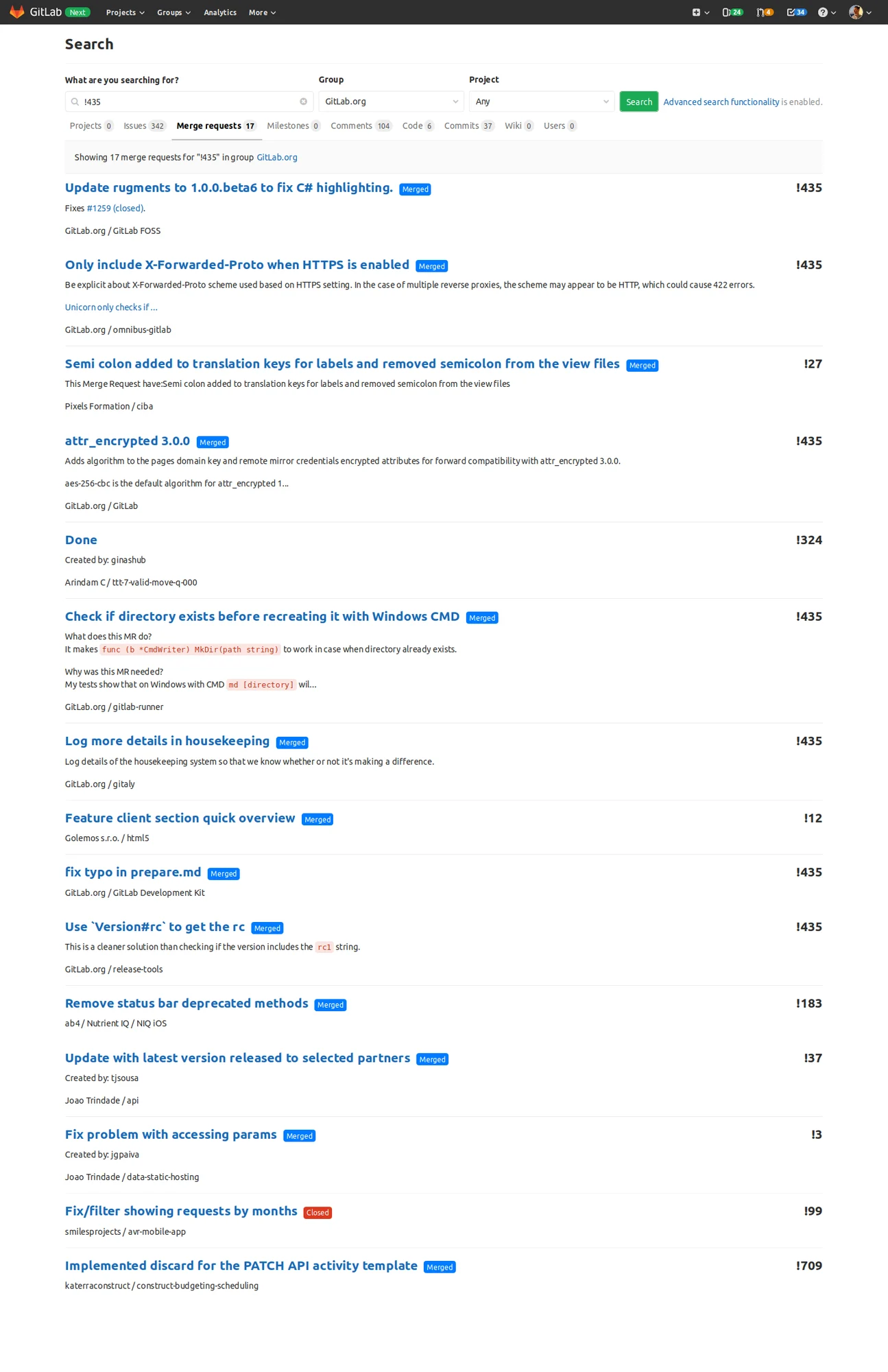
Let's take this search on the Gitlab group: https://gitlab.com/search?utf8=%E2%9C%93&snippets=&scope=merge_requests&repository_ref=&search=%21435&group_id=9970
If you go at the end of the page, you see 5 MRs from other groups that should be private - I have no idea what are those projects - I have no relation to them, and I have no access to the group they belong to! (See attached screenshot).
A lot more data can be retrieved through the APIs, now revealing existence of groups/projects I shouldn't know they exist!
I haven't fully understand the logic of the issue, but basically every combination of ! followed by numbers (I had hits with !709, !999) leaks MRs from other groups.
While on the UI doesn't show much info, the APIs retrieve a lot of data.
It also leaks private activity on public issues.
If you search for nextbit, link, you see that my main account has linked a private issue to a public issue. The activity should be private, and indeed it is not reported inside the issue itself, but it is reported in the search.
Impact
Leaking existence of private groups, private issues activity, private MRs, with lot of metadata
Impact
Leak of private MRs with metadata, activity of private issues, leak existence of private groups
Attachments
Not written yet. The AI write-up for this report has not been written yet. The Original tab links to the source.
How it worked
Root cause
Likely the Elastic Search integration did not correctly filter results by the group or by the user's permissions, so searches returned documents from other groups.
Impact
Private merge requests with metadata, private issue activity, and the existence of private groups could be leaked.
What the attacker needed
Elastic Search enabled; Access to group search
How it was found
- Enable Elastic Search for the GitLab instance.
- Perform a group search for merge requests using a term like an exclamation mark followed by a number.
- Observe merge requests from other private groups in the results.
- Use the API to retrieve more data from those unrelated groups.
Explained by bugbounty.wiki with AI from the original and checked against quotes from it; it can still be wrong. Read the original before relying on a detail.
Not written yet. The AI write-up for this report has not been written yet. The Original tab links to the source.
A search feature in GitLab was supposed to show only results from the group you searched in. Instead, it also showed private merge requests and activity from other groups you should not see. This let anyone discover that private groups exist and read some of their content.
What is Info disclosure?
Data the application should keep private (personal data, internal details, other users' records) reaches someone it should not.




