Previous Group Path Exposed via Transfered Group/Sub-Group/Project Audit Events
A user with access to a transferred project could view the previous group path of that project in its audit events, even if they did not have access to the previous group. This exposed the private group's path to unauthorised users.

GitLab
Originally disclosed on GitLab
- Fixed in 14 months
- Disclosed after 14 months
HackerOne report #770567 by rafiem on 2020-01-09:
Hi Team,
I have found information disclosure regarding transfered group/sub-group/project. User that have access to the transfered group/sub-group/project can view previous group path of the transfered group/sub-group/project. This information in audit events about previous group path should not be exposed to the user that dont have access to the the previous group.
Proof of Concept
1.) User A have a private sub-group inside of public group (In this case : https://gitlab.com/jumbre/sec_sub)
2.) User A create a project inside that sub-group (In this case : https://gitlab.com/jumbre/sec_sub/asdf)
3.) User A create another private groups In this case : https://gitlab.com/vokila)
4.) User A then transfered the project to the private group make in step 3 (In this case : https://gitlab.com/vokila/asdf)
5.) User A invite User B as Maintainer to the transfered project (https://gitlab.com/vokila/asdf)
6.) User B as Maintainer can access the audit events of the projects and can see previous group namespace of the transfered project (sec_sub) which User B dont have access to the private sub-group
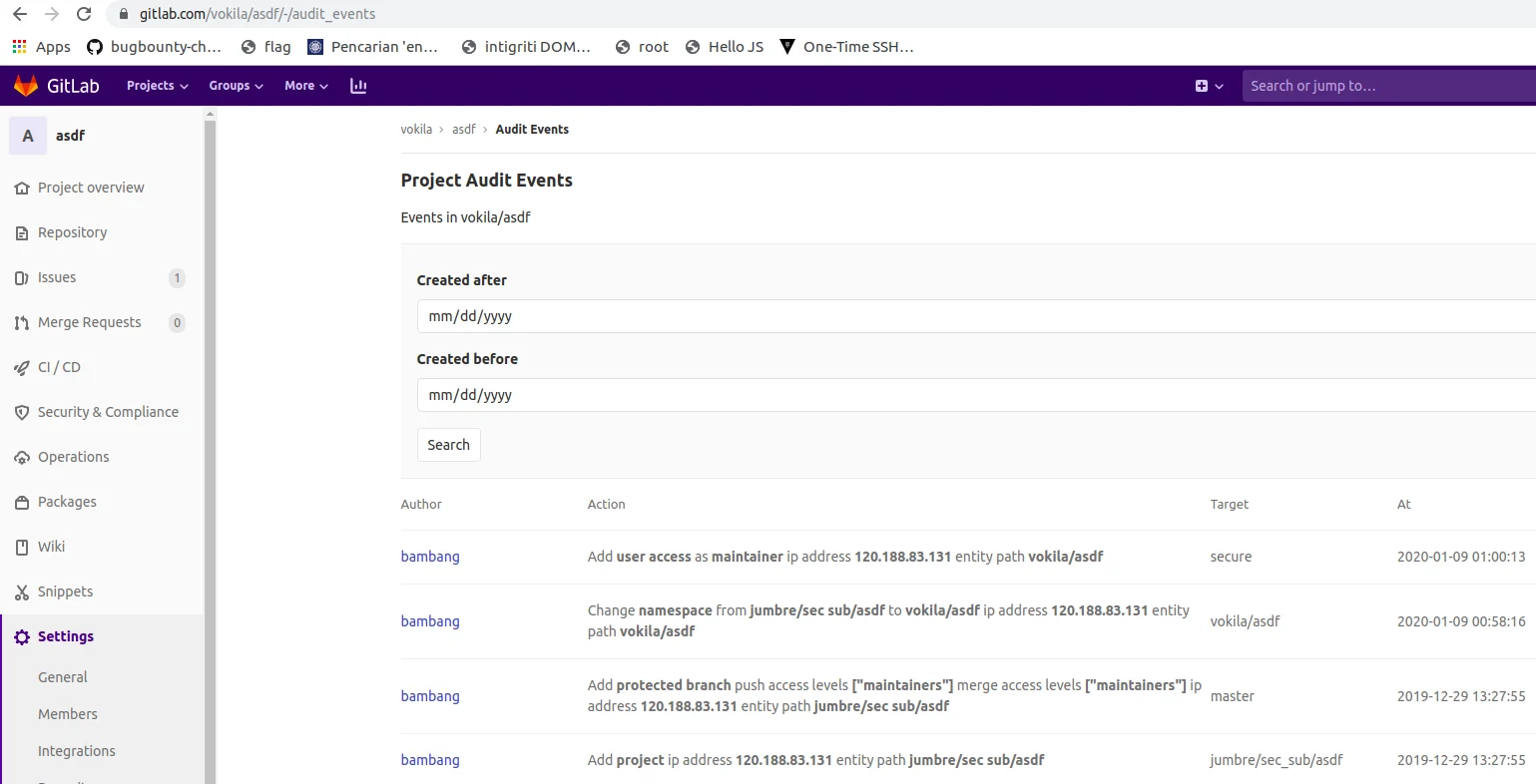
7.) The exposed previous group path works on transfered sub-group and groups too.
Impact
Exposed Previous Group Path of Transfered Group/Sub-Group/Project
Best Regards,
[@]rafiem
Attachments
Warning: Attachments received through HackerOne, please exercise caution!
Not written yet. The AI write-up for this report has not been written yet. The Original tab links to the source.
How it worked
Root cause
Likely the audit events for a transferred project include the previous group path without checking whether the viewer has permission to see that previous group.
Impact
A user with access to a transferred project could learn the path of a previous group they were not authorised to see.
What the attacker needed
Attacker has Maintainer access to a transferred project; victim has a private group that was the previous location
How it was found
- Create a private sub-group inside a public group.
- Create a project inside that sub-group.
- Create another private group.
- Transfer the project to the private group.
- Invite another user as Maintainer to the transferred project.
- As the Maintainer, view the project's audit events to see the previous group path.
Explained by bugbounty.wiki with AI from the original and checked against quotes from it; it can still be wrong. Read the original before relying on a detail.
Not written yet. The AI write-up for this report has not been written yet. The Original tab links to the source.
When a project is moved from one group to another, GitLab records the old group's name in the project's audit log. A user who was later given access to the project could see that old group name, even though they were never allowed to see the old group itself. This is a problem because it leaks the existence and name of a private group.
What is Info disclosure?
Data the application should keep private (personal data, internal details, other users' records) reaches someone it should not.




