Unfiltered `class` attribute in markdown code
GitLab's markdown renderer allowed unfiltered class attributes on HTML elements, so an attacker could inject arbitrary CSS classes into issue and merge request comments. This could be used to forge page content, hide other users' comments, or trigger pre-existing JavaScript event handlers bound by class name.

- Triaged in under an hour
- Fixed in 9 days
- Disclosed after 17 days
This affects merge request/issue comments and probably other parts of the user interface.
I am demonstrating PoCs on GitLab.com itself, as they don't affect anything outside of my test repo, which is private. It could be used to execute some js actions by contructing content that uses the pre-existing attached event handlers (for example, onclick), but I am not sure how far could that go — I have not reviewed that, the mentioned issues are already pretty bad.
This could be used to make some issue/merge request pages inaccessible, to forge page content and potentially forge or hide other users comments in the thread.
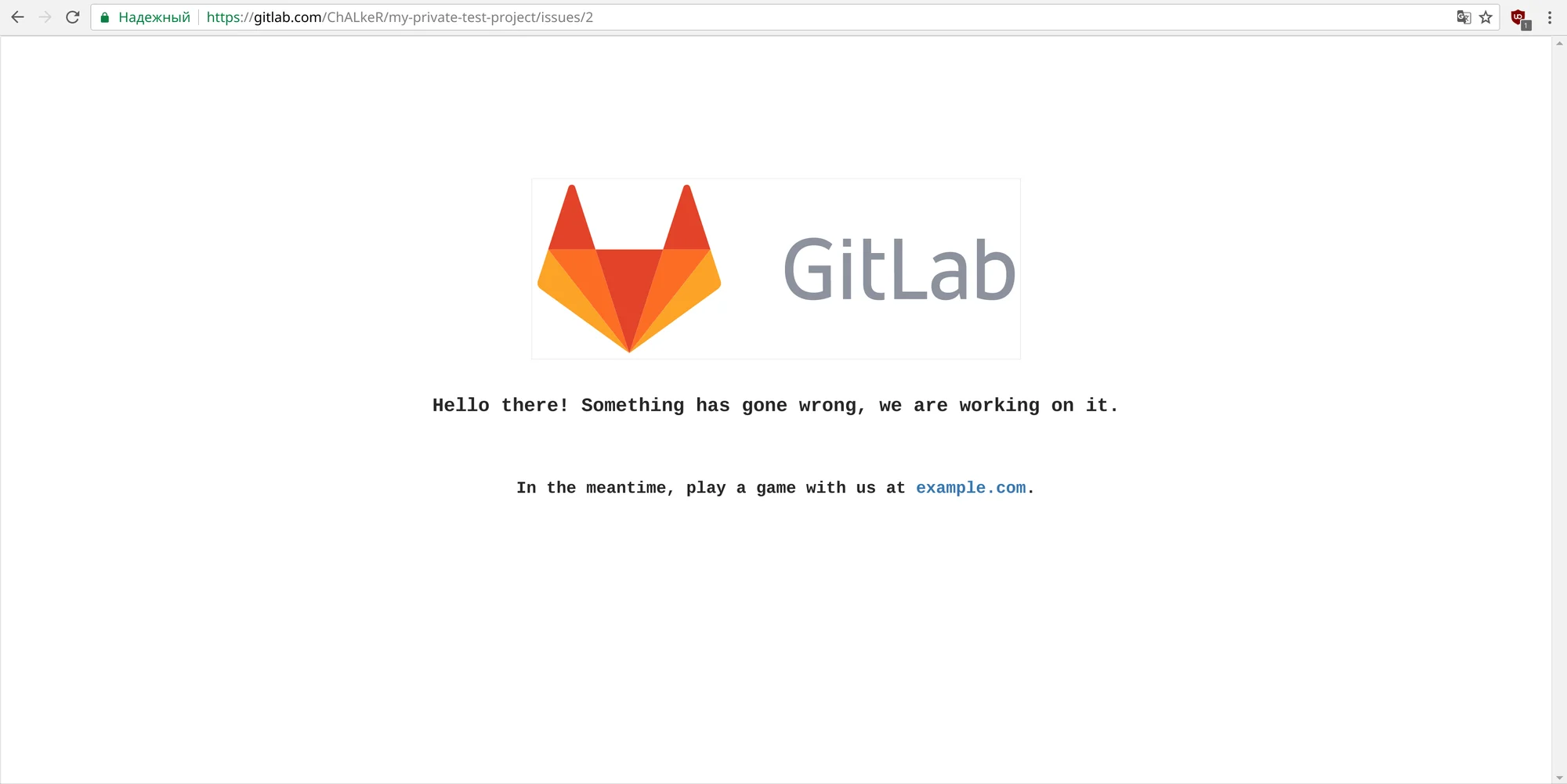
PoC 1 — full-size message
Demo: https://gitlab.com/ChALkeR/my-private-test-project/issues/2
<pre class="zen-backdrop fullscreen sherlock-line-samples-table center">
<p> </p>
<p> </p>
<p> </p>
{{media:0}}
<h2>Hello there! Something has gone wrong, we are working on it.</h2>
<h3>In the meantime, play a game with us at <a href="http://example.com/">example.com</a>.</h3>
</pre>
PoC 2 — basic JavaScript
Demo: https://gitlab.com/ChALkeR/my-private-test-project/issues/3
<pre class="js-details-expand">click me</pre>
<pre class="js-details-content hide">foo</pre>
There is a significant amout of onlick event listeners that are bound using just the classname, so it is possible to do some basic stuff with just classes and might be possible to execute more complex actions.
I have not reviewed all instances in the JS where the classnames are used, that is irrelevant to fixing this issue.
Suggested fix
Both of the following should be applied:
- Filter
classattributes (higher priority). - Make sure that user content couldn't be displayed outside of the bounding box, e.g. by applying
oveflow:hidden(lower priority).
Attachments
Not written yet. The AI write-up for this report has not been written yet. The Original tab links to the source.
How it worked
Root cause
The markdown renderer did not filter the class attribute on HTML elements, allowing user-supplied class names to be applied to the page.
Impact
An attacker could forge page content, hide or impersonate other users' comments, make pages inaccessible, and potentially trigger existing JavaScript actions bound to class names, though the full extent was not reviewed.
What the attacker needed
Ability to post a comment on an issue or merge request
The fix
The class attribute should be filtered from user-supplied HTML, and user content should be prevented from displaying outside its bounding box, for example with overflow hidden.
How it was found
- Create a comment containing HTML with a pre element and a class attribute.
- Submit the comment on an issue or merge request.
- Observe that the class is applied and changes the page appearance or behaviour.
Explained by bugbounty.wiki with AI from the original and checked against quotes from it; it can still be wrong. Read the original before relying on a detail.
Not written yet. The AI write-up for this report has not been written yet. The Original tab links to the source.
When you write a comment on GitLab, you can use simple formatting like bold or code blocks. The system converts that into HTML, the language web pages are made of. The bug is that it let people add a 'class' attribute, which is a label used to style or control parts of the page. By choosing special labels, an attacker could make the page look broken, fake messages, or trigger existing buttons and actions on the page.
What is XSS?
Script an attacker supplies runs in another user's browser, on the target's origin, with that user's session.





