Break saved option for other users in facebook
A user could break the saved items feature for other users by adding them as contributors to a collection and then manipulating a request to set the object ID equal to the list ID. This caused the victim's saved items page to show an error and become inaccessible.
 Published on blog.flawminers.com
In 2018, I discovered a vulnerability within the ‘Saved’ option on Facebook, allowing me to break my saved items. Since the impact was limited to my own account, I refrained from reporting it to the Facebook Security Team, considering it non-applicable (N/A) similar to finding a ‘Self XSS.’ In 2019, I revisited the…
The full write-up lives on its author's site
It belongs to its author, so we link to it rather than copy it. The other two tabs are our own rewrites, checked against it.
Context
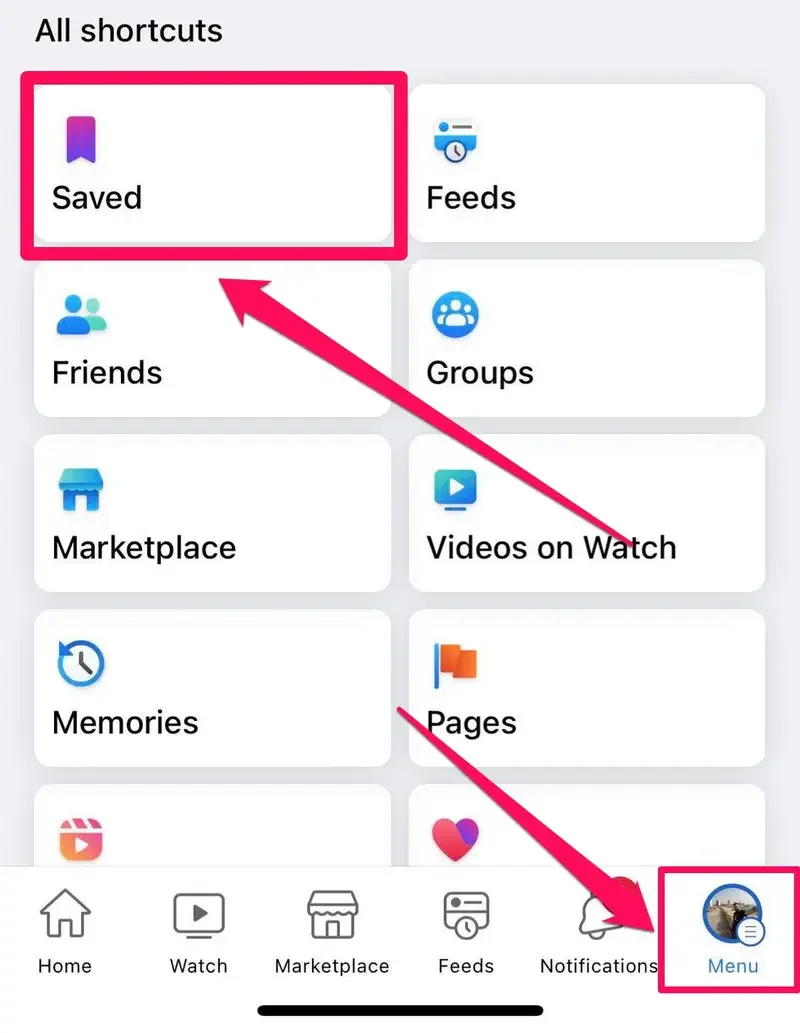
Facebook's Saved feature lets a user keep posts, links and other items for later, and the Collection feature lets a user group those saved items into named lists. Collections can be shared: the owner can add friends as Contributors, who then have permission to add items to that collection. Both features live under https://www.facebook.com/saved/.
The write-up describes a bug in the interaction between saving an item into a collection and the identifiers used in the request that performs the save. The researcher first found the behaviour in 2018, but at that point it only affected his own account, so he treated it like a self-XSS and did not report it. In 2019 he revisited it and found that the Collection contributor feature turned it into something that affects other users.
Setup
- Two Facebook accounts that are friends: the attacker and the victim.
- The attacker needs to be able to create a collection and add the victim as a contributor.
- Burp Suite is used to intercept and modify the save request.
- No special version, role or configuration beyond the normal Saved and Collection features is mentioned.
The precondition for the impact is that the victim has been added as a contributor to a collection owned by the attacker, so the victim has permission on that collection.
Finding it
In 2018 the researcher found that he could break his own saved items by manipulating the request that saves a post into a collection. Because the effect stayed inside his own account, he considered it non-applicable, in the same category as a self-XSS, and did not send it to the Facebook Security Team.
In 2019 he looked at the feature again and noticed that collections can have contributors. Since a contributor has permission on the collection, breaking the collection affects the contributor's own saved items as well. That changed the bug from a self-inflicted problem into one user breaking another user's saved items.
The researcher describes the result as a denial of service, and quotes Philippe Harewood (PHWD) for the framing: the bug limits the usability of certain users based on unhandled input, leading to errors in the app that make it unresponsive. In plain terms, a malicious user can stop other users from viewing their saved items at https://www.facebook.com/saved/.
Exploitation
Step 1: the attacker creates a collection
- The attacker opens their saved items at
https://www.facebook.com/saved/. - They choose the 'New Collection' option, enter any name and select 'Create'.
Step 2: the attacker adds the victim to the collection
- The attacker goes back to
https://www.facebook.com/saved/. - They select the collection they just created, click 'Add Contributors' and type the victim's name.
At this point the victim has permission on the attacker's collection, which is the condition that makes the next steps affect the victim.
Step 3: the attacker saves a random post to the collection
- The attacker opens any random post, clicks the three dots option, selects 'Save Post' and is redirected to
https://www.facebook.com/saved/. - From the saved items they click 'Add to a Collection', intercept the request with Burp Suite and choose the collection created earlier.
Step 4: the attacker manipulates the POST request
- The intercepted request looks similar to this:
POST /save/list/mutate/ HTTP/1.1
Host: www.facebook.com

action=SAVE_IN_EXISTING_LIST&mechanism=add_to_list_button&surface=save_dashboard&list_id=111111&object_id=22222&__user= ......etc
The body carries the action (SAVE_IN_EXISTING_LIST), the UI mechanism and surface it came from, the target collection in list_id, the item being saved in object_id, and the usual __user parameter. The two identifiers are different: list_id=111111 is the collection, object_id=22222 is the post.
- The attacker copies the value of
list_id=and pastes it into theobject_idvalue, so both values are identical:
list_id=111111&object_id=111111
- They forward the manipulated request to the server and receive a
200 OKresponse.
The server responds with 200 OK to the manipulated request.
Step 5: the victim can no longer access saved items
When the victim opens their saved items at https://www.facebook.com/saved/, they get an error message:
"Sorry, something went wrong. We're working on getting this fixed as soon as we can."
The victim can no longer see their saved items.
Root cause
The request that saves an item into a collection takes two identifiers, list_id and object_id, and the server does not check that object_id refers to a saveable object. When the attacker sets object_id to the same value as list_id, the request succeeds with 200 OK and the saved items page later fails. The server returns 200 OK, so nothing rejects the malformed entry at write time.
The broken collection then affects the saved items page of contributors, who have permission on it. Because contributors have permission on the collection, the victim's own saved items page fails with the generic error instead of loading. The report does not describe the server-side code, so the exact validation that is missing is likely the object-type check on object_id; the write-up only shows the behaviour.
In 2018 the effect stayed inside the researcher's own account; in 2019 adding a contributor extended it to another user. Adding a contributor is what extends that scope to another user.
Impact
An attacker who is friends with the victim, and who can add the victim as a contributor to a collection, can make the victim's saved items page unusable. The victim sees the error message above and cannot view their saved items. The researcher frames this as a denial of service that limits the usability of certain users based on unhandled input, rather than as data exposure or account takeover. The effect depends on the victim having been added as a contributor to the attacker's collection.
Fix
The report records that the bug was fixed by Meta Bug Bounty on 24 June 2019 and that the researcher confirmed the fix the same day. It does not describe the change that was made.
Timeline
| Date | Event |
|---|---|
| 01 May 2019 | Initial report by Sarmad |
| 03 May 2019 | Report triaged by Meta Bug Bounty |
| 24 Jun 2019 | Bug fixed by Meta Bug Bounty |
| 24 Jun 2019 | Fix confirmed by Sarmad |
| 02 Jul 2019 | Bounty awarded by Meta Bug Bounty |
Variants to test
- Other save targets. Try the same identifier substitution on other endpoints that save an object into a list or collection. A positive result is a
200 OKwhere the object identifier equals the list identifier, followed by an error page for anyone with access to the list. - Other shared containers. Look for features where one user's container can be shared with, or made visible to, other users, such as shared albums, shared playlists or shared folders. A positive result is that corrupting the container through the owner's request breaks the page for the other users who have permission on it.
- Type confusion in paired parameters. Wherever a request carries two identifiers of different types, try swapping or duplicating their values. A positive result is the server accepting an identifier of the wrong type and storing it, with a visible failure on the page that later reads it.
- Contributor and collaborator roles. Check whether adding a user to a container is enough to make that user's own view depend on the container's contents. A positive result is that the added user's page fails after the owner corrupts the container.
What happened, in plain words
Facebook has a feature called Saved. When you see a post you like but do not have time to read it now, you can save it, and it goes into a personal list you can open later at https://www.facebook.com/saved/. Think of it as a bookmark folder in your browser: the posts are bookmarks, and the Saved page is the folder you open to find them.
Facebook also has a feature called Collection. A collection is a named group inside your saved items, for example "Recipes" or "Read later". You can put saved posts into a collection to keep things tidy. Collections can be shared: the owner can add friends as Contributors, and a contributor is allowed to add items to that collection. So a collection is a bit like a shared shopping list: the person who made it can invite others, and everyone invited can add things to it.
In 2018 the researcher found that he could break his own saved items by changing one detail in the request that Facebook sends when you save a post into a collection. The effect stayed inside his own account, so he treated it as harmless and did not report it. He compares it to a self-XSS, a bug that only lets you attack yourself, which security teams normally do not pay for.
In 2019 he looked again and noticed the contributor feature. Because a contributor has permission on the collection, breaking the collection also breaks the contributor's own saved items page. That turned a problem that only hurt the attacker into a problem where one user can break another user's saved items. He describes the result as a denial of service: the victim can no longer use part of the product.
The finding
In the Collection feature you can mark friends as Contributors. If the collection is broken, the people who have permission on it are affected too, because their saved items page depends on that collection. The researcher quotes Philippe Harewood (PHWD) for the framing: the bug limits the usability of certain users based on unhandled input, leading to errors in the app that make it unresponsive. In everyday words: the app receives input it does not expect, does not handle it properly, and the page stops working for the people involved.
A malicious user could use this to stop other users from viewing their saved items at https://www.facebook.com/saved/. That is disruption and inconvenience for the affected users, not theft of data and not takeover of an account.
What you need to follow along
- Two Facebook accounts that are friends: one plays the attacker, the other plays the victim.
- The attacker must be able to create a collection and add the victim as a contributor.
- Burp Suite, a tool that sits between your browser and the website so you can look at and change the requests your browser sends. Think of it as a mail intercept service: your letter is opened, you can edit it, and then it is sent on.
- Nothing else special is mentioned: no particular version, role or setting beyond the normal Saved and Collection features.
The important precondition is that the victim has been added as a contributor to a collection owned by the attacker. Without that, the victim has no permission on the collection and the trick does not reach them.
Step by step
Step 1: the attacker creates a collection
- The attacker opens their saved items at
https://www.facebook.com/saved/. - They choose the 'New Collection' option, type any name and select 'Create'.
Why: the whole trick needs a collection to exist, because the collection is the thing that will later be broken and shared.
Step 2: the attacker adds the victim to the collection
- The attacker goes back to
https://www.facebook.com/saved/. - They select the collection they just created, click 'Add Contributors' and type the victim's name.
Why: this is the step that turns a personal problem into a shared one. Once the victim is a contributor, the victim has permission on the attacker's collection, and anything that breaks the collection also affects the victim's own saved items page.
Step 3: the attacker saves a random post to the collection
- The attacker opens any random post, clicks the three dots option, selects 'Save Post' and is redirected to
https://www.facebook.com/saved/. - From the saved items they click 'Add to a Collection', intercept the request with Burp Suite and choose the collection created earlier.
Why: this produces the normal, legitimate request that saves a post into a collection. The attacker lets it be captured in Burp Suite instead of letting it go straight to Facebook, so the request can be edited before it is sent. The post itself does not matter; any post will do, because the goal is to get hold of the request, not to save anything useful.
Step 4: the attacker changes the request
- The captured request looks similar to this:
POST /save/list/mutate/ HTTP/1.1
Host: www.facebook.com

action=SAVE_IN_EXISTING_LIST&mechanism=add_to_list_button&surface=save_dashboard&list_id=111111&object_id=22222&__user= ......etc
Line by line, in plain words:
POST /save/list/mutate/ HTTP/1.1is the first line of an HTTP request. HTTP is the language a browser and a website use to talk.POSTmeans "I am sending data to change something on the server"./save/list/mutate/is the address on Facebook's server that handles changes to saved lists.HTTP/1.1is the version of the language being used.Host: www.facebook.comtells the server which website the request is for. One server can host many sites, so the request names the one it wants.- The blank line separates the headers (the envelope information) from the body (the actual data).
action=SAVE_IN_EXISTING_LISTsays what the user wants to do: save an item into a list that already exists.mechanism=add_to_list_buttonandsurface=save_dashboarddescribe where in the interface the action came from: the 'Add to a Collection' button on the saved items dashboard. These are context details the server uses for its own purposes.list_id=111111is the identifier of the target collection. An identifier (often called an ID) is a unique number a system uses to refer to one specific thing, like a customer number in a shop.object_id=22222is the identifier of the item being saved, here the post.__user= ......etcis the part that identifies the logged-in user. The report shows it shortened with......etc, so the exact value is not reproduced here. In general, a website knows who you are because your browser sends a session cookie or token with each request, a short piece of data proving you logged in. Treat that value like a password: anyone who has it can act as you.
The key observation is that the two identifiers are different: list_id=111111 is the collection, object_id=22222 is the post. They are supposed to point at two different kinds of thing.
- The attacker copies the value of
list_id=and pastes it into theobject_idvalue, so both values are identical:
list_id=111111&object_id=111111
In plain words: the request now carries the same value for the collection and for the item being saved. This is the heart of the bug. The server responds with 200 OK to the changed request.
- The attacker forwards the changed request to the server and gets a
200 OKresponse.
200 OK is the standard HTTP status code meaning "the request succeeded". So the server accepted the request even though the object identifier now points at the collection rather than at a post. Nothing rejected the malformed entry when it was written.
Step 5: the victim can no longer open saved items
When the victim opens their saved items at https://www.facebook.com/saved/, they get an error message:
"Sorry, something went wrong. We're working on getting this fixed as soon as we can."
This is Facebook's generic error page. The victim can no longer see their saved items. The broken collection affects the saved items page of contributors, and the victim is one because they were added as a contributor.
Why it works
The request that saves an item into a collection carries two identifiers, list_id and object_id, and the server does not check that object_id refers to something saveable. When the attacker sets object_id to the same value as list_id, the request succeeds with 200 OK and the saved items page later fails. The server answers 200 OK, so nothing stops the bad entry at the moment it is written.
The broken collection then breaks the saved items page for contributors. Because contributors have permission, the victim's own saved items page fails with the generic error instead of loading. The report does not show the server-side code, so the exact missing check is not visible; based on the behaviour, it looks like a missing check on what kind of object object_id points to.
In 2018 the effect stayed inside the researcher's own account; in 2019 adding a contributor extended it to another user. Adding a contributor is what extends that reach to another user.
Impact
An attacker who is friends with the victim, and who can add the victim as a contributor to a collection, can make the victim's saved items page unusable. The victim sees the error message above and cannot view their saved items. The researcher frames this as a denial of service that limits the usability of certain users based on unhandled input, not as data exposure or account takeover. The effect depends on the victim having been added as a contributor to the attacker's collection.
Fix
The report records that the bug was fixed by Meta Bug Bounty on 24 June 2019 and that the researcher confirmed the fix the same day. It does not describe the change that was made.
Timeline
| Date | Event |
|---|---|
| 01 May 2019 | Initial report by Sarmad |
| 03 May 2019 | Report triaged by Meta Bug Bounty |
| 24 Jun 2019 | Bug fixed by Meta Bug Bounty |
| 24 Jun 2019 | Fix confirmed by Sarmad |
| 02 Jul 2019 | Bounty awarded by Meta Bug Bounty |
Variants to test
- Other save targets. Try the same identifier substitution on other endpoints that save an object into a list or collection. A positive result is a
200 OKwhere the object identifier equals the list identifier, followed by an error page for anyone with access to the list. - Other shared containers. Look for features where one user's container can be shared with, or made visible to, other users, such as shared albums, shared playlists or shared folders. A positive result is that corrupting the container through the owner's request breaks the page for the other users who have permission on it.
- Type confusion in paired parameters. Wherever a request carries two identifiers of different types, try swapping or duplicating their values. A positive result is the server accepting an identifier of the wrong type and storing it, with a visible failure on the page that later reads it.
- Contributor and collaborator roles. Check whether adding a user to a container is enough to make that user's own view depend on the container's contents. A positive result is that the added user's page fails after the owner corrupts the container.
Glossary
- Saved: a Facebook feature that keeps posts and links in a personal list for later, opened at
https://www.facebook.com/saved/. - Collection: a named group inside your saved items, which can be shared with friends.
- Contributor: a friend added to a collection who has permission to add items to it.
- Self-XSS: a bug that only lets you attack your own account, which security teams normally do not pay for.
- Denial of service (DoS): making a feature or service unusable for its users, rather than stealing data or taking over an account.
- HTTP: the language a browser and a website use to exchange requests and responses.
- POST request: an HTTP request that sends data to the server to change something.
- Request body: the part of a request that carries the actual data, after the blank line that follows the headers.
- Header: envelope information in a request, such as
Host, which names the website being contacted. - Host: the header that tells the server which website the request is for.
- Identifier (ID): a unique number a system uses to refer to one specific thing, like a customer number.
- Parameter: a named value in a request, such as
list_id=111111. list_id: the parameter holding the identifier of the target collection.object_id: the parameter holding the identifier of the item being saved, such as a post.- Session cookie / token: a short piece of data your browser sends to prove you are logged in; treat it like a password.
- Burp Suite: a tool that sits between your browser and a website so you can inspect and change requests before they are sent.
- Intercept: to capture a request in such a tool and hold it, so it can be edited before it reaches the server.
- Status code: a number in the server's reply saying how the request went;
200 OKmeans it succeeded. - 200 OK: the standard HTTP status code for a successful request.
- Root cause: the underlying reason a bug exists, as opposed to its visible symptom.
- Input validation: checking that data arriving at a server is of the expected kind before using or storing it.
- Type confusion: a bug where a value of one kind is accepted where a value of another kind is expected.
- Triaged: reviewed by the security team and accepted as a real issue to work on.
- Bounty: a payment a company makes to a researcher who reports a valid security bug.




