[demo.weblate.org] Stored Self-XSS via Editor Link in Profile
The Editor Link field in user preferences accepted a javascript: URL without validation, so a stored script could run when a source string location was clicked on a translation page. An attacker could store such a link and have it execute in the Weblate instance context when a victim clicked the source string.

- Triaged in under an hour
- Fixed in 6 hours
- Disclosed after 23 days
Hi,
Input validation and/or sanitisation is not currently applied to the "Editor Link" in the user's Preferences. Consequently, it is possible to store a JavaScript payload which is stored and executes in the Weblate instance context.
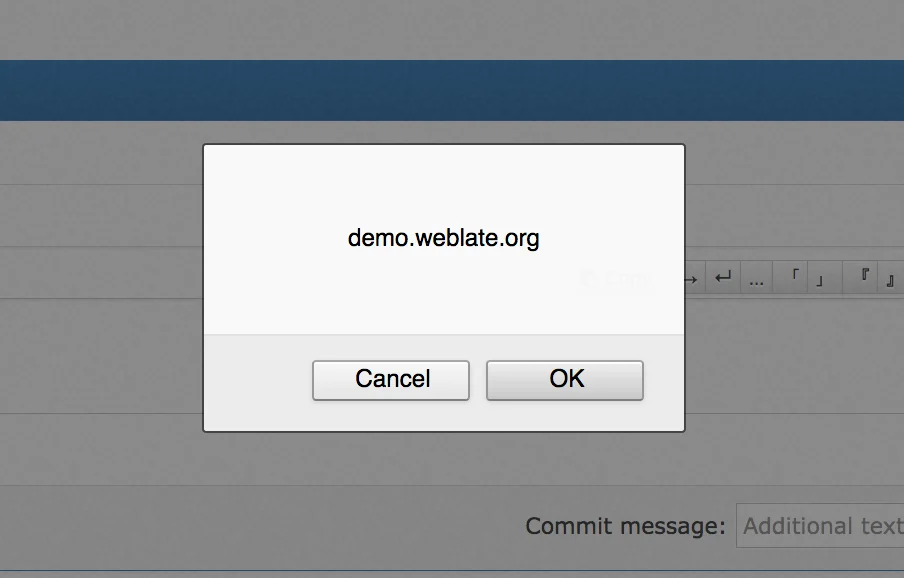
Steps to reproduce
- Visit the above Preferences page and identify the Editor Link field
- Populate the field with:
javascript:confirm(document.domain) - Visit a translation page and select a Source String Location
- The XSS will trigger upon clicking on a Source String (e.g.
main.c)
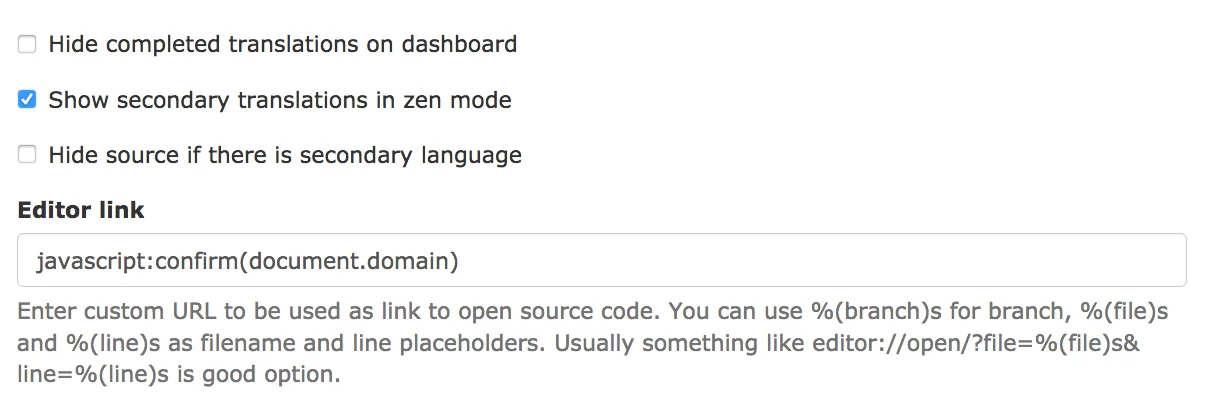
Please let me know if you require any additional information regarding this issue.
Thanks!
Not written yet. The AI write-up for this report has not been written yet. The Original tab links to the source.
How it worked
Root cause
Likely the Editor Link preference was rendered as a clickable link without validating or sanitising the URL scheme, allowing a javascript: URI to be stored and executed.
Impact
A stored script could execute in the Weblate instance context when a user clicked a source string.
What the attacker needed
A Weblate account; victim clicks a source string
How it was found
- Open the Preferences page and find the Editor Link field.
- Enter a javascript: URL in that field.
- Go to a translation page and select a Source String Location.
- Click a source string such as main.c to trigger the script.
Explained by bugbounty.wiki with AI from the original and checked against quotes from it; it can still be wrong. Read the original before relying on a detail.
Not written yet. The AI write-up for this report has not been written yet. The Original tab links to the source.
A website field that is meant to hold a normal web address accepted a special link that starts with 'javascript:' instead. When someone clicks that link, the browser runs the code inside it as if it were part of the site. Because the link was saved in the user's profile, it stayed there and ran for anyone who clicked the source string.
What is XSS?
Script an attacker supplies runs in another user's browser, on the target's origin, with that user's session.







