One payload to XSS them all
A Flash file called sIFR accepted a text parameter that was rendered as HTML, so an attacker could supply a link with a javascript: URL and run script in the page. The same file was hosted on many major sites, so the payload could be used against their visitors.
 Published on ahussam.me
Today, I want to share one of my findings from 2013, which is an XSS vulnerability in a Flash file used by many popular websites. The Flash file was called sIFR (Scalable Inman Flash Replacement).
The full write-up lives on its author's site
It belongs to its author, so we link to it rather than copy it. The other two tabs are our own rewrites, checked against it.
Context
In 2013 I found an XSS vulnerability in a Flash file that many popular websites were using. The file was sIFR (Scalable Inman Flash Replacement), and the specific version involved here is sIFR2.0.2. sIFR is a technique for rendering styled text in Flash so that a page can use fonts the visitor does not have installed: the Flash movie takes a string of text and a colour, renders it with an embedded font, and the page displays the result in place of ordinary HTML text.
The copy I ran into was hosted on Adobe's image host, at wwwimages.adobe.com, under a path that mirrored www.adobe.com. The movie took the text to render from a txt parameter and the colour from a textcolor parameter.
Before going further: this turned out to be an old bug that already had a CVE. When I first found it I believed I was the first to report it.
Setup
No accounts, roles or special tooling were involved. The starting point was an ordinary browsing session: while I was looking for a bug in Adobe, my browser directed me to the following URL:
http://wwwimages.adobe.com/www.adobe.com/lib/com.adobe/sIFR2.0.2/myriad.swf?txt=ADOBE%20PHOTOSHOP%20CS3&textcolor=
In that URL, txt carried simple text (ADOBE PHOTOSHOP CS3) and textcolor accepted an HTML colour code, which was empty in this instance. The movie file itself is myriad.swf.
Finding it
The parameters were the interesting part. txt is a string that the movie renders, and textcolor is a value that is interpreted as an HTML colour. I changed the text ADOBE PHOTOSHOP CS3 to XSS and the page displayed XSS.
Exploitation
Step 1: put an HTML payload in txt
I used the txt parameter to show our text, so I replaced it with an XSS payload:
http://wwwimages.adobe.com/www.adobe.com/lib/com.adobe/sIFR2.0.2/myriad.swf?txt=<a href="javascript:alert('Xssed by Abdullah')">xss</a>
The txt value is an anchor element whose href is a javascript: URI that calls alert('Xssed by Abdullah'), with the link text xss. It worked: the payload executed. I had injected my name into the code, marking my beginning with bug bounty.
Step 2: shorten the path to the main host
Looking at the URL, I noticed that the path looked like a file path on www.adobe.com. The movie was being served from wwwimages.adobe.com under a directory that repeated www.adobe.com, so I deleted wwwimages.adobe.com/ from the URL and navigated to:
https://www.adobe.com/lib/com.adobe/sIFR2.0.2/myriad.swf?txt=<a href="javascript:alert('Xssed by Abdullah')">xss</a>
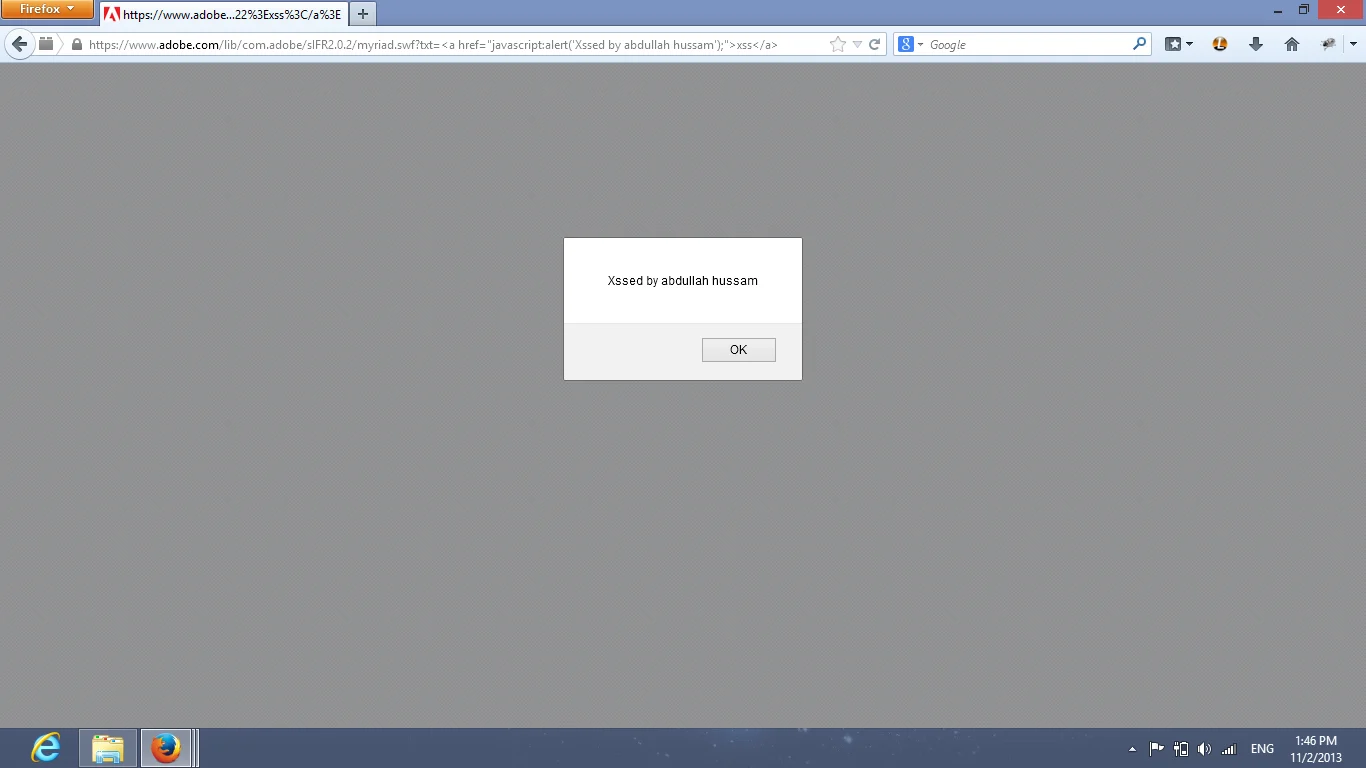
The screenshot from the shortened URL:
Step 3: look for the same movie elsewhere
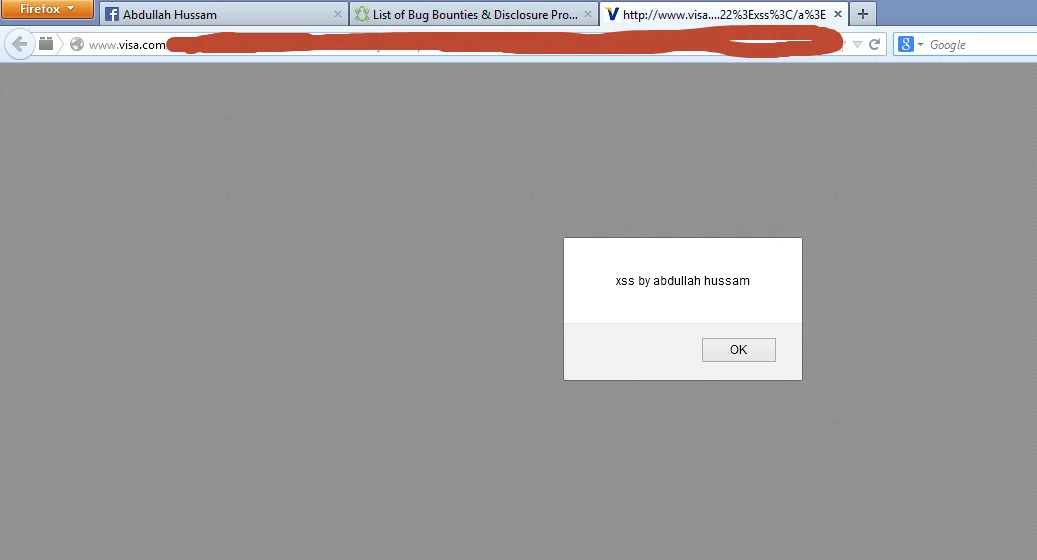
I reasoned that sIFR2.0.2 might be an Adobe product deployed on other websites, so I started searching for it elsewhere. I found it in use by major companies and government organisations, including Visa, AMEX, Blackberry, Stanford, Harvard and more. Some examples:
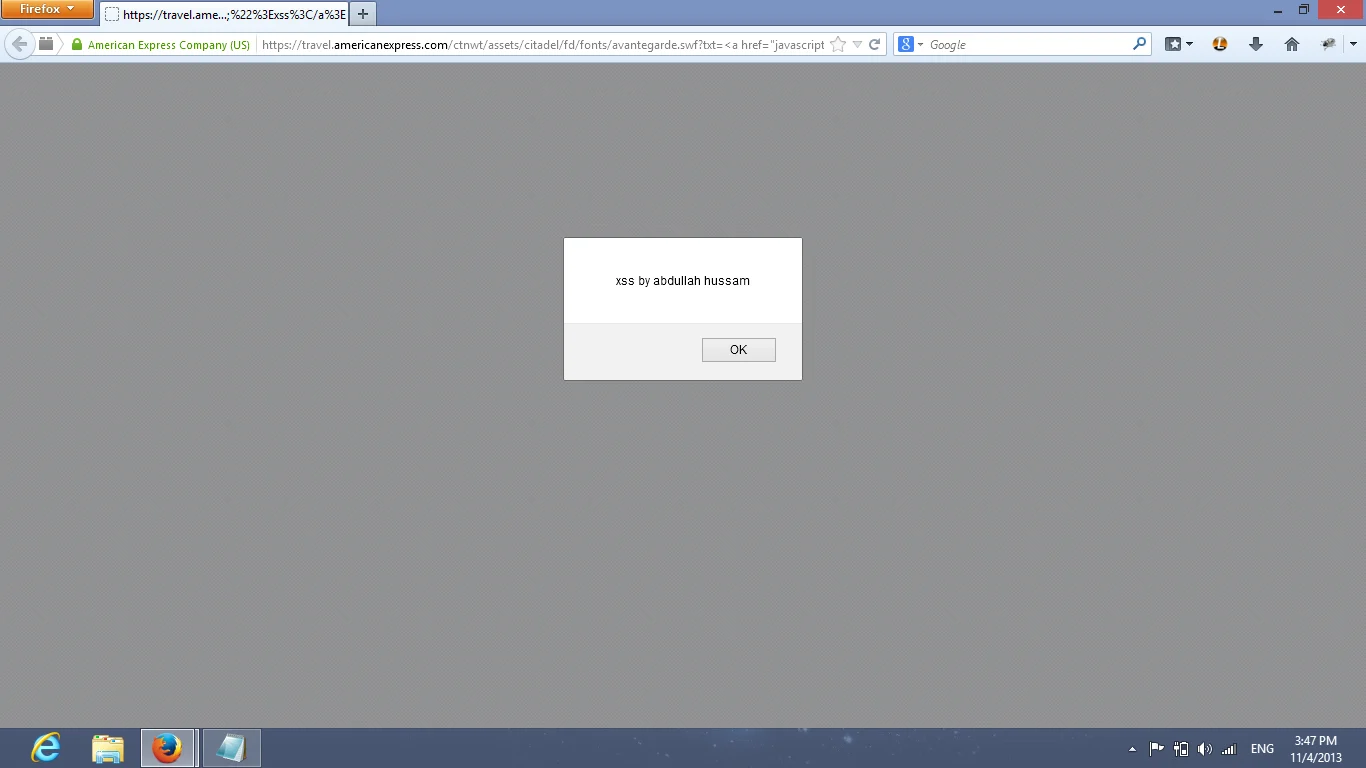
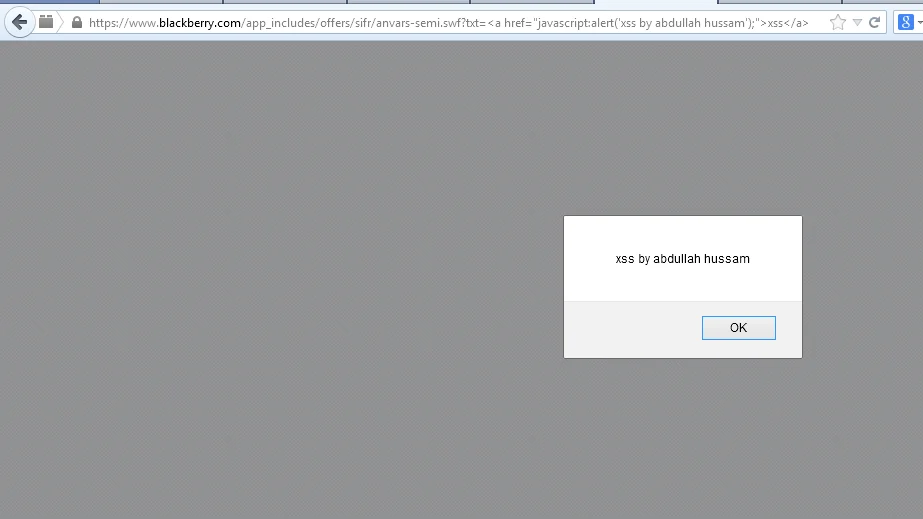
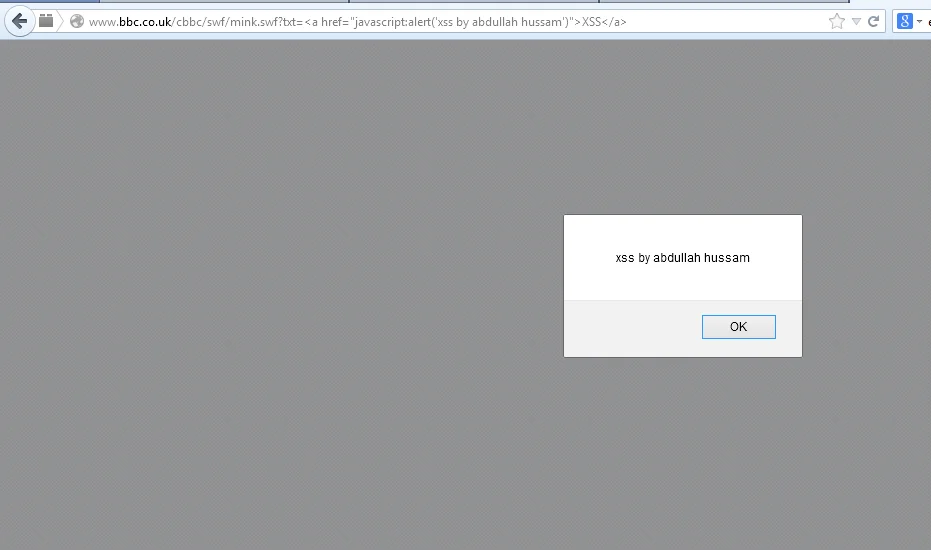
The PoC video:
There are still many other vulnerable websites where this can be found.
Root cause
The movie takes the txt parameter and renders it as HTML instead of treating it as plain text. The textcolor parameter accepted an HTML colour code.
Impact
The payload executed on the Adobe URLs shown above. The same movie was found in use by many other organisations, including Visa, AMEX, Blackberry, Stanford and Harvard. The report does not describe any specific action taken against a user beyond the alert proof of concept, and it does not state what an attacker could reach on any particular site; the practical limit is whatever the hosting origin exposes to script.
Fix
The report does not describe a fix or a change made by Adobe or by any of the other sites.
Variants to test
- Other sIFR versions and other
.swffiles on the same path. Request the movie with atxtvalue containing an anchor with ajavascript:URI. A positive result is the payload executing in the origin of the host serving the file. - The shortened path on the main host. Take a working movie URL on an asset host and remove the asset hostname, keeping the path, as done here with
wwwimages.adobe.com/. A positive result is the same movie loading and the same payload executing on the main domain. - Other parameters that are parsed rather than echoed.
textcoloraccepted an HTML colour code. Supply markup in place of a colour code and check what happens. A positive result is the markup being interpreted rather than rejected or rendered as text. - Third-party deployments of the same movie. Search for the movie filename and version string across other sites, as I did for
sIFR2.0.2. A positive result is the movie being served from another organisation's domain and the payload executing in that domain's origin.
What happened, in plain words
In 2013 I found a security hole in a small Flash file that lots of well-known websites were using. The file is called sIFR (Scalable Inman Flash Replacement), and the particular copy involved here is version sIFR2.0.2. sIFR is a trick for showing nicely styled text on a web page using a font the visitor may not have installed. A small Flash movie takes a piece of text and a colour, draws the text with a font built into the movie, and the page shows that drawing instead of ordinary HTML text. Think of it like a sign-writing machine: you feed it words and a colour, and it paints a sign for you.
The problem was that the text I supplied was displayed as part of the page, and an HTML payload in it executed. That is the essence of XSS (cross-site scripting): a site takes something a visitor supplies and lets it run as code in the browser instead of showing it as harmless text.
The copy I ran into was hosted on Adobe's image host, wwwimages.adobe.com, under a folder path that repeated www.adobe.com. The movie read the text to draw from a parameter called txt and the colour from a parameter called textcolor.
One thing to get straight before we go on: this turned out to be an old bug that already had a CVE. A CVE is a public catalogue number for a known security flaw, like a reference number on a case file. When I first found it I believed I was the first to report it.
Setup
There were no accounts, no special roles and no special tools. The starting point was an ordinary browsing session. While I was looking for a bug in Adobe, my browser directed me to this URL:
http://wwwimages.adobe.com/www.adobe.com/lib/com.adobe/sIFR2.0.2/myriad.swf?txt=ADOBE%20PHOTOSHOP%20CS3&textcolor=
Line by line, in plain words:
http://is the scheme: the browser will fetch this over plain, unencrypted HTTP.wwwimages.adobe.comis the host, the specific server being asked. Here it is an image host belonging to Adobe./www.adobe.com/lib/com.adobe/sIFR2.0.2/myriad.swfis the path to the file on that server. The file ismyriad.swf, a Flash movie (.swfis the file extension for Flash). The folders before it includesIFR2.0.2, which names the version.?marks the start of the query string, the part of a URL that carries extra values to the page.txt=ADOBE%20PHOTOSHOP%20CS3is the first parameter. Its name istxtand its value isADOBE PHOTOSHOP CS3. The%20is how a space is written inside a URL, because a raw space is not allowed there.&separates one parameter from the next.textcolor=is the second parameter. Its name istextcolorand its value is empty in this instance.
So txt carried simple text and textcolor accepted an HTML colour code. The movie file itself is myriad.swf.
Finding it
The parameters were the interesting part. txt is a string that the movie draws, and textcolor is a value that is read as an HTML colour. A parameter that is treated as HTML rather than as plain text is worth probing, because HTML is the language web pages are written in, and HTML can carry instructions (links, scripts) as well as words. So I changed the text ADOBE PHOTOSHOP CS3 to XSS, and the page displayed XSS.
Exploitation
Step 1: put an HTML payload in txt
I used the txt parameter to show our text, so I replaced it with an XSS payload:
http://wwwimages.adobe.com/www.adobe.com/lib/com.adobe/sIFR2.0.2/myriad.swf?txt=<a href="javascript:alert('Xssed by Abdullah')">xss</a>
What each part does:
- The URL is the same as before, except the
txtvalue is now a piece of HTML instead of a plain phrase. <a ...>xss</a>is an anchor element, the HTML for a link. The words between the opening and closing tags,xss, are the link text the visitor would see.href="..."is the attribute that says where the link goes when clicked.javascript:alert('Xssed by Abdullah')is the destination. Ajavascript:URI is a special kind of link that runs a snippet of JavaScript instead of opening a page.alert(...)is a built-in browser function that pops up a small dialog box showing the text inside the brackets.- So the whole thing says: draw a link labelled
xss, and if anyone clicks it, show a popup readingXssed by Abdullah.
It worked: the payload executed. I had injected my name into the code, marking my beginning with bug bounty.
Step 2: shorten the path to the main host
Looking at the URL, I noticed that the path looked like a file path on www.adobe.com. The movie was being served from wwwimages.adobe.com under a folder that repeated www.adobe.com, so I deleted wwwimages.adobe.com/ from the URL and navigated to:
https://www.adobe.com/lib/com.adobe/sIFR2.0.2/myriad.swf?txt=<a href="javascript:alert('Xssed by Abdullah')">xss</a>
What changed, and why it matters:
- The host is now
www.adobe.com, the main Adobe website, instead of the image hostwwwimages.adobe.com. - The scheme is now
https://, the encrypted version of HTTP. - The path is the same as before with the leading
www.adobe.com/folder removed, because that folder was only there to mirror the main site's layout on the image host. - The
txtvalue is unchanged: the same anchor with the samejavascript:URI.
The screenshot from the shortened URL:
Step 3: look for the same movie elsewhere
I reasoned that sIFR2.0.2 might be an Adobe product deployed on other websites, so I started searching for it elsewhere. The logic is simple: if a company ships a component and other companies copy it onto their own sites, then one bug in the component becomes a bug on every site that copied it. I found it in use by major companies and government organisations, including Visa, AMEX, Blackberry, Stanford, Harvard and more. Some examples:
The PoC video:
A PoC (proof of concept) is a small demonstration that shows a flaw is real without doing any harm. The PoC video:
There are still many other vulnerable websites where this can be found.
Root cause
The movie takes the txt parameter and renders it as HTML instead of treating it as plain text. The origin is the combination of scheme, host and port that the browser uses to decide what a piece of code is allowed to touch; code from one origin is not supposed to read data from another. The textcolor parameter accepted an HTML colour code. Output encoding is the practice of converting special characters into harmless equivalents before putting them on a page, so that < becomes something the browser shows as a character rather than reads as the start of a tag.
Impact
The payload executed on the Adobe URLs shown above. The same movie was found in use by many other organisations, including Visa, AMEX, Blackberry, Stanford and Harvard. The report does not describe any specific action taken against a user beyond the alert proof of concept, and it does not state what an attacker could reach on any particular site; the practical limit is whatever the hosting origin exposes to script.
Fix
The report does not describe a fix or a change made by Adobe or by any of the other sites.
Variants to test
- Other sIFR versions and other
.swffiles on the same path. Request the movie with atxtvalue containing an anchor with ajavascript:URI. A positive result is the payload executing in the origin of the host serving the file. - The shortened path on the main host. Take a working movie URL on an asset host and remove the asset hostname, keeping the path, as done here with
wwwimages.adobe.com/. A positive result is the same movie loading and the same payload executing on the main domain. - Other parameters that are parsed rather than echoed.
textcoloraccepted an HTML colour code. Supply markup in place of a colour code and check what happens. A positive result is the markup being interpreted rather than rejected or rendered as text. - Third-party deployments of the same movie. Search for the movie filename and version string across other sites, as I did for
sIFR2.0.2. A positive result is the movie being served from another organisation's domain and the payload executing in that domain's origin.
Glossary
- XSS (cross-site scripting): a flaw where a site lets something a visitor supplies run as code in the browser instead of showing it as harmless text.
- sIFR (Scalable Inman Flash Replacement): a technique for drawing styled text with a font embedded in a Flash movie, so a page can use fonts the visitor does not have installed.
- Flash /
.swf: a browser plugin technology for animated and interactive content;.swfis the file extension for a Flash movie. - CVE: a public catalogue number for a known security flaw, like a reference number on a case file.
- Parameter: a named value passed to a page in the URL, after the
?, written asname=valueand separated by&. - Query string: the part of a URL after the
?that carries parameters. - Host: the specific server named in a URL, such as
www.adobe.com. - Scheme: the first part of a URL, such as
http://orhttps://, which says how to fetch the resource. - HTML: the language web pages are written in; it carries both words and instructions such as links.
- Markup: text written in HTML, where tags such as
<a>give it structure and behaviour. - Anchor element: the HTML for a link, written
<a href="...">text</a>. - Attribute: a setting inside an HTML tag, such as
hrefon an anchor. javascript:URI: a special kind of link that runs a snippet of JavaScript instead of opening a page.- JavaScript: the programming language browsers run to make pages interactive.
alert(): a built-in browser function that pops up a small dialog box showing the text you give it.- Payload: the piece of code or markup an attacker supplies to trigger a flaw.
- Escaping / output encoding: converting special characters into harmless equivalents before putting them on a page, so they are shown rather than interpreted.
- Origin: the combination of scheme, host and port that the browser uses to decide what a piece of code is allowed to touch.
- PoC (proof of concept): a small demonstration that shows a flaw is real without doing any harm.
- Reflected: said of a value that a page sends straight back out in its output.






