XSS in select attribute options

- Triaged in 4 months
- Fixed in 4 months
- Disclosed after 5 months
To reproduce
- Create a new select attribute.
- Add a select attribute option with value
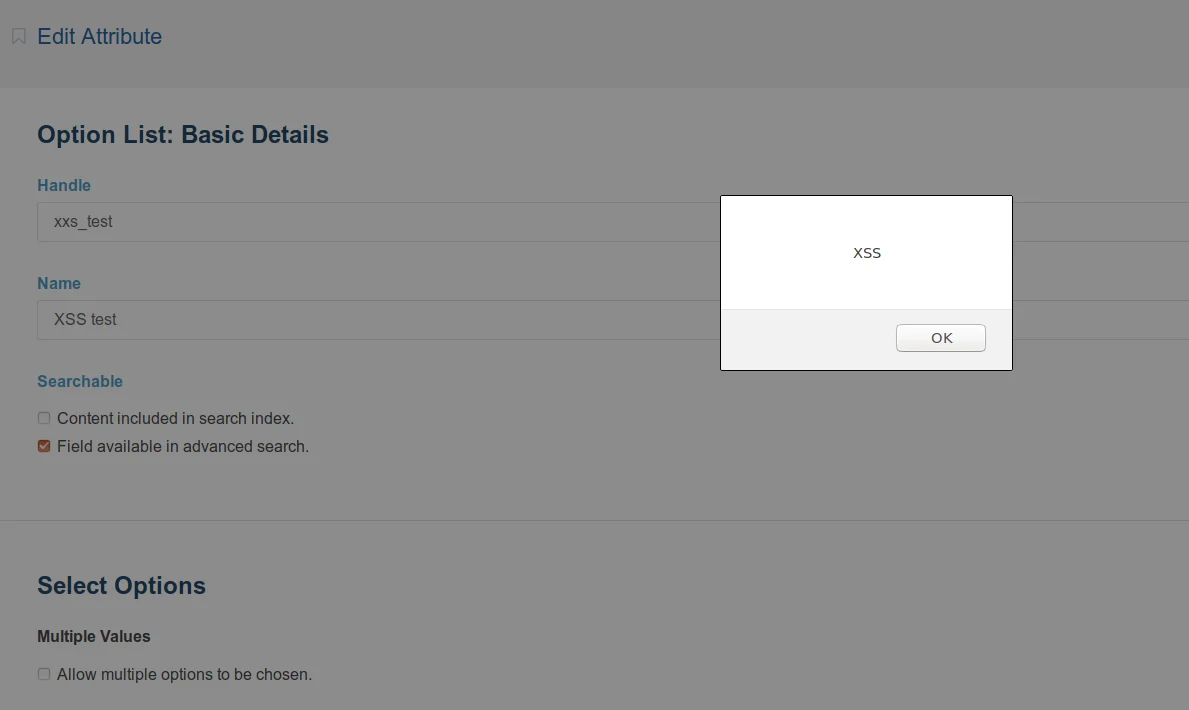
<script>alert('XSS')</script>and hit Save. - Edit the newly created attribute again and see XSS dialog.
The vulnerability lays in the type_form.php file, see https://github.com/concrete5/concrete5/blob/develop/concrete/attributes/select/type_form.php#L40
Unauthenticated use
The vuln can be pretty bad if the website has an Express Form with select attribute associated with it that "Allow users to add to this list.". In that case, an (unauthenticated) user can submit a form that results to stored XSS.
Screenshot
Impact
Stored XSS on /index.php/dashboard/pages/attributes/edit/xxx page and when editing an Express Form block.
Not written yet. The AI write-up for this report has not been written yet. The Original tab links to the source.
What is known
A low-severity XSS bug in https://github.com/concrete5/concrete5, rated CVSS 1.9. HackerOne made it public on 29 April 2020.
About XSS
Script an attacker supplies runs in another user's browser, on the target's origin, with that user's session.
Not written yet. The AI write-up for this report has not been written yet. The Original tab links to the source.
What is XSS?
Script an attacker supplies runs in another user's browser, on the target's origin, with that user's session.



