A user who is not a member of a project is capable of creating regular/confidential objectives inside the project contrary to documentation
A user who is not a member of a project could create regular and confidential objectives and view objectives and key results, contrary to documented permission requirements. This allowed unauthorised access to project data and creation of content without the required guest or reporter role.

GitLab
Originally disclosed on GitLab
- Fixed in 37 days
- Disclosed after 37 days
⚠️ Please read the process on how to fix security issues before starting to work on the issue. Vulnerabilities must be fixed in a security mirror.
HackerOne report #2223468 by ricardobrito on 2023-10-24, assigned to @ngeorge1:
Report | Attachments | How To Reproduce
Report
Hi team,
Summary
I would like to report 4 issues here:
-
According to the documentation, a user needs at least
guestrole in a project in order to be able to create objectives inside the project: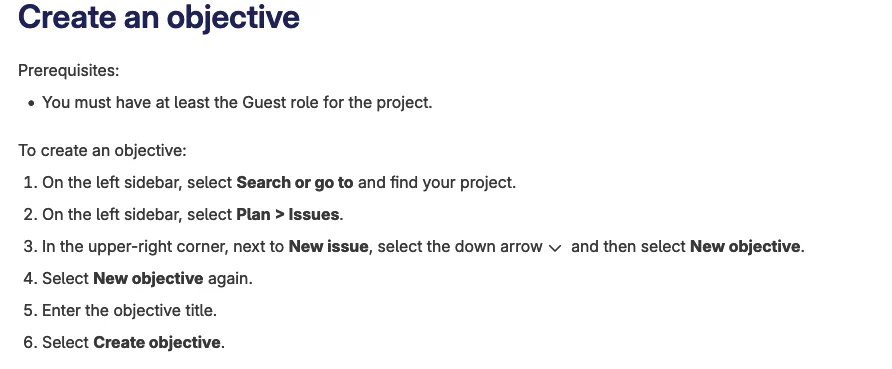
image.png From the original on GitLab However, I have found that a user who is not a member of a project (not even
guestrole) is capable of creating objectives inside the project. -
According to the documentation, you must have at least reporter role in order to create a confidential objective:
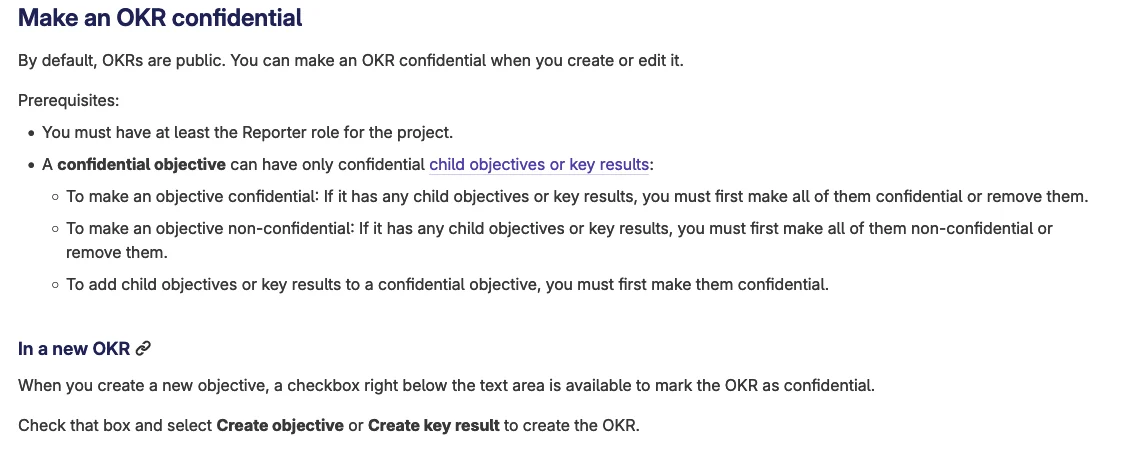
image.png From the original on GitLab However I have found that a user who does not even have
guestrole (not part of the project) is capable of creating a confidential objectve. -
According to the documentation, a user must have at least
guestrole for the project in order to be able to view an objective: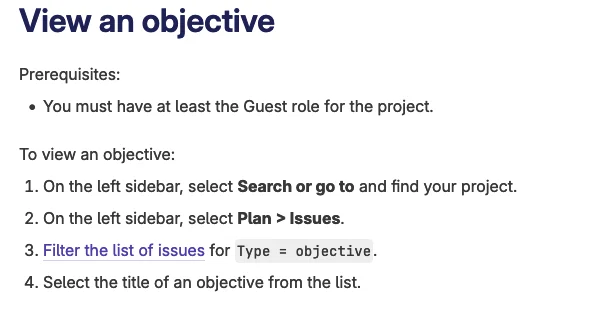
image.png From the original on GitLab However, I have found that a user who is not a member of a project (not even
guestrole) is capable of viewing objectives created by other users. -
According to the documentation a user needs at least
guestrole inside a project in order to view an objective's key results: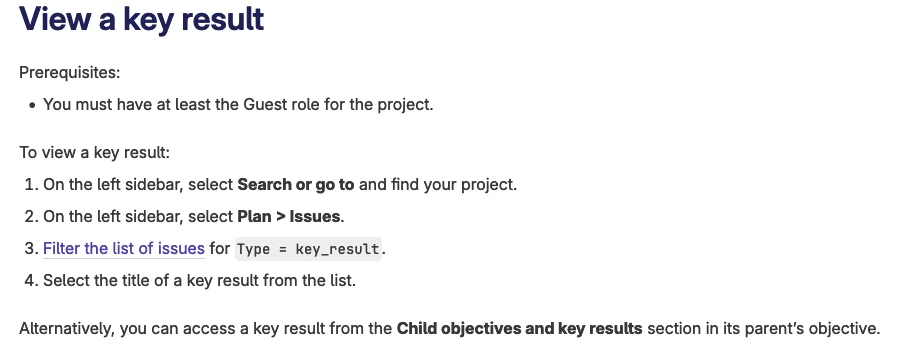
image.png From the original on GitLab However, I have found that a user who is not a member of a project is capable of viewing key results.
Pre-Requisites
You need to enable the flag okrs_mvc for the instance in order to be able to access the objectives feature:
Feature.enable(:okrs_mvc)
Steps to reproduce
- As user A, create a public project.
- As user B, go to the project's issues, on the top right corner (where it says new issue), press the arrow button and select new objective
- Fill in the text and click on
create objectiveand the objective is created even though you do not even have guest role in the project - As user A, create an objective by following the above steps. Inside the objective you can also create a key result.
- As user B, go to the project issues and you will be able to view the objectives created by user A (and after you click on it you will also be able to view the key results added to it), even though the documentation says you need at least guest role.
- As user B, create another objective but mark it as confidential. The objective will be created and it will be confidential, contrary to the documentation that states that you need at least reporter role in order to create confidential objectives.
The most impactful thing here is that a user who is not a member of the project should not be able to create objectives inside the project, but it is possible for this user to create confidential objectives as well.
I will let the [@]gitlab team determine the impact.
POC Video
Impact
A user who is not a project member is capable of viewing objectives created by other users, capable of creating regular and confidential objectives contrary to the documentation.
Attachments
Warning: Attachments received through HackerOne, please exercise caution!
How To Reproduce
Please add reproducibility information to this section:
Not written yet. The AI write-up for this report has not been written yet. The Original tab links to the source.
How it worked
Impact
A user who is not a project member could view objectives and key results created by others and create regular and confidential objectives, contrary to the documentation.
What the attacker needed
Okrs_mvc feature flag enabled; attacker has an account; victim has a public project with objectives
How it was found
- As user A, create a public project.
- As user B, go to the project's issues, click the arrow next to new issue and select new objective.
- Fill in the text and click create objective; the objective is created even without guest role.
- As user A, create an objective and add a key result inside it.
- As user B, go to the project issues and view the objectives created by user A, including key results.
- As user B, create another objective and mark it as confidential; it is created and remains confidential.
Explained by bugbounty.wiki with AI from the original and checked against quotes from it; it can still be wrong. Read the original before relying on a detail.
Not written yet. The AI write-up for this report has not been written yet. The Original tab links to the source.
In GitLab, objectives are goals that can be set within a project. The documentation says you need to be a project member with at least the guest role to create or view them. The report found that even people with no membership at all could create and view objectives, including confidential ones.
What is Access control?
A user can do something their role should not allow: reach an admin function, act on a feature they have not paid for, or skip a permission check. IDOR is the special case where the object belongs to someone else.

