Iterations from unauthorized descendant groups can be disclosed via include_descendants.
The iterations API endpoint for a public parent group did not properly check access to private descendant groups when the include_descendants parameter was used. An authenticated user could retrieve iteration titles, descriptions and scheduling information from private child groups they should not be able to access.

GitLab
Originally disclosed on GitLab
- Fixed in 20 days
- Disclosed after 20 days
⚠️ Please read the process on how to fix security issues before starting to work on the issue. Vulnerabilities must be fixed in a security mirror.
HackerOne report #3484568 by go7f0 on 2026-01-02, imported by @fvpotvin:
Report | Attachments | How To Reproduce
HackerOne Analyst Summary
Summary
An access control issue exists in GitLab's iterations API endpoint that allows unauthorized disclosure of iteration data from private descendant groups. The vulnerability occurs when the include_descendants parameter is used in the /api/v4/groups/<parent_group_id>/iterations endpoint, which bypasses proper authorization checks for private child groups. When a parent group is configured as public but contains private child groups, authenticated users can retrieve iteration information from those private descendant groups despite lacking direct access permissions.
Steps to Reproduce
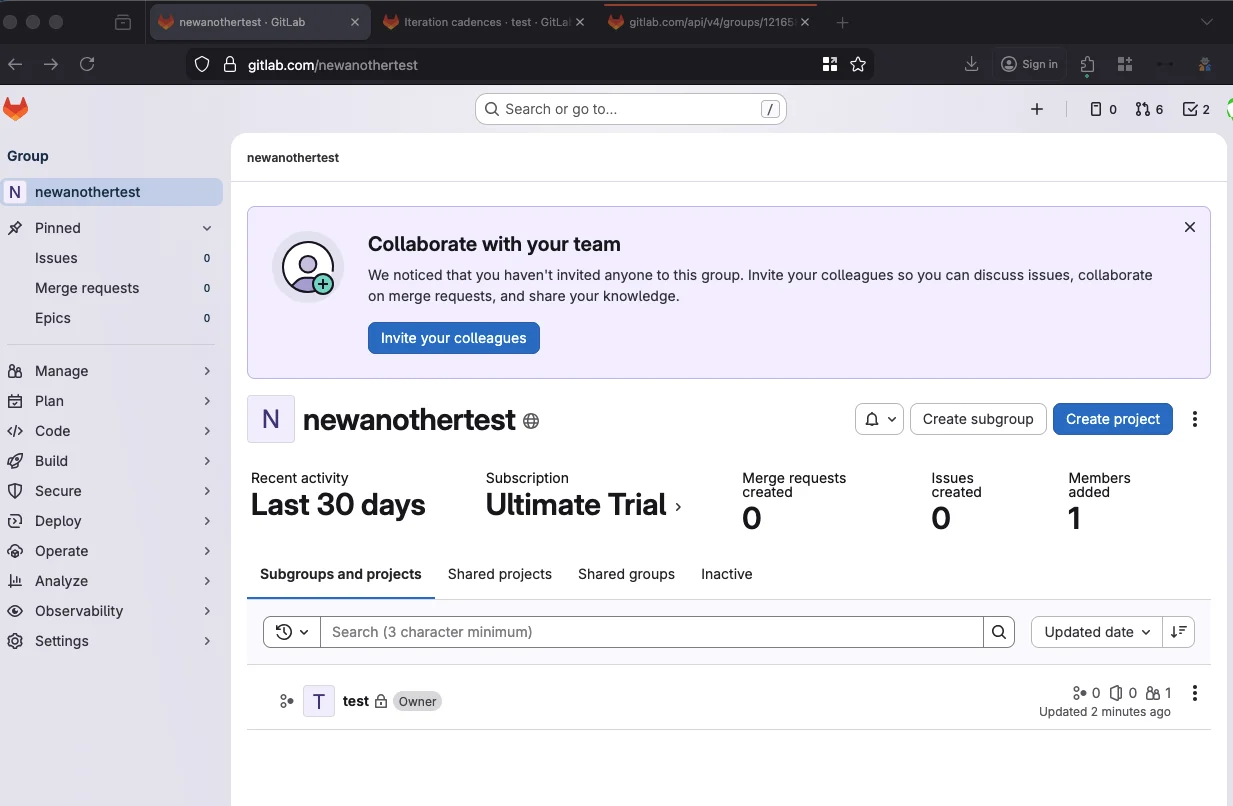
- Create a parent group that is configured as public visibility
- Within the parent group, create a child group with private visibility settings
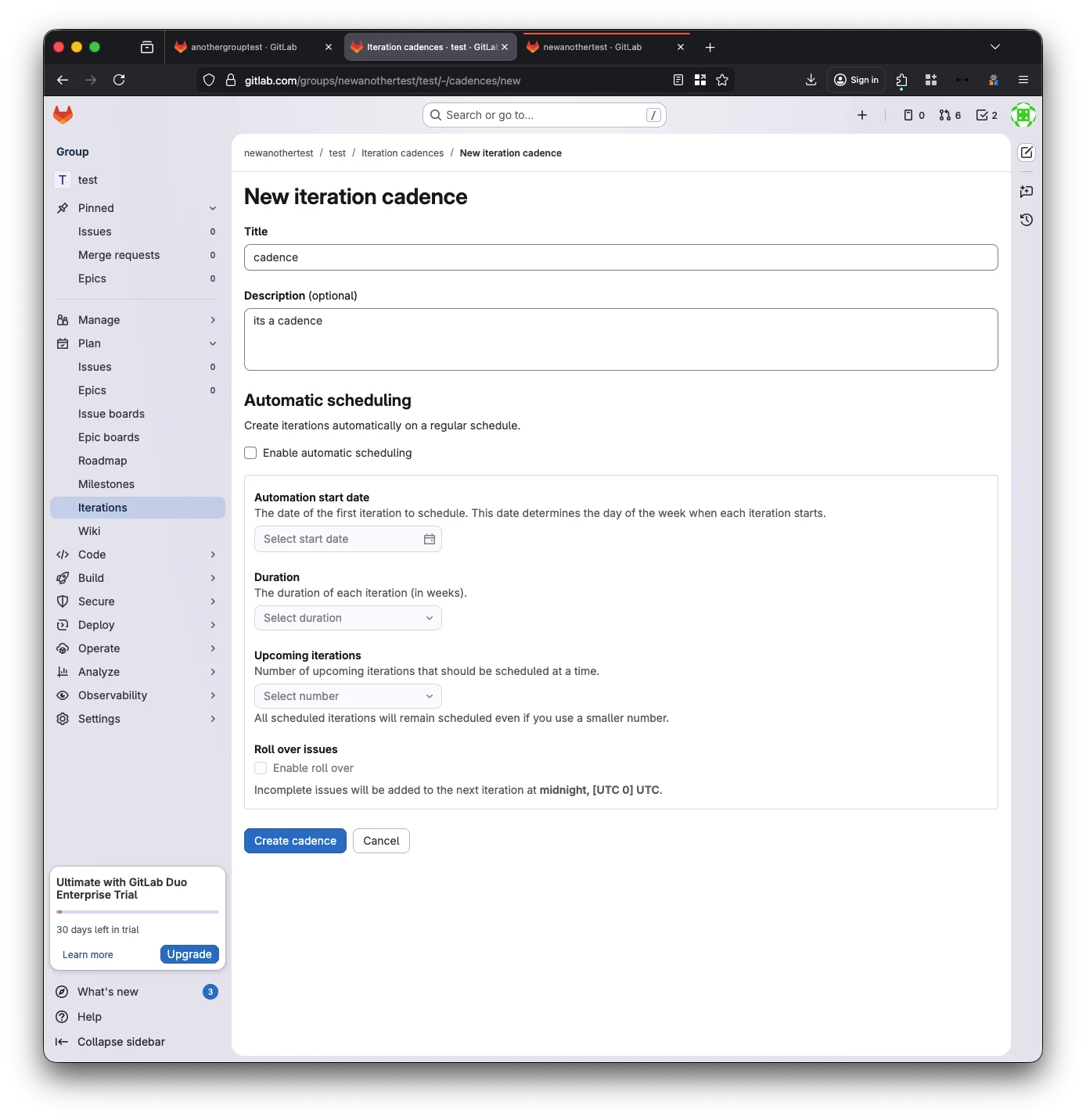
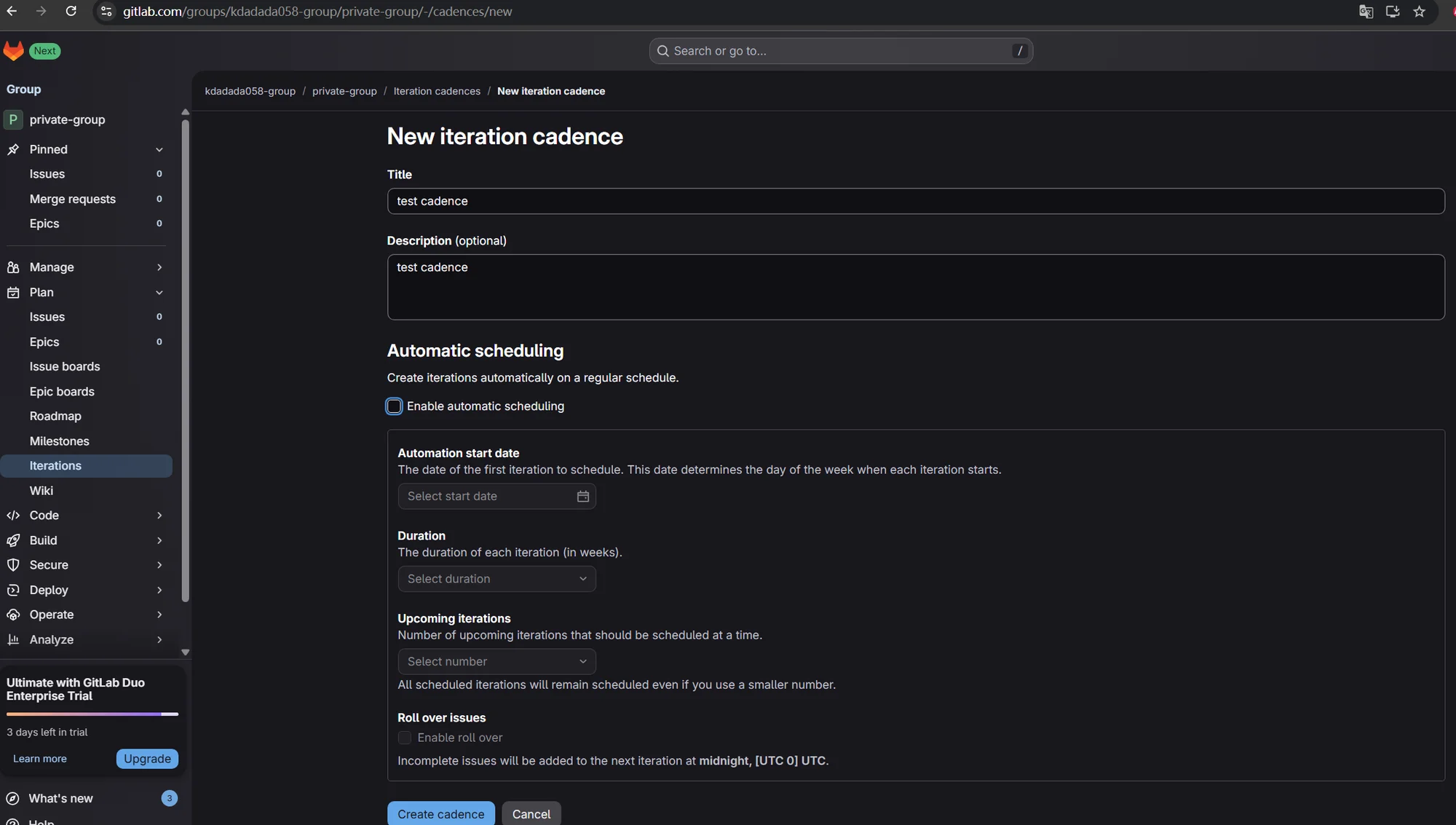
- Navigate to the private child group and access Plan → Iterations to create a new iteration cadence
- Title: "test cadence"
- Description: "test cadence"
- Leave "Enable automatic scheduling" unchecked
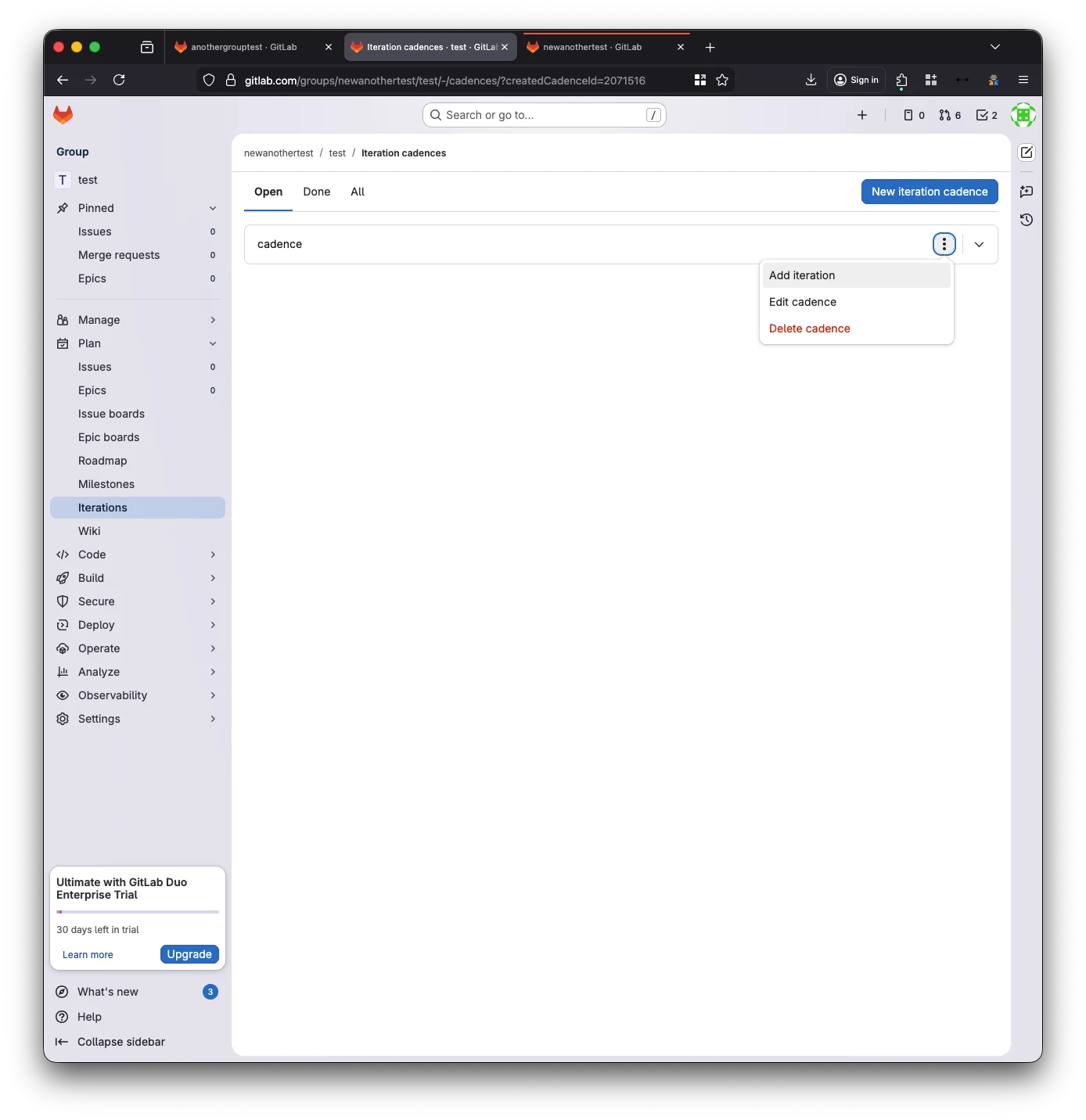
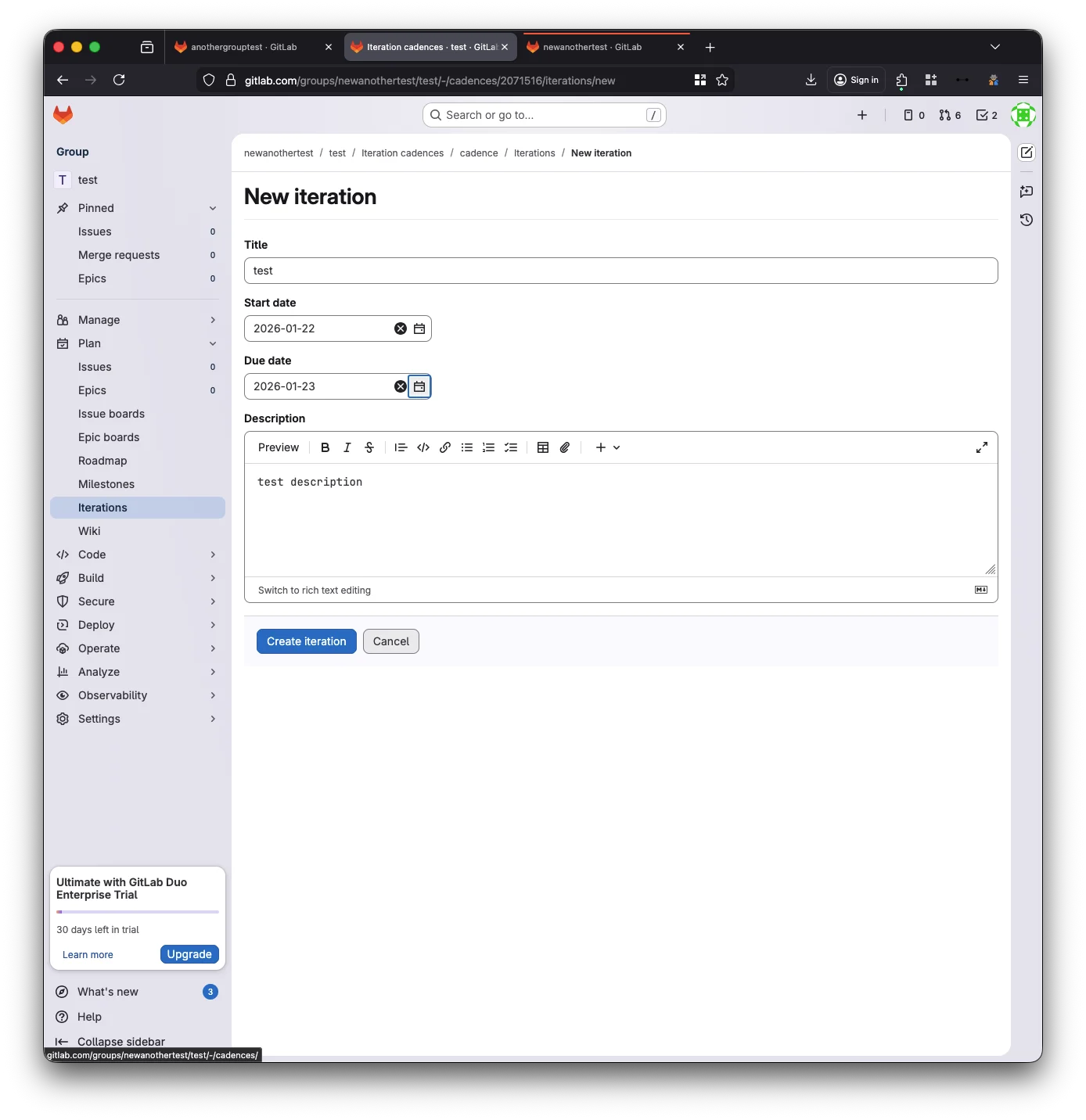
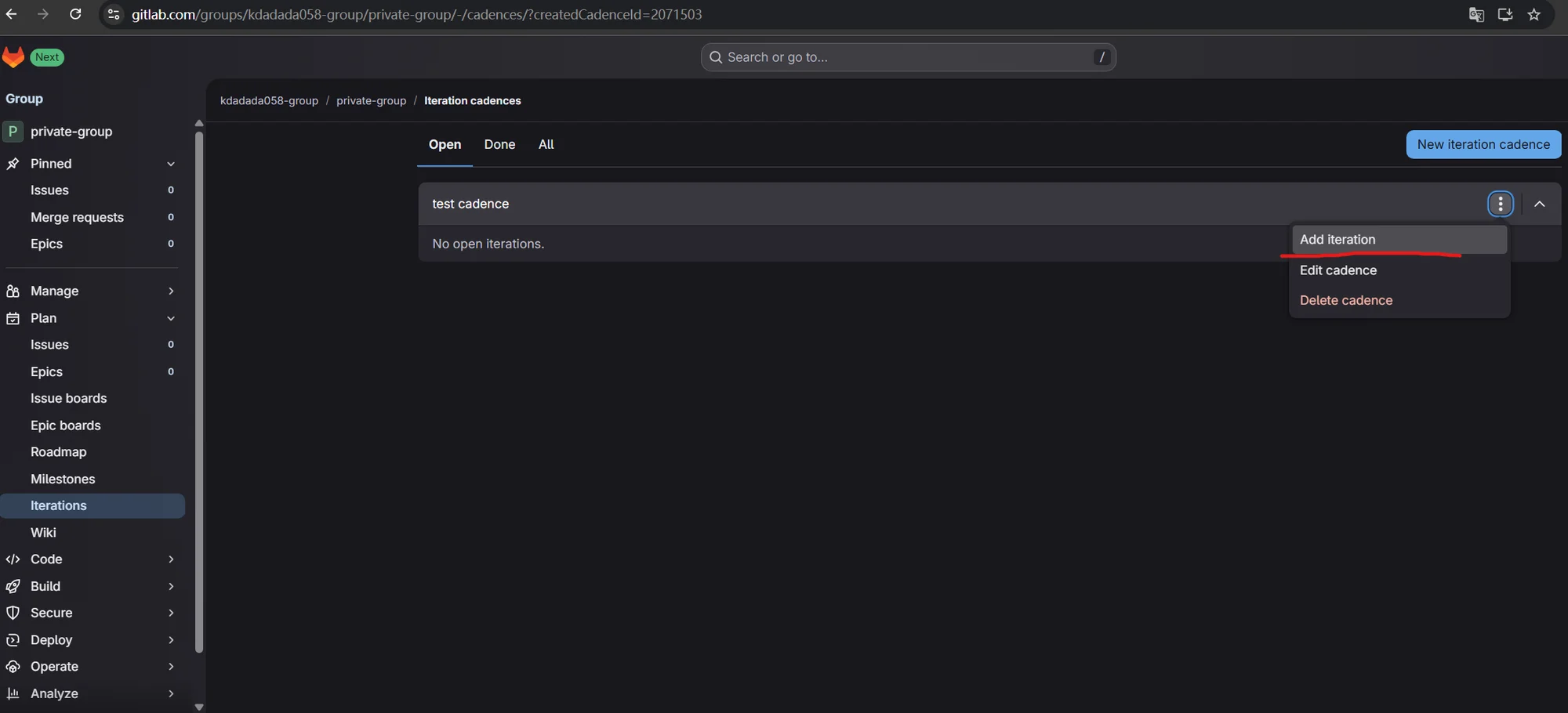
- Within the newly created cadence, add a new iteration
-
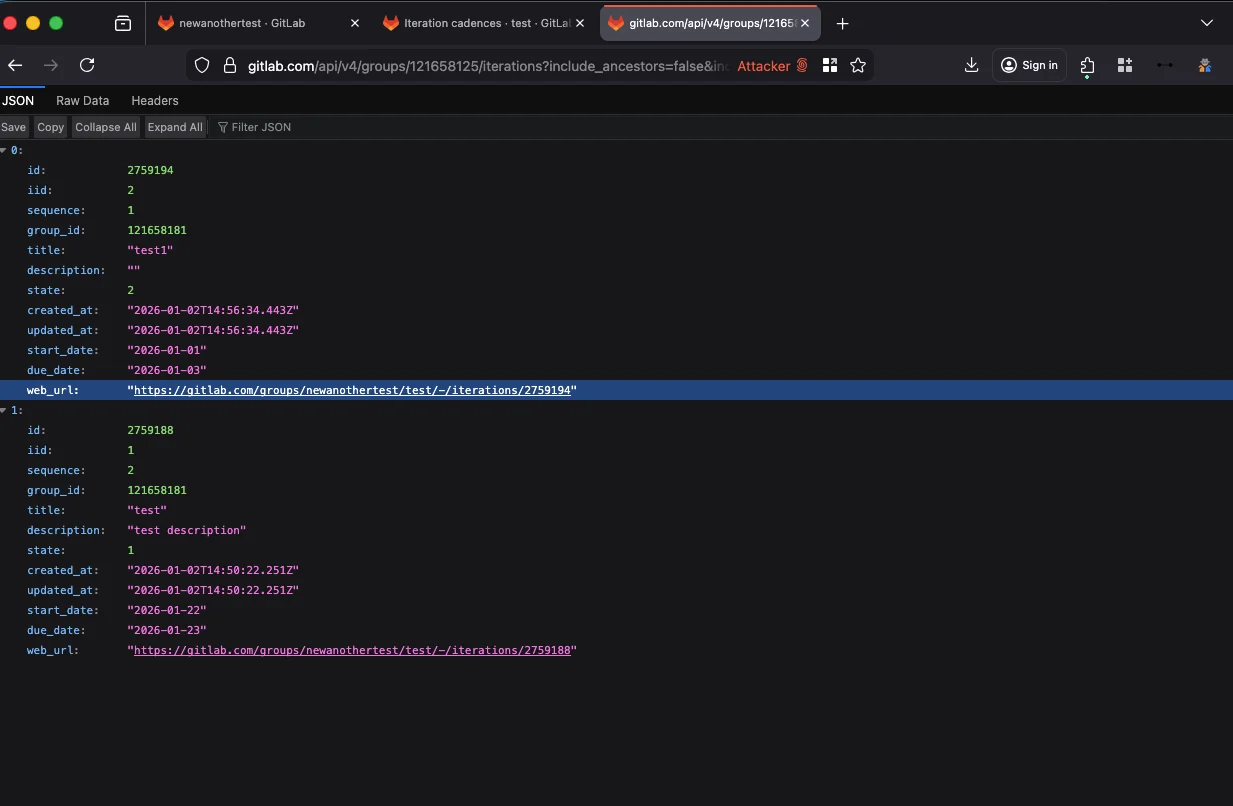
Make an API request to the parent group's iterations endpoint with the include_descendants parameter:
GET /api/v4/groups/<parent_group>/iterations?include_ancestors=false&include_descendants=true
Impact
The vulnerability enables unauthorized access to iteration planning data from private descendant groups, potentially exposing project management information. This includes access to iteration titles, descriptions, and scheduling information.
Original Report
Summary
include_descendants allows users to retrieve iterations belonging to descendant groups they should not be able to access.
Steps to reproduce
Construction environment: parent_group is public, child_group is private.
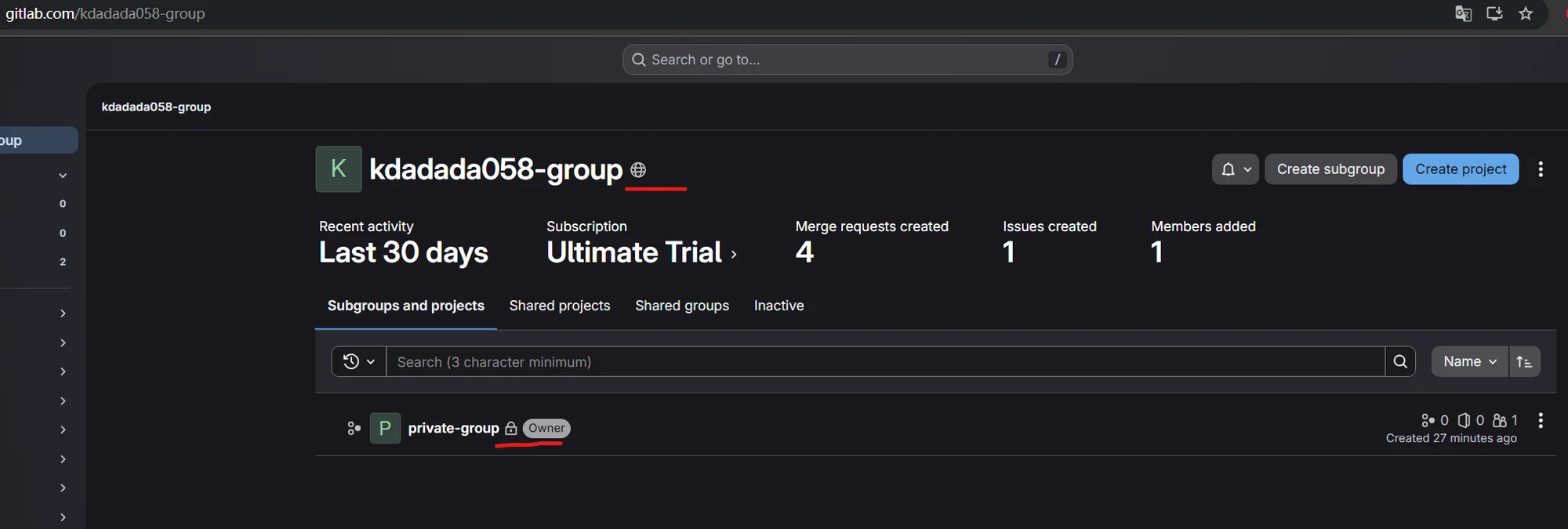
Create new cadences in private-group Plan -> Iterations.
The
Enable automatic schedulingoption here can be checked or unchecked; for ease of distinction, it is left unchecked.
Add iteration in the newly created Cadence.
Enter sensitive content in the Title and Description fields.
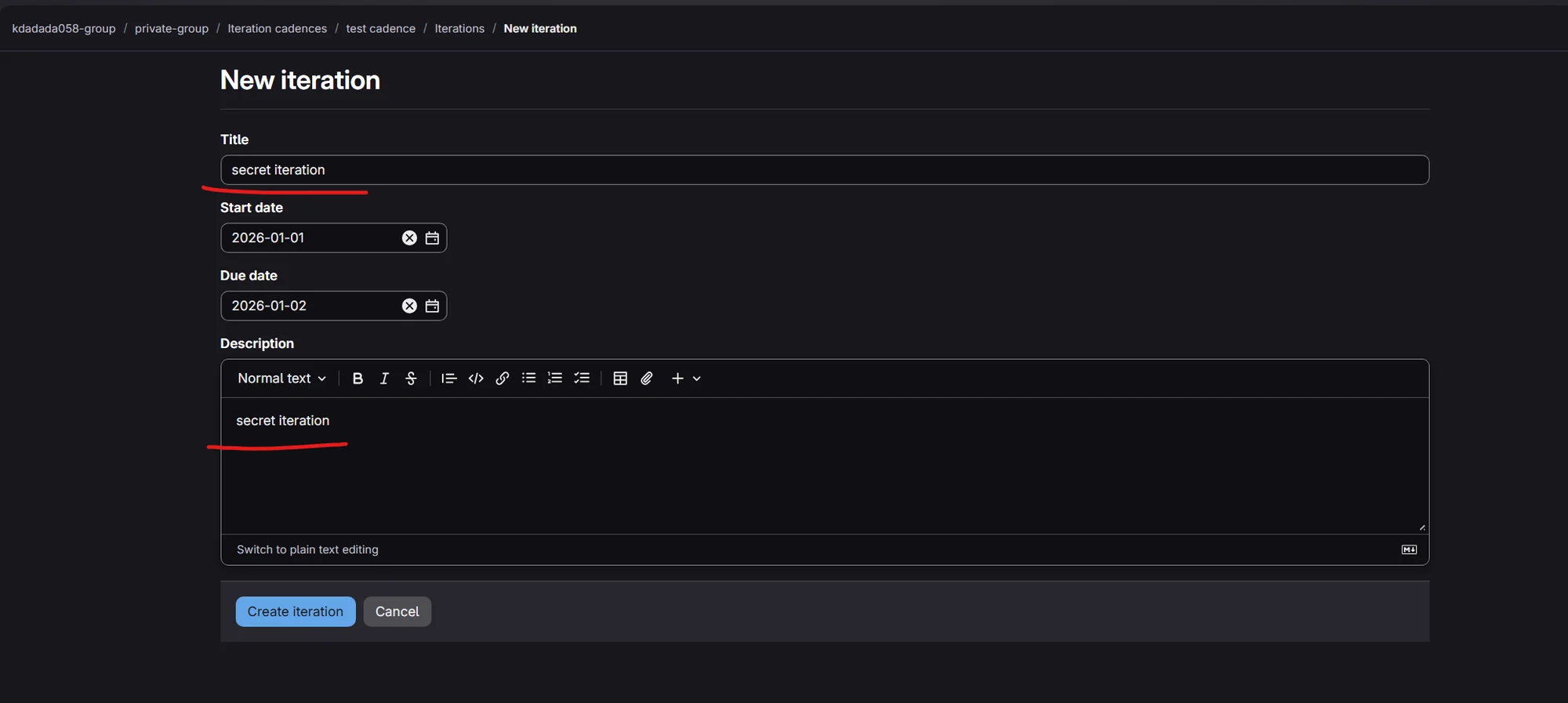
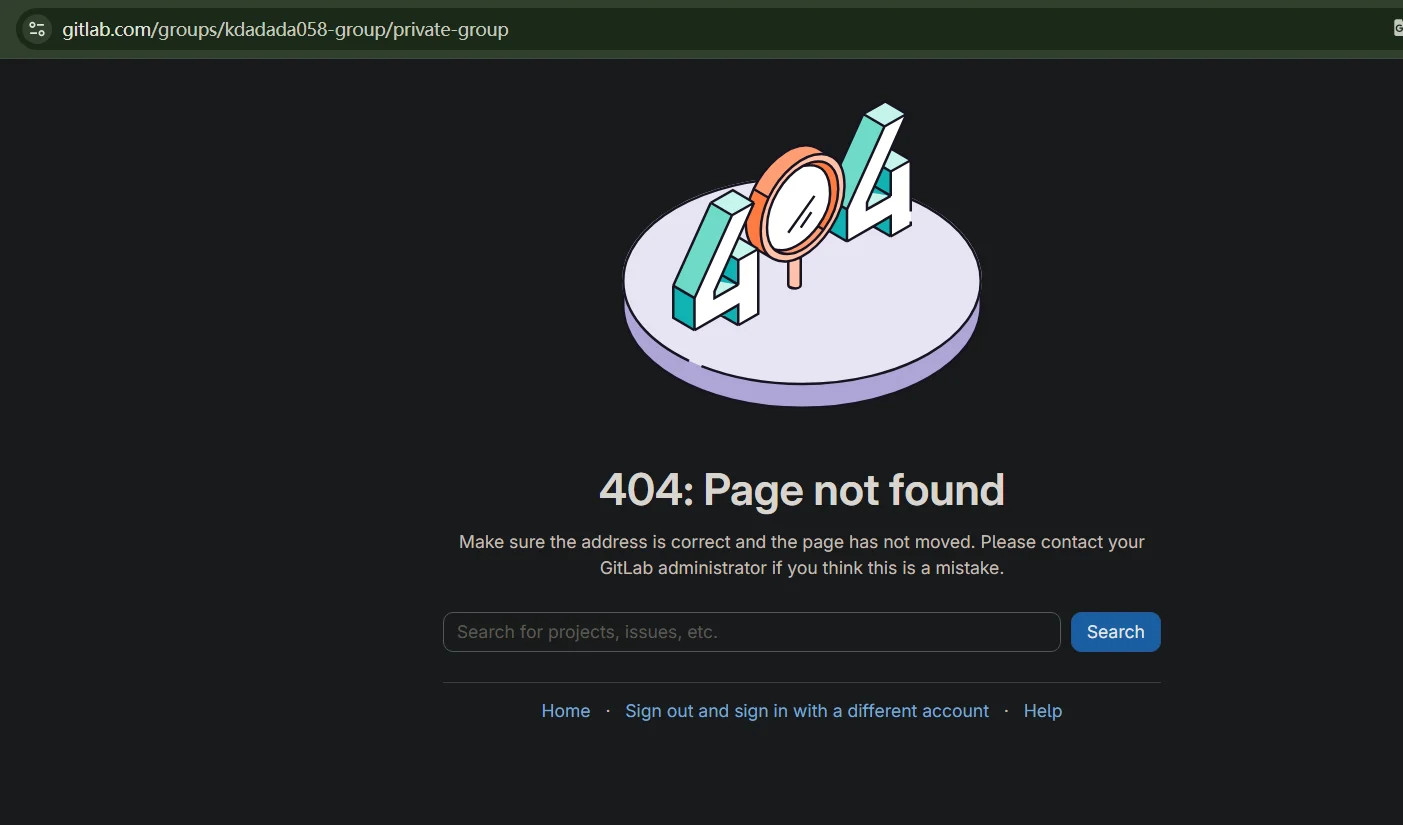
At this point, since private-group is private, other regular accounts will receive a 404 error when attempting to access it.
However, since the parent group is public, the content of the iterations in the private group can be obtained through /api/v4/groups/<parent_group_id>/iterations?include_ancestors=false&include_descendants=false.
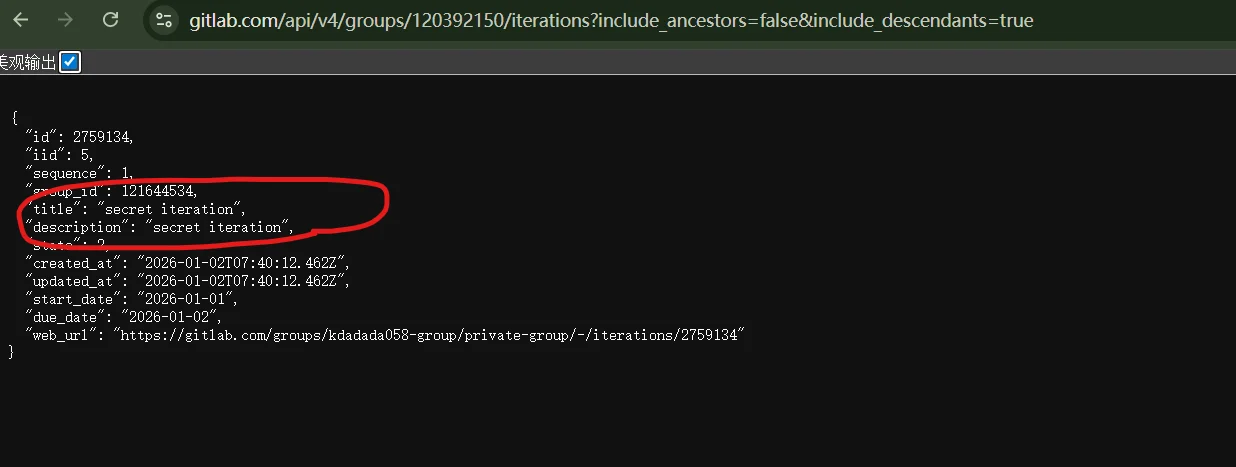
Impact
This enables unauthorized access to iteration data from descendant groups, potentially exposing private planning information across group boundaries.
Attachments
Warning: Attachments received through HackerOne, please exercise caution!
How To Reproduce
Please add reproducibility information to this section:
Not written yet. The AI write-up for this report has not been written yet. The Original tab links to the source.
How it worked
Root cause
Likely the iterations API endpoint did not filter descendant groups by the current user's permissions when include_descendants was set.
Impact
An authenticated user could read iteration titles, descriptions and scheduling information from private descendant groups, exposing private planning data.
What the attacker needed
Public parent group; private child group with iterations; authenticated account
How it was found
- Create a public parent group.
- Create a private child group inside it.
- In the private child group, create an iteration cadence and add an iteration with sensitive title and description.
- As a regular user who gets a 404 on the private group, call the parent group's iterations API with include_descendants set to true.
- Observe the iteration data from the private child group in the response.
Explained by bugbounty.wiki with AI from the original and checked against quotes from it; it can still be wrong. Read the original before relying on a detail.
Not written yet. The AI write-up for this report has not been written yet. The Original tab links to the source.
A group can contain smaller groups, called child groups. A public parent group is visible to everyone, but a private child group should only be visible to its members. The iterations feature stores planning information. The API let anyone list iterations from private child groups just by asking for descendant groups, even though the user had no access to those child groups.
What is Access control?
A user can do something their role should not allow: reach an admin function, act on a feature they have not paid for, or skip a permission check. IDOR is the special case where the object belongs to someone else.

