Stored XSS vulnerability in additional URLs in 'Location' dialog [Sitemap]
A stored cross-site scripting vulnerability exists in the additional URLs field of the Location dialog in the Sitemap. An attacker with page attribute editing rights could inject a payload that executes in the browser of another user who opens the Location dialog for the affected page.

- Fixed in 2 months
- Disclosed after 3 months
Intro
"Transformers: Dark of the Crayons"
Type of issue: Core CMS issue Level of severity: Internal Attack Vector Concrete5 version: 8.2.0 RC2 rev. 0a26b63c4a64d42e7afb36aba0a6e4d1f4c53d7d (July 19th)
Summary
There is Stored XSS vulnerability in additional URLs in 'Location' dialog. This issue can be exploited only against other users which have rights to edit page attributes in Sitemap.
Steps to reproduce
- log in to concrete5 instance and enable Conversations feature
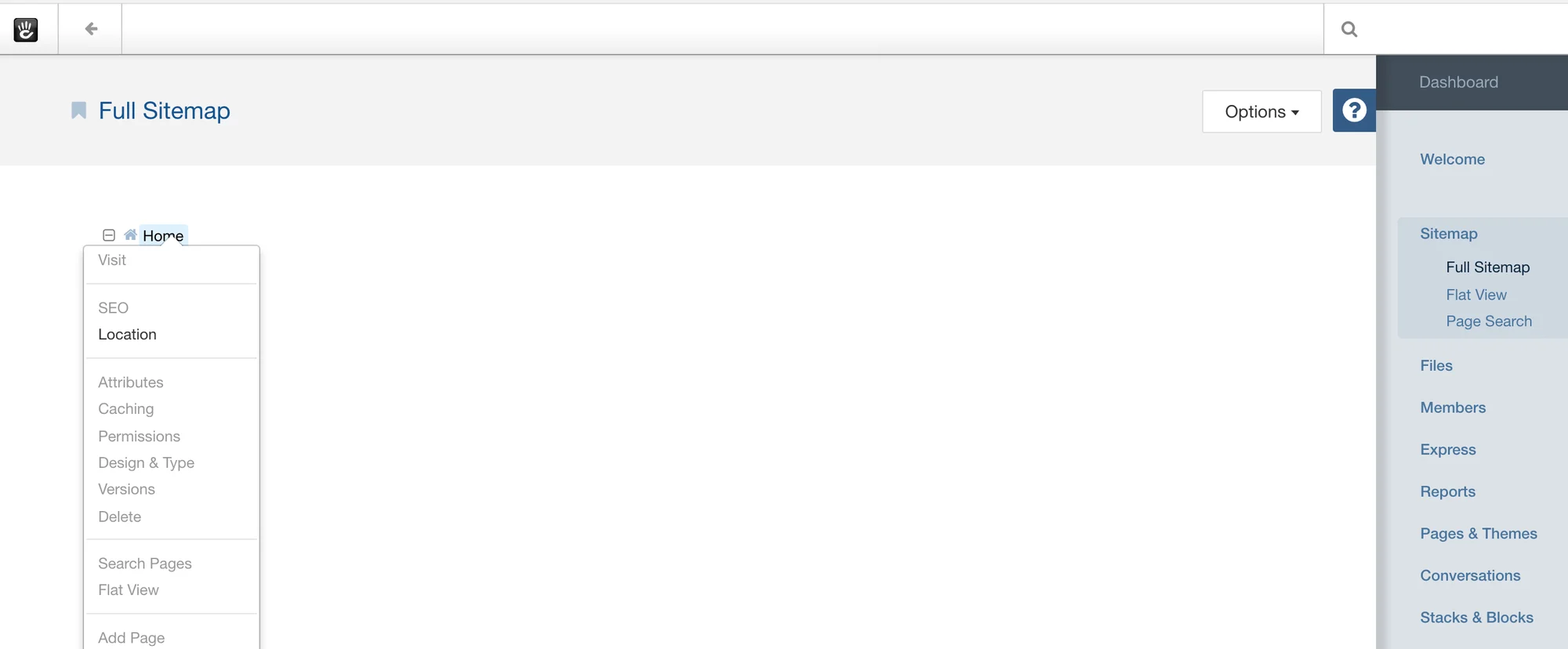
- go to Sitemap. Click on any page and select
Locationoption from menu:
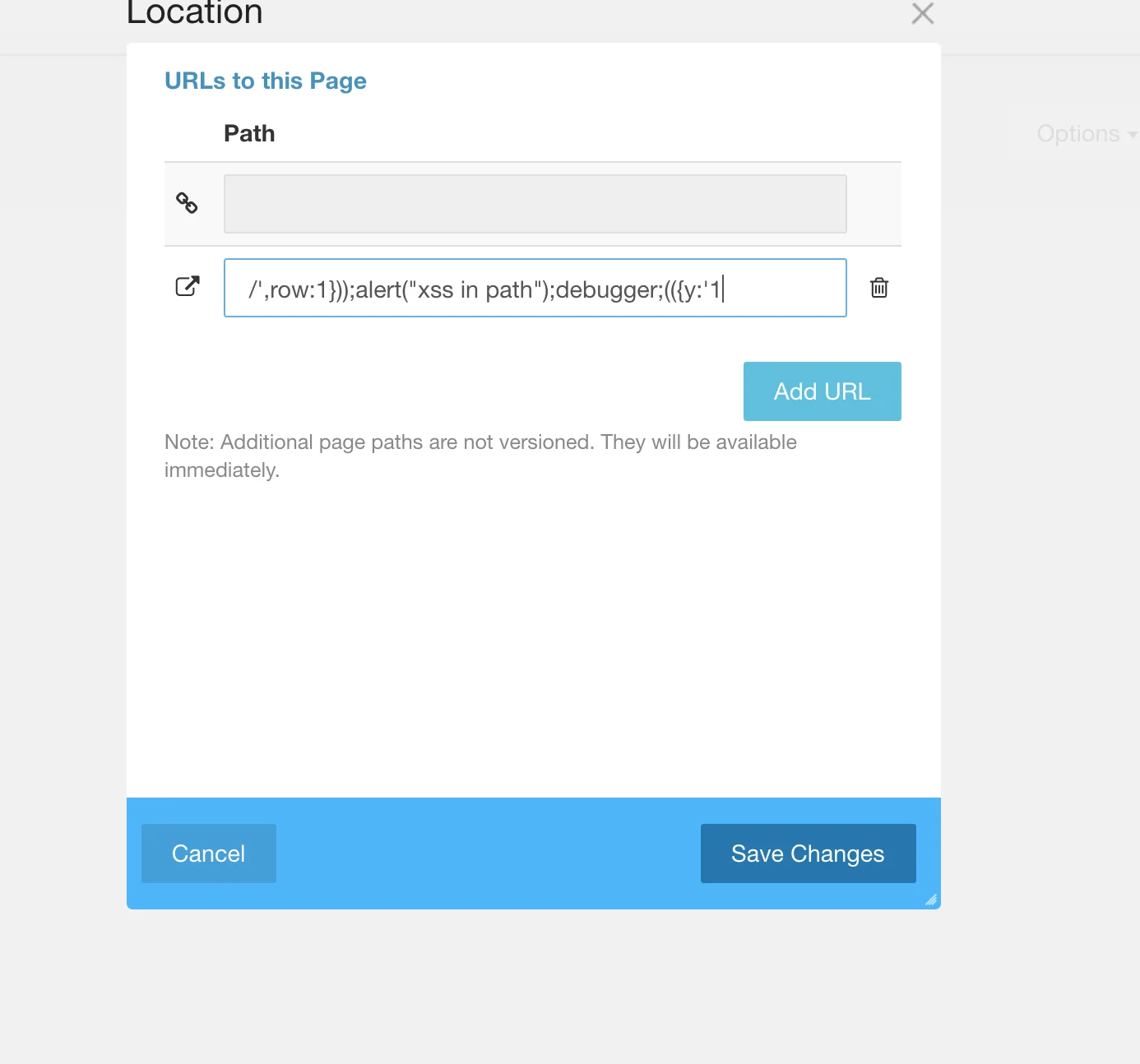
- in dialog box, click on
Add URL. In new text input put the following payload:
',row:1}));alert("xss in path");debugger;(({y:'1
- save changes
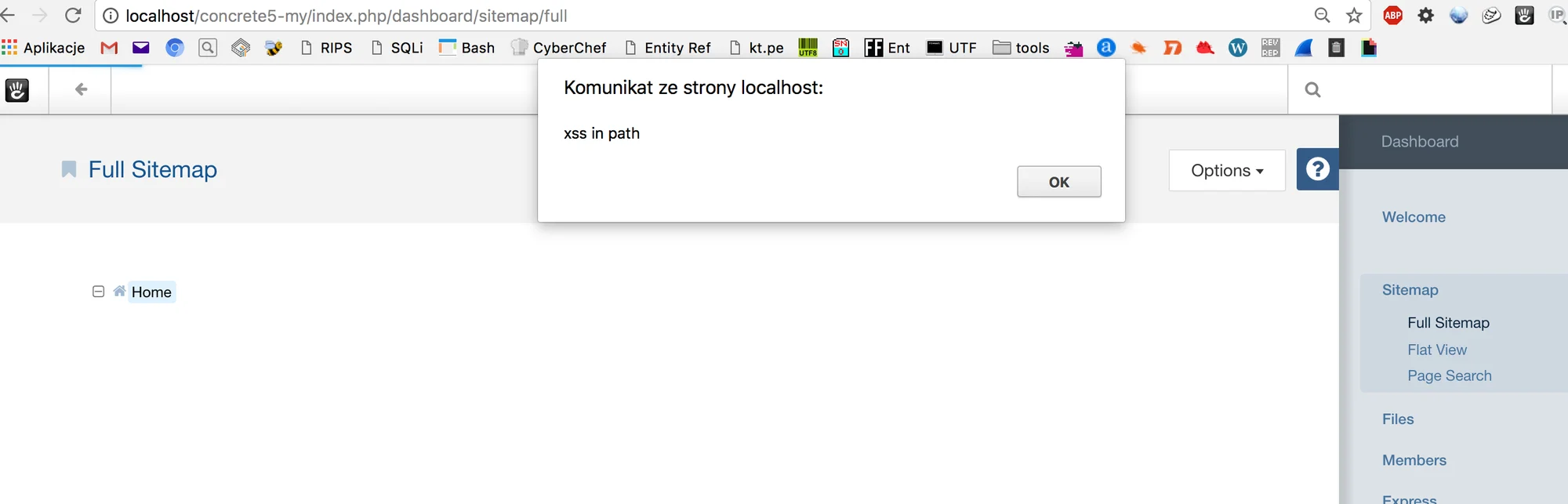
- click on editied page and select
Locationoption from menu - payload is executed and alert is displayed
Here's how payload escapes from legitimate JavaScript code, executes alert() call and keeps syntax with no errors:
$('table.ccm-page-panel-detail-location-paths tbody').append(
        renderPagePath({
			isAutoGenerated: 0,
			isCanonical: 0,
			isHome: 1,
			pagePath: '/',row:1}));alert("xss in path");debugger;(({y:'1',
			row: 2		})
	);
Impact
This vulnerability presents an Internal Attack Vector and has low impact.
Testing environment
System:
- Concrete5 version 8.2.0 RC2, commit 0a26b63c4a64d42e7afb36aba0a6e4d1f4c53d7d (July 19th), installed localy
- PHP ver. 5.6.30
- Apache HTTP Server 2.4.25 for macOS
- MySQL ver. 5.7.13 for macOS
This vulnerability was tested on macOS Sierra 10.12.5 with following browsers:
- Chrome 59.0.3071.115
- Chromium build 61.0.3161.0
- Opera 46.0.2597.32
Wrap up
I hope my report will help keep Concrete5 safe in the future.
Best Regards,
Rafal 'bl4de' Janicki
Not written yet. The AI write-up for this report has not been written yet. The Original tab links to the source.
How it worked
Root cause
Likely the application inserts user-supplied URL values into a JavaScript template without proper escaping, allowing the value to break out of a string literal and execute arbitrary script.
Impact
The vulnerability is an internal attack vector with low impact, as it only affects other users who have rights to edit page attributes in the Sitemap.
What the attacker needed
Attacker has rights to edit page attributes; victim has rights to edit page attributes; victim opens Location dialog for affected page
How it was found
- Log in to the Concrete5 instance and enable the Conversations feature.
- Go to Sitemap, click on any page, and select the Location option from the menu.
- In the dialog, click Add URL and enter the payload into the new text input.
- Save the changes.
- Click on the edited page and select the Location option from the menu.
- The payload executes and an alert is displayed.
Explained by bugbounty.wiki with AI from the original and checked against quotes from it; it can still be wrong. Read the original before relying on a detail.
Not written yet. The AI write-up for this report has not been written yet. The Original tab links to the source.
Cross-site scripting (XSS) is when a website lets an attacker sneak harmful code into a page that other people view. Here, a user who can edit page settings could type a special value into a URL field, and when another editor later opens the same dialog, that value runs as code in their browser. The attacker must already have permission to edit page attributes, so it is not open to just anyone.
What is XSS?
Script an attacker supplies runs in another user's browser, on the target's origin, with that user's session.





