Full access to internal Gitlab instances at redash.gitlab.com, dashboards.gitlab.com, prometheus.gitlab.com
The researcher registered a Google account for GitLab's support email address by abusing a Zendesk ticket-hash feature to make the verification code visible inside a support ticket. This gave control of that address, which was then used to access internal GitLab instances such as prometheus, redash and dashboards.
rijalrojan Follow with rawalshree1
 Originally disclosed on HackerOne
- Triaged in 18 hours
- Fixed in 14 days
- Paid in 14 days
- Disclosed after 57 days
Summary by the researcher
Read about the test here: https://sites.google.com/securifyinc.com/secblogs/scary-tickets
The report
Summary: Lack of proper ticket trick security leads to internal access on Gitlab instances. **I did not use support.gitlab.com instead just using [email protected] email was suffice.
Description:
Getting a [email protected] Google Account
After the Ticket Trick attack that Inti reported and disclosed, many companies including Gitlab added proper security measures to prevent this kind of attack. What companies did not realize is that Zendesk has a feature that can be exploited by attackers other than the CC feature.
In this case, Gitlab has blocked sending emails to support+*@gitlab.com which prevents Ticket Trick that Inti came up with. However, the CC feature along with the Zendesk's feature can lead to further exploitation.
To begin with, I sent an email to [email protected]. After this, an automated reply was sent by Gitlab with confirmation that my ticket went through. Next, I went to accounts.google.com and registered [email protected]. For the firstname and last name I copied a special hash for the ticket. Zendesk as a feature has a special hash for each ticket that is generated in the system This hash is like the key in a dictionary and can be used to add more content to the ticket. So by getting that hash and sending the request, Google allegedly sends an email to verify.
What happened here was due to Zendesk's own security measures, the first email from Google will be set as private because they are not CCed to my ticket. So then, I replied to the support ticket from Gitlab and in CC put [email protected]. Once this was done, I replayed the request in Google and again tried to verify [email protected] this time the ticket had the verification code public.
If you check the image on the top right corner you can see the hash repeated twice because I put that as a first and last name.
Once this was done, I had a verified [email protected] email.
Next, I went to crt.sh to search for gitlab.com domains and found 3 domains that stood out:
-
prometheus.gitlab.com
-
redash.gitlab.com
-
dashboards.gitlab.com
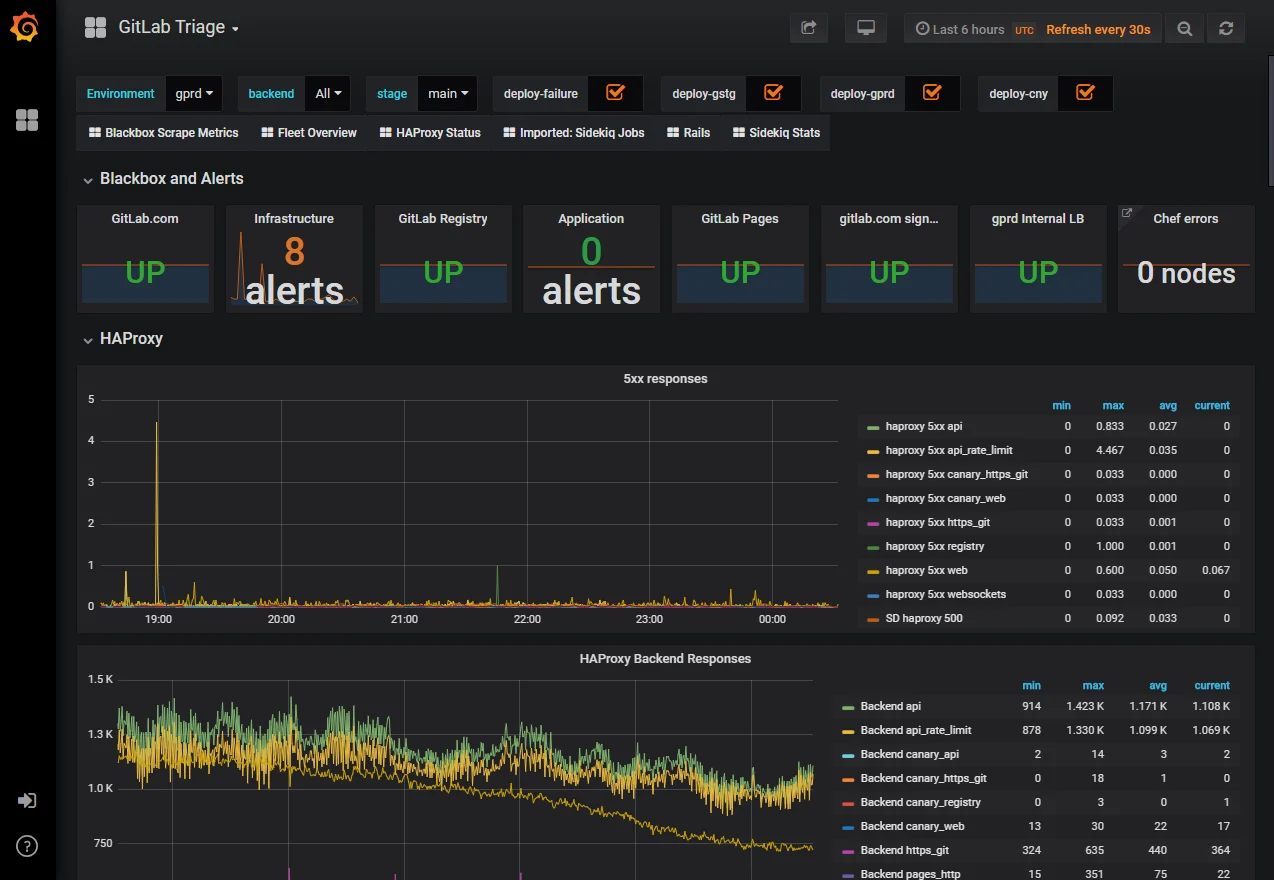
Impact
Getting access to internal applications.
Not written yet. The AI write-up for this report has not been written yet. The Original tab links to the source.
How it worked
Root cause
Likely the help desk software exposed a per-ticket hash that let an outsider add content to a ticket, and the email verification message was made visible in that ticket instead of staying private.
Impact
The researcher could reach internal applications hosted on company subdomains, though the text does not say what data or actions were possible there.
What the attacker needed
Ability to email the support address; a Google account signup; knowledge of the ticket hash
How it was found
- Send an email to the company's support address and receive an automated confirmation reply.
- Register a Google account using the support address, putting the ticket hash in the name fields.
- Reply to the support ticket and CC Google's no-reply address so the verification email is not kept private.
- Replay the Google verification request so the code appears publicly in the ticket.
- Use the visible code to finish verifying the support address.
- Search certificate transparency logs for company subdomains and access the internal instances found.
Explained by bugbounty.wiki with AI from the original and checked against quotes from it; it can still be wrong. Read the original before relying on a detail.
Not written yet. The AI write-up for this report has not been written yet. The Original tab links to the source.
Many companies run a help desk where emails to an address like support@ become tickets. If someone can create an account on another service using that same address, they may be able to read messages meant for the company. Here the researcher used a quirk of the help desk software to see a verification code that was sent to the company's support address, then used it to take over that address and reach internal sites.
What is Account takeover?
Getting into someone else's account through a flaw in sign-in, password reset, second factor, single sign-on or session handling.





